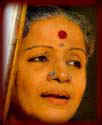
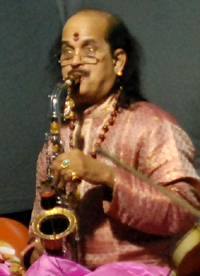
M.
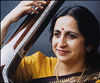
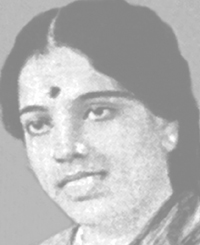
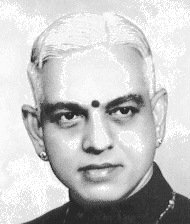
L.Vasanthakumari ...had her initial training from her mother and
later from G.N. Balasubramaniam, (GNB). MLV imbibed some of GNB's style in her
renditions... She could very easily render an elaborate ragam-tanam-pallavi in
uncommon talam with an unusual eduppu, sing kritis set in two kalai talam or
regale her audience with popular and semiclassical songs..." Kalyani
Ragam by MLV Thani
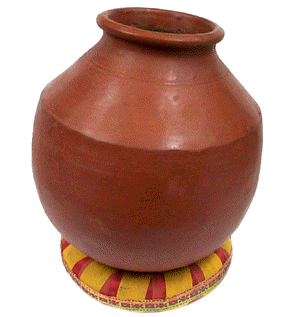
avarthanam (Carnatic percussion solo)
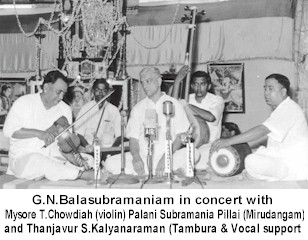
G.N.Balasubramaniam
- "GNB - the first and arguably the most famous acronym in Carnatic
music. The name somehow still retains freshness even now...
GNBs name will figure in anybody�s short list of all time greats. He was perhaps
the first of Carnatic Music�s intellects.."
Rajkumar Bharathi"...is the great grandson of the great Tamil
poet and composer
Subramania Bharathi. ..He started delving deeper into the works of his
great-grandfather. It made him look at life from a different perspective. People
began to expect him to sing more and more of Bharatiyar's compositions, and
Rajkumar also musically, spiritually, philosophically and content-wise found his
work rich and fulfilling..."
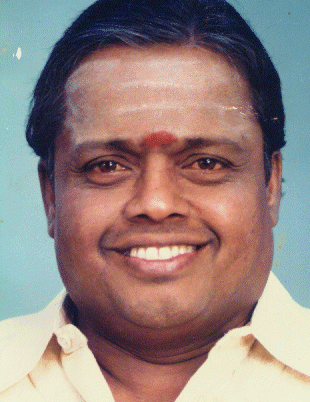
Isai Mani, Padmashri, Dr. Sirkali Govindarajan is respected by
millions all around the globe as a maestro of Tamil Classical, Devotional and
Film music, with an excellent voice range and tonal purity. His ringing voice,
rendering the songs with expression and expertise, with clear pronunciation of
the language, and with classicism intact, was his speciality. He is regarded as
an embodiment of humility and an excellent humanitarian among his
contemporaries.
Madurai
Somasundaram
- "...In his voice, the fluid line of Carnatic music took on a novel shape - the
theme developed the technique instead of the technique molding the theme.. "
Padma
Shri T.M.Sounderarajan " Most of the TMS fans get real
surprise when they come to know about classical songs sung by TMS. When I lived
in Chennai, India during 1990 to 1998, I used to record his concerts from radio
and other sources. During my recent visit to my motherland, I collected
considerable number of karnatic songs from TMS himself. Sri TMS showed keen
interest in bringing out this web site and he not only helped but also
encouraged me. I also collected his karnatic classical songs from his close
associates. I have presented here my
entire
collection of Karnatic songs sung by Sri TMS...I have also presented
some movie
songs which depicts his various bhavam and moods. "
Muthai
Thiru Ulagam
Pirandadu Naan
Yen Pirenden
"...தமிழன் சொந்தத்
தாய்மொழிச் சொல்லில் இசையைக் கேட்க இச்சை கொள்வதே 'தமிழிசை' என்பதன் தத்துவ
மாகும்..."Nammakal Kavijnar
"..In consideration of the tremendous original
contribution of the ancient Thamizh people to the development of isait Tamizh,
the least we can do to recognize their efforts is to present their ideas in a
simple form which can be understood by ordinary people. Mere references to
mutthamiz (முத்தமிழ்) alone is not adequate to convince the world that Thamizh
music traditions go way back to the fifth century A.D. or even earlier..." Dr.C.R.Krishnamurthy on இசைத்
தமிழ்: Tamil Music
"...Nations are as much cultural as political
forms, and the creation of a
unique high culture of world significance
is often central to their legitimation.... artists ... express the
nation's distinctiveness; they are themselves symbols and icons of the
nation's unique creative power; they regenerate their nation morally and
speak for its heart and conscience..." John
Hutchinson, European Institute, London School of Economics and David
Aberbach, Department of Jewish Studies, McGill University,
Quebec, Canada in Nations & Nationalism, Volume
4, 1999
Tamil music is sometimes categorised into Devotional,
Classical and Popular Folk music. Rythms of popular folk music express a
vitality which stems from the closeness of its contact with the life of a
people. Classical music deepens and refines these associations with life and its
moving ragas and melodies have withstood the passage of time and remain almost
timeless. Finally, the devotional music of the Tamil people, gives expression to
the ecstasy that comes from
transcending our
fragmented and partial self and becoming one with that which is whole and
therefore holy.
The musical traditions that have developed amongst the Tamil people have also
been influenced by the differing origins and languages of the peoples of the
Indian sub continent. Carnatic classical music is related to speakers of the
Dravidian group of languages.
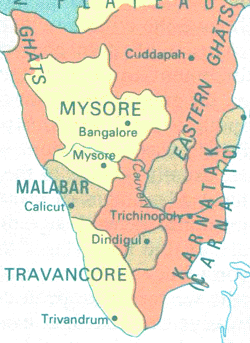
"The name Carnatic music refers to the traditional music of a region
called Carnatic. All books on recent Indian history note that before British
rule, the kingdoms in South India were: Travancore - most of today's Kerala,
Mysore - the southern part of today's Karnataka excluding the west coast, and
Carnatic- most of South India. (almost the same as Madras State of the 1950s
i.e. all of today's Tamil Nadu, southern Andhra and some neighboring areas).
When the Carnatic kingdom came under British control, they renamed it Madras
Presidency. They also renamed the town of Chennai patnam as Madras City... see
Encyclopedia Britannica for a map of Carnatic....
...Tamil 'Nadu' is also
often called as Tamil 'agam'. 'Karu' means black and also means central. 'naadu'
means country and 'agam' means home. Thus Karunaadu meant central country, as
well as black (people) country. The name 'karu naad agam' got anglicized to
'Carnatic' state. In Tamil, the word karunaadagam is still used. The British
renamed the territory as Madras. The music of karunaadagam was called
karunaadaga isai..."
Dr.Srinivasan's interpretation of the origin of the expression 'carnatic
music' is not without controversy.
Appapillai Rajendra points out:
" 'Carnatic music' did not come from the word karnatak nor does it have any
connection to the state of Karnataka. Although the western world up holds
the Roman Empire as the crux of all ancient civilization, in reality, long
before the advent of the Roman Empire, the glory of the Tamil arts and culture
was at its peak during the
Chera, Chola and Pandya dynasties.
Cilappathiharam makes mention of Cavari Puhum Pattinam. During this period
the performing arts were very popular and as a matter of routine, dramas and
music expositions were held on every full moon night on the banks of the river
Cavery, where it merges into the sea. The popularity of these dramas cum music
prevailed in the township that was located on Cavery near the sea shore (Kadal
Carai) which got its name as Cavery puhum Pattanam and the festivity on the sea
shore became known as �Carai� (Shore) �nadaham� (Drama) and �issai� (music),
which turned out �carai nadaha issai� to �carnadaha isssai� and anglicized as
�Carnatic music�."
"..To which country does Carnatic music belong? There is no doubt that it
belongs to Tamilnadu. Since the days of
Silappadikaram Carnatic music has been present in Tamilnadu for generations.
This music has not attained its pre-eminent state in Andhra or Karnataka. Only
in Tamilnadu has it reached its pinnacle of glory. But
then why is it called Carnatic music? It is similar to Bharath being called
India. The Greek invaders when they entered India they encountered the river
Sindhu. So they called this country Sindhu, which in course of time got changed
into India. In the same way the North Indians named the south Indian music as
Carnatic music because the state of Karnataka was nearest to them..."
"இப்புவியெங்கும் வழங்கிவரும் இசை முறைகளுக்கெல்லாம் அடிப்படையாய் இசை விளங்குபவை
ச, ரி, க, ம, ப, த, என்னும் ஏழு சுரங்களே. இவற்றை உலகுக்குத் தந்தவர்களும்
பழந்தமிழர்களே.."
"Carnatic music is the classical music of Southern India. The basic form is
a monophonic song with improvised variations. There are 72 basic scales on the
octave, and a rich variety of melodic motion. Both melodic and rhythmic
structures are varied and compelling. This is one of the world's oldest and
richest musical traditions..."
"As a Westerner interested in Carnatic music, I am frequently asked to
explain my interest and to articulate what makes South Indian music special.
Both Indians and Westerners ask the same questions. Since I did not grow up with
it, but rather chose it for myself from among a broad range of world traditions,
Carnatic music is special indeed. There is always a sense in which
cross-cultural interactions serve not only to broaden one's horizons, but also
to set one's own cultural identity more strongly in relief.... I value
Carnatic music first for the effectiveness with which it can build positive
mental discipline. It helps me to focus and organize my thoughts, and it helps
to eliminate negative mental habits. How does it do this? Of course, I do not
really know. However, I do claim that music naturally illustrates patterns of
thought, and in the case of the great composers of Carnatic music, these mental
patterns have been effectively conveyed at the highest level..."
V. N. Muthukumar and M. V. Ramana point out
"Until the late 19th century, the primary location for
performances of Art music was at the abodes of kings and other rich patrons.
These concerts are described as being centered on ragam-tanam-pallavis,
elaborate exercises in musical creativity, usually in major ragas like
Sankarabharanam, Todi and Bhairavi. The modern concert format (kaccheri
paddhati), on the other hand, is largely dominated by kritis, which were either
composed by "the trinity" � Syama Sastry, Tyagaraja, and Muthuswami Dikshitar -
or vaggeyakaras following their styles. The relationship between these two
musical forms � ragam, tanam, pallavi (RTP) and kriti � is complex..."
Unusual Pallavi Themes
The
Carnatic Beginner's List, provides a 'fairly broad introduction to the
variety of Carnatic music in a manageable number of recordings' and is 'an
attempt ... to provide a starting point for people who are interested in
listening to and learning more about Carnatic music'. The
Carnatic Recording List sets out at greater length a selection of Dr. T.M.
McComb's favourite Carnatic music recordings.
Sudha Raghunathan's music clips in Real Audio
affords a quick overview of some of the different ragas -
"..இசையின் வடிவில்
இறைவனைக் கண்டார்கள். நான் விருப்பு, வெறுப்புகளுக்கு அப்பாற்பட்டு ஒரு
பார்வையாளராக, ஓர் இரசிகனாக, இசையில் புலமை பெற்றவனாக அல்ல - ஒரு தமிழ்ப் பற்றாளன்
என்கின்ற முறையில் அதைப் பார்க்கிறேன்... தமிழ் இசை, சாதி, மத எல்லைகளைக் கடந்து
இருக்கின்றது. கத்தோலிக்கப் பாதிரிமார்களும், திருச்சபை பாதிரிமார்களும்,
தமிழுக்குத் தொண்டு செய்தார்கள் எனில் இங்கே திருவாசகத்தின் பெருமையைத் தருகிறோம்
என்கிறபோது, எல்லை களைக் கடந்து �யாதும் ஊரே யாவரும் கேளிர்� என்று உலகத்துக்கு ஒரு
காலத்தில் கொள்கையைத் தந்தோமே, நம்முடைய நாகரிகத்தை - நம்முடைய இசைக்கலையை
உலகுக்குத் தருகின்ற இந்தப் பெருமை இன்னும் ஆயிரம் ஆயிரம் ஆண்டுகளுக்கு நிற்கும்"
Outstanding musicians have nurtured, fostered and kept alive the
musical traditions of the Tamil people and many have become household names and
these include
Muthuswamy Dikshitar, and
Saint
Thyagaraja.
".. When you listen to Tamil folk songs, the thing that hits you the most is
the intensity variation - the modulation, sudden up and down in intensity (and
sometimes in frequency) - none of the 'glide' or the 'brighas' or microtonal
acrobatics of the classical music system. Just to give you an example, if you
had listened to 'Inji iduppalaga' in the recent movie 'Thevar Magan', at the end
of the fourth line ('Marakka manam koodudhillaye') the singer raises her voice.
Another example, (I think from the movie 'Vaaname ellai') from the song
'Kambangaadu' - the second time the singer goes 'Kambangaadu', he raises his
voice on the 'kaadu'. A more blatant exhibition of such voice gymnastics is the
'ullulation' (my spelling may be wrong) when a chorus of women go into a loud,
short, high pitched scream, to punctuate a song - Ilayaraja employs this often.
An example I always give as a quintessential Tamil folk song is from the
movie 'Karagattakkaran' which goes 'Mundhi mundhiri naayagane'. This clearly
brings out the simple melodic grammar of folk songs vis a vis, classical system.
Pure, raw emotional impact seems to be more important than any ornamental
presentation. Even the musical instruments complement this. Nayanam, a downsized
version of Nadaswaram or simple string instruments like Villu or Kottangachi
violin are often the only ensemble with relentless, simple drums like Melam (a
cousin of tavil) or Udukkai or Tambattam."
The Tamil film
has become a powerful medium for popularising the music of the Tamil people, and
not surprisingly, Tamil film music often draws its inspiration to a greater or
lesser extent, from each of the three categories -devotional, classical and
popular folk music. The Tamil film music greats include
S.P.Balasubramaniam,
Ilayaraaja,
T.M.Soundarajan, A.M. Rajah, M.S. Viswanathan, and
Abdul Rahman.
An increasing number of websites have MP3 and Real Audio links
to Tamil songs, both classical and popular.
"Research findings have established clearly that folk music preceded
traditional, classical music in Tamil Nadu. Cave men and tribal men made sounds
that developed into a language. These people gave simple tunes without any
rules, but a sense of music was apparent even then. In my childhood days, there
was no cinema as there is now. Performers travelled from village to village
telling stories . Songs were interwoven in the stories. The appreciative
audience offered these performers whatever they could. This was the beginning of
symphony.... if you look at the chronology of singers,
Kittappa was followed by
T.R.Mahalingam, who was followed by
T.M.Soundarajan,
Sirkali Govindarajan,
all persons who could sing in very high pitches. G.Ramanathan brought a fresh
air to cine music. ... The Tamil film songs were strongly based on Carnatic
music tradition.
P.U.Chinnappa was followed by
Chidambaram Jayaraman,
Tiruchi Loganathan. Gantasala was followed by P.B.Srinivas,
S.P.B, Mano..."
"Listening to a few old Tamil songs always reminds me of the golden era of
Tamil Cine Music. The two decades from the late fifties seems to me to have
produced the best light music in Tamil. The golden era not only belongs to MSV
(& Ramamoorthy) but also minor composers like AM Raja and V Kumar who could
create music which has taste and inspiration behind it. Perhaps the formative
years of Tamil Cine Music had an element of genuine inspiration behind it that
could shape the musical sense of even the minor composers.
I have observed the songs belonging to this era having a kind of organic
fluidity that is so natural to good music. The tunes flow to the natural
sequence of music and don't have the strain of an artificial imagination at all.
The accidental notes fall so perfectly in their places and add charm instead of
a jarring sound as one hears in modern Tamil cine music. Take for instance a
song like "Unnidam Mayangugiraen". It varies in its rhythm and tune so
differently but as a whole it is so beautifully synthesized that it adds so much
of beauty and charm to the tune as a whole. The variation of tune sequence (or
the scale) in those songs always seems to blend and not forced as one sees in
the songs today.
They still appeal to the music lover, for there is the charming simplicity of
the tune which combines elegantly with the better lyrics (mostly from
Kannadasan, who had a fine sense of the beauty and more importantly, a good
sense of sound in Tamil Language). The lyrics, hence, came naturally without any
forced or exaggerated poetic association. One notices that those songs don't
involve much complex orchestration of modern light music, but nevertheless are
so musically elegant ; there isn't any forced imagination ; no aping of Western
music as in modern light music. We mostly find the composer in his natural
elements trying to synthesize a musical expression in a medium 'native' to his
sense of music. Even a later composer like Ilayaraja is original most of the
times when he tries his hand at folk music with which he grew up with.
In contrast, today's Tamil cine music seems to appeal to us only by the hi-fi
sound effects and rarely by any musical sense. There is always the annoying
monotony, one who has any musical sense, observes. I wouldn't say that the songs
of the earlier period were all so creatively diverse in their compositions. One
can't expect such a thing in a lesser form of music as light music. But then
there was at least that part of experimenting and a genuine attempt to create
something from the musical sense that was less falsified in its inspiration. The
composer of those times, as one can observe, had a kind of devotion to music,
which didn't just have commercial interests alone. It is seldom seen today.
It seems to me that it is more than a question of taste and listening pleasure
alone when one responds to Tamil film music of its formative period...."
The
Kannadasan
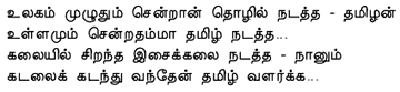
lyric specially written for a song by Sirkali Govindrajan in connection with the
opening of the London Murugan temple in the 1980s, movingly reflected the spread
of the Tamil diaspora and their links with Tamil and Tamil music:
Today, the Tamil people
live in many lands and across distant seas. But wherever they may live, they
acquire strength from the richness of
their own cultural heritage - not only because that culture has something to
do with their own roots but also because that culture has a rich contribution to
make to the cultural fabric of an increasingly small world.
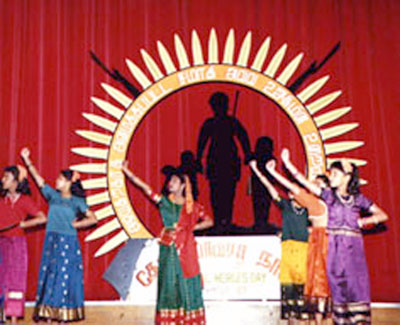
Maha Veerar Naal
as well as Pongu
Thamizh have provided a platform to Tamils living in many lands to give
expression in dance, drama and song, to a growing Tamil togetherness - a growing
Tamil togetherness drawing strength from its roots in the ground.
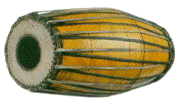
Palghat T.S. Mani Iyer "Mani Iyer�s mridangam playing earned him the title
of "Mridanga chakravarthy". His career spanning over 60 years brought him among
other things the prestigious "Sangeetha Kalanidhi"(1967), "Padmabhushan" (1971)
and the President of India�s "National Award"(1956). ..it is said that he had
such a sense of timing and control of thala that for any song he simultaneously
could mark two different talas with his right and left hands respectively. .."