Free Press
of the Free World... Manufacturing
Consent? ".... the media present news and events in a manner that
not only agrees with the views of the powerful, but actually supports
their domination...(by articulating) different visions of the world
in such a way
that their potential antagonism (to that domination) is
neutralised."
John Harrington,
1998
Project Syndicate - an international
association of 244 newspapers in 114 countries
One World
"Globalisation permits money and goods to move around
the world unimpeded, yet criminalises the other
indispensable element of production, labour, when it seeks
to move to where it can command a decent livelihood."
Jeremy Seabrook in the
New
Internationalist, February 1999
Revisited:
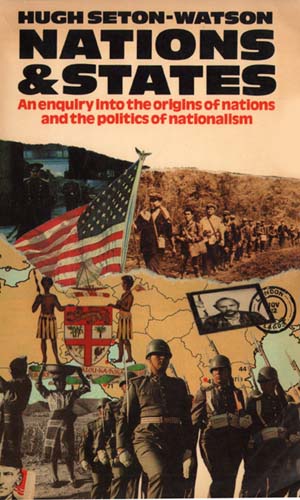
Nations & States, Hugh Seton-Watson - "The object of this book is to examine the
processes by which nations have been formed, the types of
political movements which have sought to achieve what has been
considered to be the national purpose, and the ways in which
such movements have influenced and been influenced by the
internal policies of states and the relations of states with
each other.
The distinction between states and nations is fundamental to
my whole theme. States can exist without a nation, or with
several nations, among their subjects; and a nation can be
coterminous with the population of one state, or be included
together with other nations within one state, or be divided
between several states. There were states long before there were
nations, and there are some nations that are much older than
most states which exist today. The belief that every state is a
nation, or that all sovereign states are national states, has
done much to obfuscate human understanding of political
realities.A state is a legal and political organisation, with
the power to require obedience and loyalty from its citizens. A
nation is a community of people, whose members are bound
together by a sense of solidarity, a common culture, a national
consciousness. Yet in the common usage of English and of other
modern languages these two distinct relationships are frequently
confused..." more
"ஏன் என்ற கேள்வி
- இங்கு
கேட்காமல் வாழ்க்கை இல்லை
நான் என்ற எண்ணம் - கொண்ட
மனிதன் வாழ்ந்ததில்லை... பகுத்தறிவு பிறந்தததெல்லாம் கேள்விகள் கேட்டதனாலே உரிமைகளைப் பெறுவதெல்லாம்
உணர்ச்சிகள் உள்ளதினாலே... வரும் காலத்திலே நம் பரம்பரைகள்
நாம் அடிமை இல்லை என்று முழங்கட்டுமே.."
1. "Nation building is rightly, though at times excessively,
associated with political and
social processes. Yet, it is not
confined to national liberation movements, charismatic leaders and liberators,
wars of national independence, and the struggle of national entities to emerge
to independence from a position of relative powerlessness and subservience to a
dominant power. Nations are as much cultural as political forms, and the
creation of a unique high
culture of world significance is often central to their legitimation. True,
the effects of culture are not as clearly quantifiable as those of politics. The
effect of Verdi, for example, on Italian nationalism is hardly as clear cut as that of
Garibaldi.
Wagner's
impact on German nationalism is amorphous alongside the concrete political
achievement of
Bismarck.
William Butler Yeats' influence on Irish nationalism is not as definable as
that of
Michael
Collins or Eamon De Valera. The inspiration of
Chaim Nachman Bialik
on Jewish nationalism is diffuse in comparison with that of
Herzl.
Yet it may be argued justly that artists have equal
if not
greater importance. They above all
express the nation's distinctiveness; their creativity is
part of the momentum to independence; they are themselves
symbols and icons of the nation's unique creative power;
they regenerate
their nation morally and speak for its heart and conscience."
-
John Hutchinson, European Institute, London School of Economics and
David
Aberbach, Department of Jewish Studies,
McGill University, Quebec, Canada in Nations & Nationalism, Volume 4, 1999
2.
"..மொழியும்,
கலையும்கலாசாரமும் வளம் பெற்று வளர்ச்சியும் உயர்ச்சியும்
அடையும பொழுதே தேசிய இனக் கட்டமைப்பு இறுக்கம் பெறுகின்றது. பலம்
பெறுகின்றது. மனித வாழ்வும் சமூக உறவுகளும் மேன்மை பெறுகின்றது. தேசிய
நாகரிகம் உன்னதம் பெறுகின்றது.."
Velupillai Pirabakaran
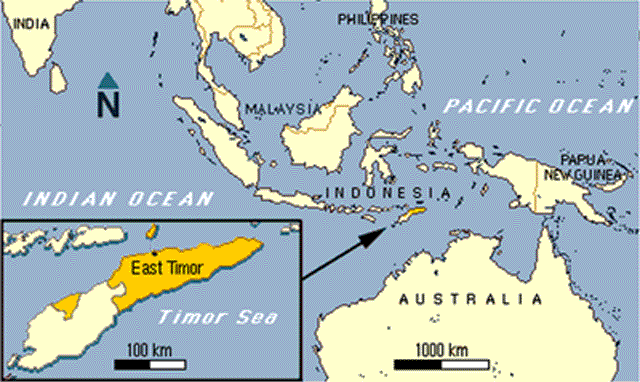
Ten years since East Timor’s independence vote
in 1999 -
Patrick O’Connor"By 2006, the first Timorese post-independence administration of Fretilin’s Mari
Alkatiri was regarded as insufficiently compliant with Australian dictates and
oriented too much towards Portugal and China. As a result, the Australian
government launched a provocative regime change operation, dispatching another
military intervention force.That the tenth anniversary celebrations of the 1999 referendum were being held
yesterday (30 August 2009) while around 800 Australian and New Zealand soldiers remain stationed
in East Timor - together with more than 1,000 mostly Portuguese and Malaysian UN
police - underscores the reality of the country’s so-called independence."
Comment by tamilnation.org "It
is said that the wise learn from the experience of others
and that fools do not learn even
from their own
experience. "
more
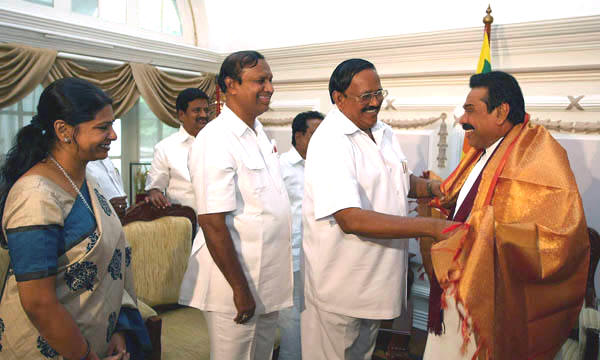
Colombo, 13 October 2009
Members of the minority DMK led Tamil
Nadu State Assemby members including daughter of DMK
leader M.Karunanidhi, Kanimozhi, A.K.S.Vijayan,
T.K.S.Elagovan, Helen Davidson and Congress members S.
Nachiappa, N.V.S. Chithan, J.M. Hara Rashid and K.S.
Azhagiri honour Sri Lanka President Rajapaksa with
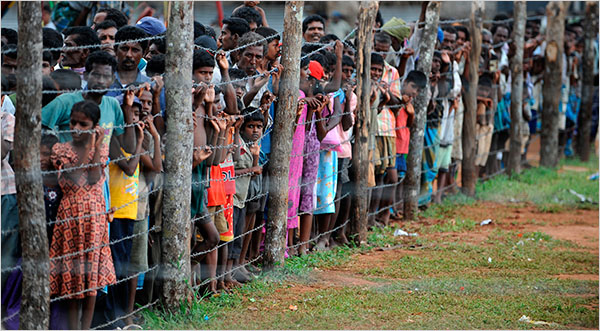
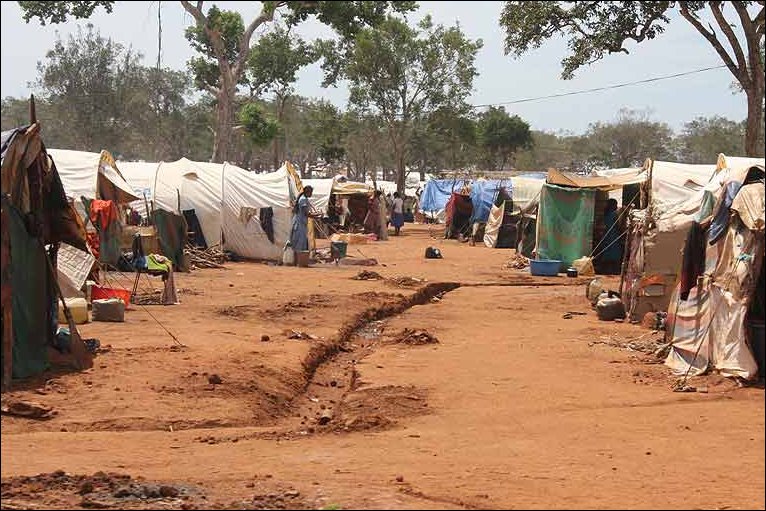
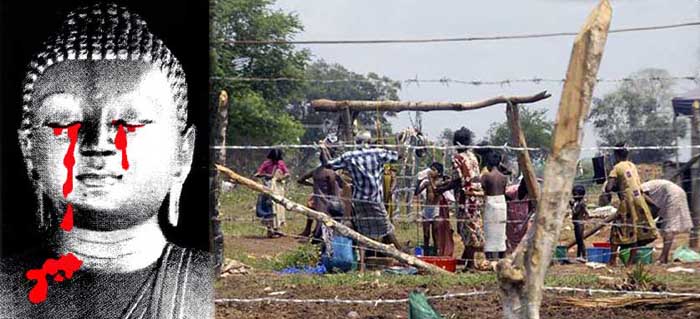
Ponnadai (Golden Shawl) in Colombo whilst 300,000 Eelam
Tamils remain incarcerated in Sri Lankan concentration
camps...
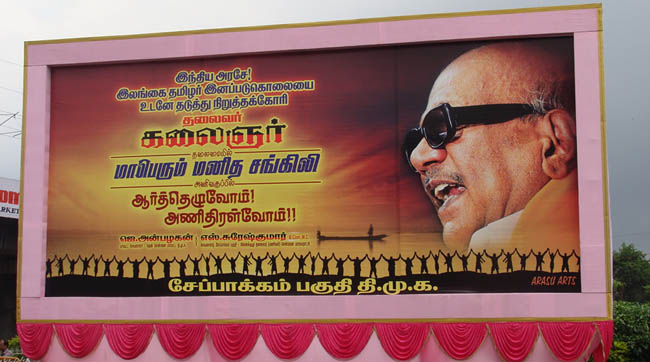
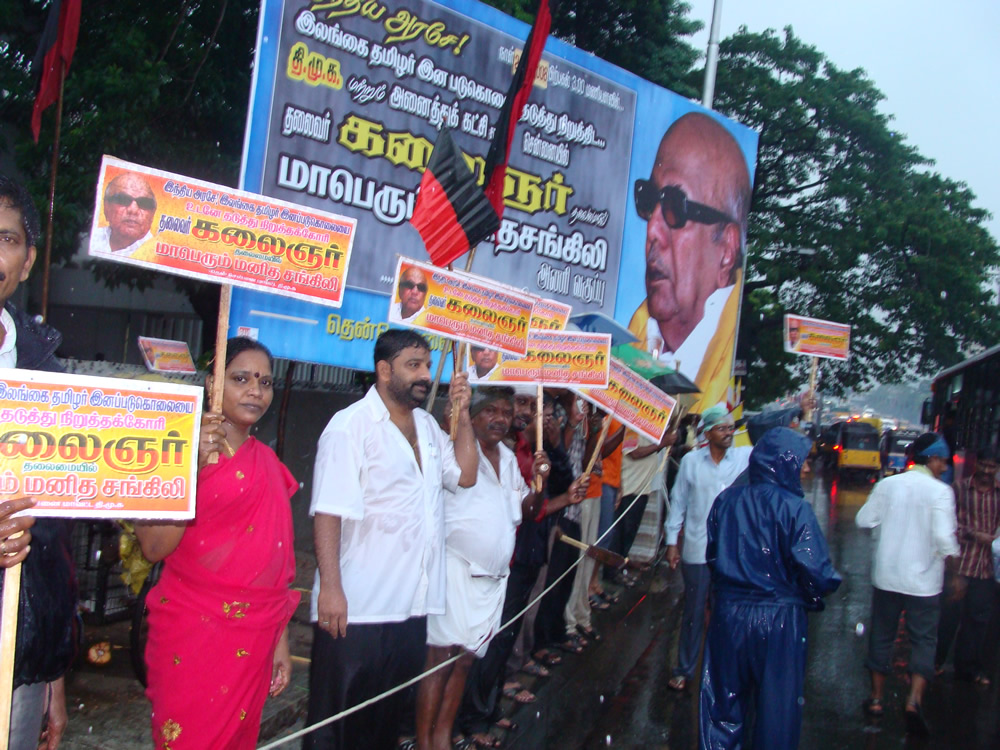
அன்று...
"இந்திய அரசே, தமிழர்
இனப்படுகோலை உடனே தடுத்து!"
Chennai, 23 October 2008 -
கொட்டும் மழையில் மக்களை முட்டாளாக்கிய தலைவன்
அறிமுகம் - Introduction
Kandiah Mylvaganam
Blogspot "Dear Friends and relatives of Late
Mr.K.Mylvaganam: We are developing a blog site in memory of
the Late Mr.K.Mylvaganam.Please be good enough to write a
few words about him in your own view and sent to this email: [email protected] "
Indictment Against Sri Lanka - the
Charge is Ethnic Cleansing
2. "No word ever dies. What we are saying today may not be accepted by the
people at this moment. But our propaganda is not in vain. Our words remain
embedded among the people... One who doesn't dream and can't make others dream, can
never become a revolutionary..."Ideologue
of Maoist movement,
Charu Mazumdar quoted in
Sumanta Banerjee - India's Simmering Revolution: The Naxalite Uprising,
25 years ago in 1984
3. "Some analyse and ask why. Others
dream and ask: why not?... I am a dreamer..." Anon,
with apologies to Robert F Kennedy and George Bernard
Shaw
4."...March
separately, but strike together! Agree only how to strike,
whom to strike, and when to strike. Such an agreement can be
concluded even with the devil himself..." Leon Trotsky
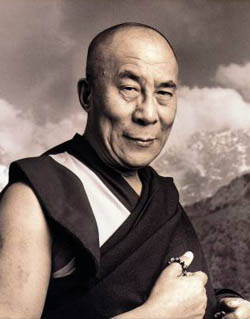
“The Dalai Lama’s administration acknowledged today that it had received $1.7
million a year in the 1960s from the Central Intelligence Agency, but denied
reports that the Tibetan leader benefited personally from an annual subsidy of
$180,000. The money allocated for the resistance movement was spent on training
volunteers and paying for guerrilla operations against the Chinese, the Tibetan
government-in-exile said in a statement. It added that the subsidy earmarked for
the Dalai Lama was spent on setting up offices in Geneva and New York and on
international lobbying. The Dalai Lama, 63, a revered spiritual leader both in
his Himalayan homeland and in Western nations, fled Tibet in 1959 after a failed
uprising against a Chinese military occupation, which began in 1950. The
decade-long covert program to support the Tibetan independence movement was part
of the CIA’s worldwide effort to undermine Communist governments, particularly
in the Soviet Union and China.”
more
Tamil Nation Library:
International Relations
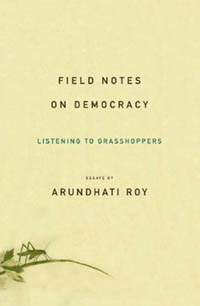
Field Notes on Democracy: Listening to GrasshoppersKashmir - a
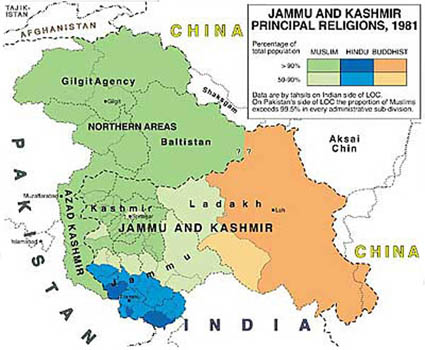
Revolt Against Indian Military Terror "... there are
many ways for the Indian state to continue to hold on to
Kashmir. It could do what it does best. Wait. And hope the
peoples' energy will dissipate in the absence of a concrete
plan. It could try and fracture the fragile coalition that
is emerging. It could extinguish this nonviolent uprising
and reinvite armed militancy. It could increase the number
of troops from half a million to a whole million. A few
strategic massacres, a couple of targeted assassinations,
some disappearances, and a massive round of arrests should
do the trick for a few more years... The Indian military occupation of Kashmir makes monsters of us all. It allows
Hindu chauvinists to target and victimize Muslims in India by holding them
hostage to the freedom struggle being waged by Muslims in Kashmir. It's all
being stirred into a poisonous brew and administered intravenously, straight
into our bloodstream. At the heart of it all is a moral question. Does any government have the right
to take away peoples' liberty with military force? "
more
India: An Empire in Denial
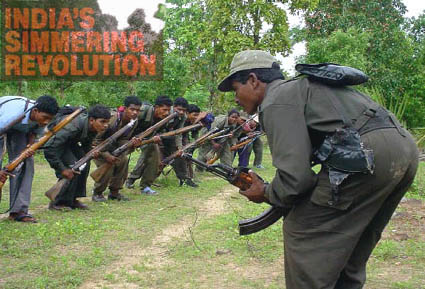
Maoist fighters training in Chattisgarh in central India in 2006
1.India's Counter Insurgency:
A Civil War“Instead of addressing the source of the problem, the Indian state has decided
to launch a military offensive: kill the poor and not
the poverty, seems to be the implicit slogan of the Indian government... The millionaire population in India grew in 2007 by 22.6 per cent from the
previous year, which is higher than in any other country in the world... (but) 80 percent of households have no access to safe drinking water. 77 percent spend
less than 20 rupees a day. Only 42 percent houses have electricity. 93 percent
of the work force (58 percent in agricultural sector) is of informal workers,
lacking any employment security, work security and social security. Close to 60
percent of rural households are effectively landless. Between 1997 and 2007,
182,936 farmers committed suicide.” more
2.
'Calling Maoists 'mad
Islamists' is not going to help'"The PM has said
that the
Maoist movement is India's gravest security threat . It
suits the Maoists and the government to inflate the danger.
It makes it easier to come down with all the force of your
security apparatus. The inflation is mischievous . And it
creates a situation in which every other kind of resistance
is subsumed into this mad binary and dealt with as such. The
most frightening thing is the criminalisation of the
democratic space. You're either with us or against us. Bush
is back, if he ever went away. "
more
Reflection
"...Do we not deliberately obfuscate when we
conflate the two words 'terrorism' and 'violence'? ... The Cuban revolution was
violent but it was not terrorism. The war against Hitler was violent but it was
not terrorism...What are the circumstances in which a people ruled by an alien
people may lawfully
resort to arms to resist that alien rule and secure freedom? Or is it that
there are no circumstances in which a people ruled by an alien people may
lawfully resort to arms to to liberate themselves? And if all resort to
violence to secure political ends is not terrorism, then
what is terrorism?
..to categorise a combatant in an armed conflict as a 'terrorist' organisation
and seek to punish it on that basis, is to.. assert in effect that a
people ruled by an alien people may not, as a last resort, lawfully
resort to arms to resist that alien rule and secure freedom... "
Nadesan Satyendra On Terrorism & Liberation,
22 September 2006
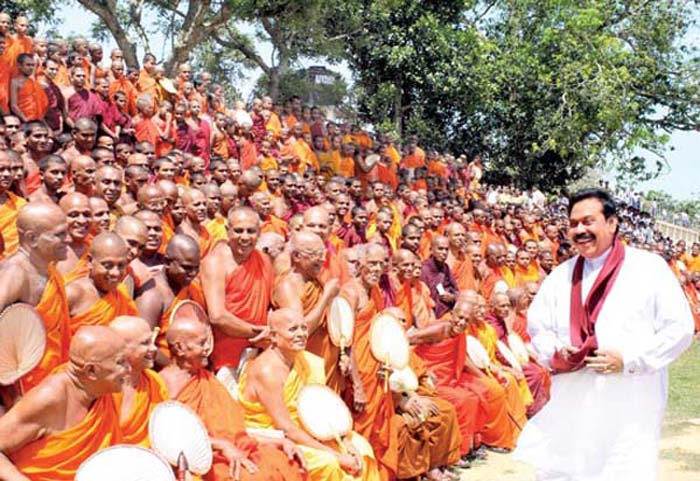
'The
President in 'Conversation' - " Pictured is the
Sri Lanka President Mahinda Rajapaksa 'in conversation' with the Maha Sangha
after offering Ata Pirikara at the alms giving
in Hambantota. as a 'token of gratitude to
the country for defeating terrorism.'"Sri Lanka Government Controlled Ceylon Daily
News, 6 October 2009"
அங்கே சிரிப்பவர்கள் சிரிக்க்கெட்டும் அது
ஆணவச்சிரிப்பு...
வயிறு வலிக்க
சிரிப்பவர்கள் ம்னிதஜாதி, வயிறு எரிய
சிரிப்பவர்கள்
மிருகஜாதி
Tamils - a Nation without a State: Norway
Nationalism turns all Tamils into
family says
anthropologist, Stine Bruland S�rensen "The conflict in Sri Lanka has scattered
parents, children, aunts, uncles, and cousins who used
to lived together to diverse places in Europe, Asia,
Canada, the United States, and Australia. The struggle
for a Tamil nation helps the families create a new home
for themselves in the diaspora, says Stine Bruland
S�rensen in her Master's thesis at Oslo University' Nationalism turns all Tamils into
family... 'Having a sense of nationalism toward the home
country is an important part of a creating a home, in order
to feel at home or settled in, It is vital for the parents
to create a family history and continuity of their own life
in the diaspora. Traditionally, a sense of belonging in the
family has provided Tamils with a sense of belonging among
relatives, village, and a place in the cosmos. Akam, or
inclusion into these levels of belonging is considered to be
the ideal that maintains the cosmological order and ensures
a persons wellbeing. Being situated outside of these
affiliations is thereby feared and considered to bring about
tosam (loneliness) and puram (chaos)' "
more
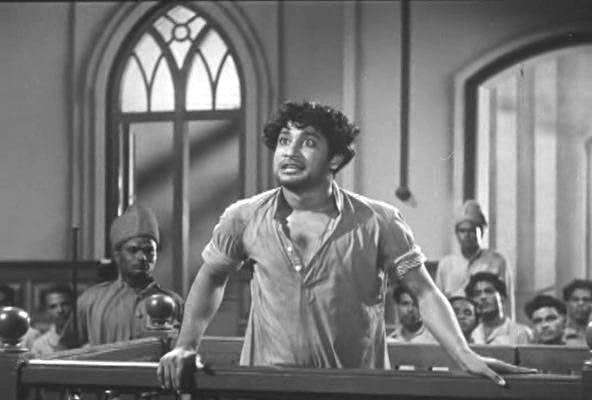
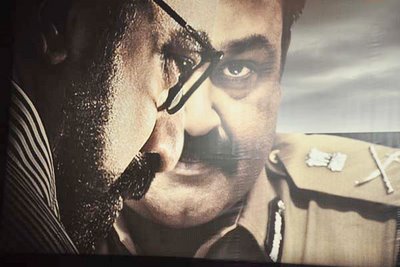
1. Rethinking Transnational Cinema:
The Case of Tamil Cinema, Vijay Devadas" - Tamil cinema
articulates, mobilises and dismantles the hegemonic
conception of the postcolonial Indian nation as fostered by
the apparatus of the nation-state through an appeal to a
sense of Tamil cultural nationalism that is antagonistic to
the national imaginary. The point here on the intimacy of
the media form to the production and circulation of a sense
of (antagonistic) cultural nationalism is precise: Tamil
cinema, in particular, has had a central role in the
postcolonial re-construction of the nation and national
identity..."
more
"
'உன்னைப்போல் ஒருவன்'. தீவிரவாதம், போராளிகள் இப்படிப்பட்ட நல்ல
வார்த்தைகள் அடிக்கடி வந்து வந்து போகின்றன... தீவிரவாதம் வேறு பயங்கரவாதம்
வேறு என்பதனை தாங்கள் நண்கு அறிந்தவர்கள்.... மனிதன் மனிதனாக வாழ
மேலும் சுதந்திரமாக வாழ அவனுக்கு விடுதலை நிச்சம் வேண்டும் என்பதில்
யாருக்கும் மாற்றுக் கருத்து இருக்க முடியாது... மற்றவர்கள் பிரச்சனையை தொடுவதற்குமுன் நாம் சரியா என்பதனை
பரிசோதித்துப்பார்துக்கொள்வது நல்லது.
" more
. " The Sri
Lankan press has been accused of war mongering,
racism and ignorance about the country's ethnic
conflict.....It
is as if all journalistic norms have been discarded
in the frenzy to criminalise Tamils and to create an
atmosphere of suspicion bordering on paranoia...''
Centre
for Policy Alternatives (CPA)










 அங்கே சிரிப்பவர்கள் சிரிக்க்கெட்டும் அது
ஆணவச்சிரிப்பு...
வயிறு வலிக்க
சிரிப்பவர்கள் ம்னிதஜாதி, வயிறு எரிய
சிரிப்பவர்கள்
மிருகஜாதி
அங்கே சிரிப்பவர்கள் சிரிக்க்கெட்டும் அது
ஆணவச்சிரிப்பு...
வயிறு வலிக்க
சிரிப்பவர்கள் ம்னிதஜாதி, வயிறு எரிய
சிரிப்பவர்கள்
மிருகஜாதி