CONTENTS OF
THIS SECTION
Last updated
19/07/08 |
|
Stop arms supply to Sri Lanka: CPI urges Indian government,
27 March 2008 |
|
Stop Indian military aid to Sri Lanka: Tamil Nadu leaders,
13 March 2008 |
|
The
Re-emergence of the Tamil Nadu Factor in India’s
Sri Lanka Policy - M. Mayilvaganan,
Institute for Defence Studies and Analyses,
India, November 2007 "...There is a view in
Tamil Nadu that India played a role in the
division of LTTE, primarily to weaken the LTTE
and force it to come to the negotiating table.
But people in Tamil Nadu would rather argue that
any effort by India aimed at trouncing the LTTE
at the moment, when the government of Sri Lanka
has launched its full-scale offensive against
the LTTE, would be construed as inimical to the
interests of the Tamils and give rise to
spontaneous opposition by the people of Tamil
Nadu..."
more |
|
India admits
helping Sri Lanka Navy, 17 January 2007 |
|
தமிழீழ
பிரச்சினையின் தீர்வுக்கான சர்வதேசப் பாதை திறப்பு
"தமிழக"த்தில்தான் உள்ளது - M.Thirunavakarasu,
Jaffna 18 November 2007 |
|
Eelam
and Indian Security: Need for policy
alternatives
- Ampalam, 16 November 2007 |
|
India's
intelligence support for Sri Lanka in the waters
of the Tamil homeland |
|
RAW
recalls Colombo officer suspected of ‘Chinese
Connection’, 7 October 2007 |
|
|
|
India opposes Sri Lanka buying
arms from China, Pakistan,
31 May 2007 |
|
India
Circumspect about LTTE air strike whilst UK
All-Party Parliamentary group on Sri Lanka
rushes in...28 March
2007 |
|
B.Raman,
South Asia Analysis Group (SAAG) On LTTE's Air Capability,
March/April 2007 |
|
LTTE Air
Raid on Katunayake Air Base - Col R Hariharan
26 March 2007
together with a
Response by Jayantha Gnanakone, USA |
|
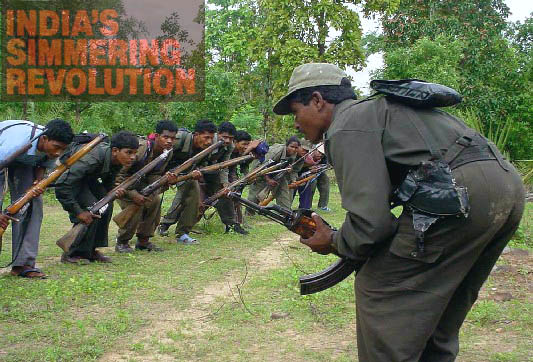
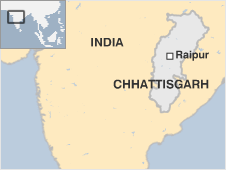
Maoist Naxalite attacks in Central India, 16
March 2007 |
|
India must stop assistance to Sri Lankan government:
Thamil Chelven, 29 January 2007 |
|
LTTE Avoids Battle of Attrition in the East -
B.Raman, 22 January 2007 |
|
"Cool reception" in Delhi for Rajapakse, 30
November 2006 |
|
Indian Re-Thinking of the Sri
Lankan Situation - Thomas Webber, 25 November 2006 |
| Sri
Lanka: Marginalisation of India, B.Raman, 26 November 2006 |
|
India seeks solution with a united and
federal Sri Lanka - Indian Prime Minister Manmohan Singh, 16 November 2006 |
|
India trains Sri Lanka jet bomber support crews, 15 November 2006 |
|
The Way Ahead in Sri Lanka: Summary of an interaction organised by
Observer Research Foundation,Chennai 2 September 2006, published November 2006 |
|
US Senate backs India nuclear deal, November 2006
"Energy-hungry India needs nuclear power.
The US Senate has overwhelmingly voted to pass a controversial deal to share
civilian nuclear technology with India. Under the deal, which was proposed
more than a year ago, India must allow international inspections of its
nuclear facilities. US President George W Bush hailed the move as bringing
India into the "nuclear non-proliferation mainstream". However, the bill
still has to clear a number of hurdles before it becomes law and is
implemented. One condition would require India to fully and actively
participate in efforts to contain Iran's nuclear programme."
more |
|
Atharma Bhumi? - Sanmuga Suntharam, 6 October
2006 |
|
Father
Chandiravarman Sinnathurai on Palacingham Pragmatism , 1 July 2006 |
|
India and the LTTE: Out of the Box -
K.T.Kumaran, 29 June 2006 |
|
RAW aiding paramilitary recruitment in India, 25
June 2006 |
|
LTTE strategies for War &
Peace - Col.Hari Haran, 19 June 2006 |
|
LTTE faces
difficulties without anti aircraft support - B.Raman, 18 June 2006 |
|
Implications of EU Ban on LTTE - Indian Point of
View, June 2006 |
|
Indian General
Raghavan(retd) advises International Community on its Role June 2006 |
Shaping Security in India’s Maritime East:
Role of Andaman & Nicobar - Commander
G S Khurana - March 2006 |
|
B.Raman Additional Secretary (retd),
Cabinet Secretariat, Govt. of India on Pakistan Intelligence Base in Colombo ,
June 2004 |
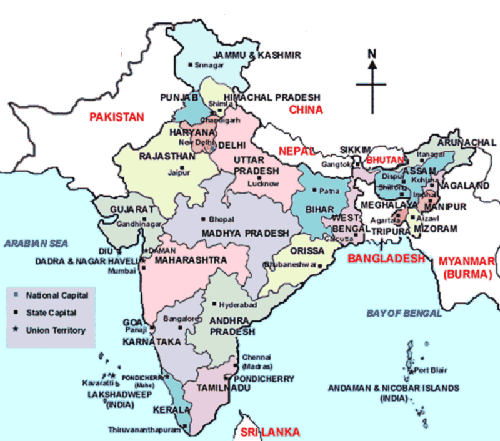
| Map of India |
|
Tamils: A Trans State
Nation - Tamil Nadu |
|
Rajiv Gandhi's War
Crimes |
|

துயிலும்
இல்லம், Jaffna
includes those Eelam Tamils who died in the
war against the Indian Army in 1987-1989 |
|
Rajiv Gandhi Assassination - the Verdict, 1999 |
|
Need for a Balanced Assessment Arjun Katoch, November 1991 "It is not the purpose of this article to defend or glorify the LTTE. But
one man's terrorist, they say is another's freedom fighter. Currently, despite the fuss
over the Sri Lankan army and LTTE fighting together in 1989 to eliminate the TNA, the LTTE
are no doubt the Indian and the Sri Lankan governments' terrorists, but with equal
certainty they are, and always have been, the Sri Lankan Tamil's freedom fighters. To conclude with the basic rationale behind the LTTE's continued presence
against heavy odds - and to repeat a point made earlier - the whole struggle is for land.
The logic behind the LTTE's popularity in the Tamil speaking part of Sri Lanka is that
they are trying to protect what they consider to be their homeland from incursions by
settlers from the south, under the protection of the Sri Lankan army. This fact must be
understood for a balanced assessment of their durability and influence in the Sri Lanka
imbroglio." |
|
Two Voices but One Policy - 20 Years Later,
11 November 2004 |
| Memorandum
submitted by Tamil Professionals in London
to Indian Prime Minister Atal Behari Vajpayee, 22 May 2000 |
| Shiv Sena and MDMK support LTTE,
10 May 2000 |
|
Military Training as a Tool of
Peacetime Military Diplomacy - B. S. Sachar, 1 September 1993 "..The
paper looks at the manner of conduct of military training cooperation by
India and examines the areas where this cooperation can be suitably enhanced
by adopting a more concerted approach to peacetime military diplomacy, in
consonance with foreign policy..." |
|
Glimpse of the LTTE's Fortunes in Sri Lanka: Designs on India - Major General
Asfir Karim, 1993
|
|
The Challenge of Ethnic Conflict
India: The Dilemmas of Diversity - Robert L Hardgrave, 1993 |
|
India's Major General Mehta on the Pooneryn Debacle, 1993 |
|
India's Vietnam: the IPKF in Sri Lanka,
Rediffusion, March 2000 |
| Related
Offsite Links |
|
Indian
Peace Keeping Mission in Sri Lanka - India's Vietnam - Pakistan Military
Consortium |
|
Research and Analysis Wing - New Delhi, India |
| Indian Armed Forces |
| Institute of Peace & Conflict |
|
Observer
Research Foundation |
|
ORF
Institute of Security Studies |
| |
|
|
India &
the Tamil Eelam Freedom Struggle |
"Inter-state relations
are not governed by the logic of morality. They were and they remain an amoral phenomenon.."
Jyotindra Nath Dixit
Indian High Commissioner in Sri Lanka 1985 /89, Foreign Secretary in
1991/94 and National Security Adviser to the Prime Minister of India
2004/05,
speaking in Switzerland,
February 1998
"...The fundamental premise of India's strategic
policies can be simply stated - and that is to deny any
intermediary role to extra regional powers in the
affairs of South Asia..."Nadesan Satyendra in Sri Sabaratnam Memorial Lecture, 9
May 1987
|
|
The Record...
Defend Eelam
Tamils
Arm & Train Eelam Tamils
Coerce Eelam Tamils
Secure
New Delhi's Geo Political Goals
Attack Eelam Tamils
Rajiv Gandhi's War Crimes
Indian Army
Forced to Leave Tamil Eelam
Rajiv Gandhi Assassination
Ban Liberation Tigers of Tamil
Eelam
Calibrated Approach
Covert Support to Sri Lanka
Failed Efforts of Eelam Tamils to stem New Delhi's
Attack
New Delhi's 'Expansionism'
Map of India
|
Defending Eelam Tamils.... 1981 - 1985 |
| August
1984 |
Statement by Mr.R.C.Bandare, Indian Expert Member
of Sub Commission at UN Sub
Commission on the Prevention of Discrimination and Protection of
Minorities, August 1984
"...mounting violence continues to work against the search for a
political solution because it leads to a hardening of positions, the building up of
resentment, the depending of the feeling of insecurity, of fear and desperation, of being
victims of a concerted plan of genocide. Above all, violence imparts a surrealistic
character to political negotiations and in turn induces
loss of faith in peaceful methods. Mr Chairman, today, not only is the
right to life of Tamils threatened
but their property, their way of life is jeopardised. They are made to suffer
political
and civic disabilities. Draconian laws and
emergency regulations reinforce and react with
harsh counter-measures taken by the Government to severely curtail their human rights and
effectively block out any access to remedies..."
|
| |
India's Annexure "C" Proposals, December 1983 "
Subsequent to
Genocide'83 and the death of
thousands of Tamils at the hands of Sinhala mobs in July/August 1983, Indian Prime
Minister Indira Gandhi sent her representative, Mr. G. Parthasarathy for discussions with
Sri Lanka. The proposals which emerged as a result of discussions between the Government
of India and the Government of Sri Lanka during August/November 1983 were presented as
Annexure "C" to a statement submitted by President Jayawardene to the
All Party
Conference on the 1st of December 1983. However, the Government of Sri Lanka failed to
adopt these Proposals at the All Party Conference discussions which commenced in December
1983 and ended inconclusively in December 1984.
|
| 8 March
1985 |
Statement by Dr.G.S.Dhillon, Leader of Indian Delegation
at
UN Commission on Human Rights 1985
"Over the past few months the everyday lives of
ordinary citizens, particularly in the North and East,
have been
adversely affected Following the imposition of a security zone in
the Jaffna Peninsula, movement of persons and vehicles has been
restricted. There are reports of an acute shortage of food and
thousands of fisherfolk have been unable to
ply their trade and are now without any means of livelihood.
Recent reports of organised
colonisation of the Northern and Eastern Provinces have added to the friction between
different communities. Such an atmosphere, Mr.Chairman, breeds hate and fear - and these
are emotions which are not conducive to creating the atmosphere necessary for finding a
solution to the problem."
|
Arming & Training Eelam
Tamils... 1981-1985 |
| |
Shri V.P. Singh, former Prime Minister of India, deposition
before the Jain Commission, 5 November 1996
".....the first batch of training of the militants was done in
1983 under the Congress Government. I will not disclose the place
where this training was held. It was done in Chakarata. Then in
1984, weapons were given to all the militant groups. The Camps were
set up in Tamil Nadu. Monetary help was given. MGR in his statement
in the Assembly of Tamil Nadu said that Rs.4 crores aid has been
given by him to Tamil Militant Groups. The other information I will
not give to the Commission, which I believe is sensitive..."
|
| |
Jain Comission Report - Growth of Sri Lankan
Tamil Militancy in Tamil Nadu
Chapter I - Phase I (1981-1986),
August 1997
"7.11 A first hand assessment of the camps being organised by
the various Sri Lankan militant groups is found in the enclosure
to a letter (DO C.11. No. 1634/M dated Feb. 8, 1986, referred to
in details at page 111) written by Shri K. Mohan Das, the then
Director General of Police (Intelligence), Tamil Nadu to the
Chief Secretary, Tamil Nadu.
The enclosure gives detailed particulars including strength,
weaponry and type of training in the camps, which, according to
Shri Mohandas were being organised by the militant groups
themselves.
The information contained in the enclosure is summarised as
follows:-
LTTE:- 6 camps were reported being conducted by the LTTE in
the districts of Anna (1 camp), Thanjavur West (1 camp),
Thanjavur East (1 camp), Salem (1 camp, Madurai (1 camp) and
Ramnad ( 1 camp) of Tamil Nadu. The total strength of trainees in
these camps was reported to be 495 cadres including 90 female
Tigers. The camp at Sirumalai (Anna district) was the only camp
were all the 90 female Tigers were getting training along with 40
male Tigers. The largest LTTE camp was located at Kumbarapatti in
Salem district. The training comprised Arms Training, swimming,
boat driving and physical training. The camps were equipped with
transport facilities such as Jeeps, Vans, motor cycles etc.
TELO:- Five camps organised by Tamil Eelam Liberation
Organisation (TELO) were reported to be running in the districts
of Ramnad ( 3 camps) and Salem ( 2 camps). There were totally 233
male cadres undergoing this training which comprised Physical
Training, Arms training, swimming and boat driving.
EROS:- Eelam Revolutionary Organisers (EROS) were reported to
be conducting two camps in the districts of Ramnad and Pasumpon
Muthuramalingam districts. There were 8 male trainees in these
camps which were imparting Physical Training and Arms Training.
EPRLF: The Eelam Peoples Revolutionary Liberation Front
(EPRLF) was reported to be conducting 7 training camps in the
districts of Thanjavur West (3 camps), South Arcot (2 camps),
Trichy ( 1 camp) and Ramnad (1 camp) with a total strength of 73
male trainees who were being trained in Guerilla warfare,
Physical Training and Arms training. These camps reportedly
possessed sophisticated weapons such as Light Machine -guns as
well as transport vehicles.
PLOT:- The Peoples Liberation Organisation for Tamil Eelam
(PLOT) was conducting training in 18 camps located in the
districts of Thanjavur West (11 camps), Pudukottai ( 4 camps),
Tirunelvei East (2 camps) and Thanjavur East (1 camp). Totally
2236 cadres in addition to 94 female cadres were getting trained
in these camps. The camps possessed transport facilities, boats
and some weapons. Predominantly, the training comprised guerrilla
warfare and also Physical Training, Swimming and Boat Driving.
Other assorted organisations were also conducting their camps
in Tamil Nadu such as Tamil Eelam Army (TEA) - 2 camps, 31
trainees; TELA -Kanthan group ( 3 camps, 117 trainees);
TELA-Rajan group (1 camp, 10 trainees); TENA (1 camp, 25
trainees); RELO ( 1 camp, 13 trainees; NLFT (1 camp, 2 trainees);
ECRP (1 camp, 4 trainees) and TMPP ( 1 camp, 6 trainees).
As per the enclosure, the total number of trainees of various
Sri Lankan Tamil militant organisations in their training camps
being conducted in Tamil Nadu was 3179 males and 184 females,
totally 3363 cadres..."
|
| |
Ninan Koshy on India's Consistently Unsound Policy, Indian Express,
30 December 1997
"The...assertion by the
Jain Commission
that the training given to militant groups on Indian soil was
essentially for self-defence is an exercise in self- deception. The
type of training and weaponry belies such claims. By 1984, Sri
Lankan Tamil groups abroad had the impression that at an
opportune time, if the need arose, India would intervene
militarily...During the
Sub-Commission meeting in Geneva in August 1985 the leader of a
Tamil group who was a participant at the
Thimpu talks chaired by Foreign Secretary Romesh Bhandari told
me about attitudes there: ``We have fixed Punjab, we have fixed
Assam, now we will fix you bloody Tamils''. Those were the heady
days of `quick-fix' under Rajiv. ..""
more
|
| |
Jyotindra Nath
Dixit, Indian High Commissioner in Sri Lanka 1985
/89, Foreign Secretary in 1991/94 and
National Security Adviser to the Prime Minister of India
2004/05 on India's Role in the Struggle for Tamil Eelam
- Speaking in Switzerland, February 1998
"(In the 1980s) ...Tamil militancy received support
both from Tamil Nadu and from the Central Government not only as a
response to the Sri Lankan Government's military assertiveness
against Sri Lankan Tamils, but also as a response to Jayawardene's
concrete and expanded military and intelligence cooperation with the
United States, Israel and Pakistan. ...The assessment was that these
presences would pose a strategic threat to India and they would
encourage fissiparous movements in the southern states of
India. .. a process which could have found encouragement from
Pakistan and the US, given India's experience regarding their
policies in relation to Kashmir and the Punjab....
In normal terms of international law and principles
of neutrality was Mrs. Gandhi correct in giving political and
material support to Sri Lankan Tamils ? The answer is obvious and
has to be in the negative. ..Had Sri Lanka been several hundred
miles away from the coast of India this approach could have been
adopted. But Sri Lanka was only 18 miles away from Tamil Nadu.
Inter-state relations are not governed by the logic of
morality. They were and they remain an amoral phenomenon.
Unilateral adherence to morality, if it affects your very existence
as a united country, may be admired as an idealistic principle. But
it is neither desirable nor practical if another country
deliberately indulges in policies which are amoral and at the same
time pose threat to you. So practical corrective action has indeed
to be taken..."
|
Coercing Eelam Tamils... 1985-1987 |
| |
Murad Khan,
Baluchistan People's Liberation Front, speaking to Raymond Noat - Interview quoted in
Tariq Ali's 'Can Pakistan Survive?'...
" The Shah of Iran
once said that in his role as the gendarme of the region he had two main
weapons for dealing with the revolutionary threat which existed in the
region. First, was direct intervention. This was applied in the case of Oman
in 1973, and also in the case of Baluchistan when the Shah provided
armaments and military finance for the Pakistani state's repression in the
area. The second
weapon was internal subversion of the national
liberation movements among the various
nationalities. This method was applied in Kurdistan. The
goal, ofcourse, was to allow the national movement to
grow in a particular direction in order to defeat it. The case of Kurdistan was classic.
The Shah said openly that the Kurdistan operation was
relatively cheap for him. With 30 million dollars the
job was done. He simply supported Kurdistan to
destroy it...."
|
| |
Nadesan Satyendra
in Tamil Eelam, Kurds & Bhutan, July 1985
"..The Shah of Iran was never willing to go as far as he could
have for the Kurds, even in terms of weapon supplies. Kurdish
nationalism in Iraq was in the long run, disadvantageous for Iran.
For Iran the Kurdish fight against the Iraqis was a convenient way
of keeping Iran's chief rival off balance...When it became
advantageous for Iran to come to an agreement with Iraq, the Kurds
were abandoned... ...Let us learn from the experience of the
Kurds of Iraq. It is said that fools fail to learn even from
their own experience. Wise men learn from the experience of others.
We are a people - not without wisdom..."
|
| |
The Thimpu Talks, July/August 1985
"In June 1985, at the initiative of the Government of India, the
leaders of the Tamil militant movements which were engaged in an
armed struggle for the establishment of a separate Tamil Eelam state
in the North and East of the island of Sri Lanka, agreed to a
'cease-fire' as a preliminary step to creating a 'congenial'
atmosphere for 'peace talks'. Phase I of the talks commenced on 8th
July 1985 and concluded on 13th July 1985. Phase II of the talks
commenced on 12th August 1985 and concluded on 17th August 1985. The
venue of the talks was Thimpu, the capital city of the Himalayan
kingdom of Bhutan..."
|
| |
The 1986 "December 19th Proposals"
Subsequent to the collapse of the
Thimpu Talks in August
1985, and the
September 1985 Working paper, the Indian External
Affairs State Minister Natwar Singh and Home, Pensions, Personnel and Public Grievances
Minister P. Chidambaram visited Sri Lanka in 1986 to discuss a political solution along
the lines of "Eastern Province Trifurcation proposals" of J. R. Jayawardene.
India suggested that the predominantly Sinhala Amparai electorate be delinked from Eastern
Province and attached to Uva Province. The proposals which emerged as a result of
discussions of this Indian delegation (who left Sri Lanka on December 19, 1986) came to be
known as the "December 19th Proposals".
|
| |
Nadesan Satyendra in Sri Sabaratnam Memorial Lecture, 9
May 1987
"...The fundamental premise of India's strategic
policies can be simply stated - and that is to deny any
intermediary role to extra regional powers in the
affairs of South Asia. Mr.Onkar Marwah, Joint Director,
Asian Centre, Graduate Institute of International
Studies, Geneva, has commented:
"...It is feared for instance that in addition to
facilities in Pakistan, the United States may also be in
search of bases for its Rapid Deployment Force in Sri
Lanka (Trincomalee naval installations) and Bangaladesh
(Chittagong harbour). Such moves, if undertaken, would
create immediate negative repercussions in India-Sri
Lanka and India-Bangladesh relations. India's hardened
reactions would complicate the settlement of the Tamil
problem in Sri Lanka..."
|
| |
Romesh Bhandari, Indian Foreign Secretary on
'Settlement by Persuasion' in the Hindustan Times, 11 July
1987
"..No one individual formulates and decides (Indian) Government's
policy. There are always in depth internal consultations and
discussions. There are several inputs before decisions are taken.
Any individual entrusted with a task does so on directions... it has
been made clear at all times to Sri Lanka, that India's national
compulsions cannot also be set aside. In any final reckoning these
would prevail over anything else...Besides being a neighbour and
non-aligned, Sri Lanka is a small island strategically located in
the Indian Ocean having harbours on which some outsiders have their
eyes. Continued strife and disorder only weakens Sri Lanka and makes
itself vulnerable to foreign interference, presence and even
involvement. None of these can suit India..."
more
|
| |
"I have never mistrusted India" - Sri Lanka
President J.R.Jayawardene, 15 September 1987
" Having in mind LTTE's
assertion that India did not come to Sri Lanka to help the Tamils
but came to further her own geo political interests I once asked
the Indian High Commissioner,
Mr.Dixit: “Who benefited
by the Peace Accord?”. After a good look around, Mr. Dixit asked:
“Do you want the truth?”, and when I replied “Yes”, he said “India
stands to gain most, not Sri Lanka, nor the Tamils.” To the question
that I put to Mr.Dixit “Why did India take such an interest in the
Tamil problem?”, his reply was: “ The shores of India and Sri Lanka
are only 21 miles apart. If they were 500 miles apart, India would
not have bothered that much.” Dixit went on to say: “New Delhi is
concerned only with the interests of India; not the welfare of the
Tamils. If the interest of India and the Tamils are the same, we
help each other. India’s first priority is to further her own
interests.”"
|
Securing its geo political goal... 1987 |
| |
Indo Sri Lanka Agreement, July 1987 |
| |
The Indo Sri Lanka Accord
- Nadesan Satyendra, 15 January 1988
"...It would seem that a spectre is haunting both the Sri Lankan
Government and the Indian Government - the spectre of Tamil
nationalism. And in their fear they are hugging each other. And if
both the Indian Government and the Sri Lankan Government are hugging
each other in fear of the political force of Tamil nationalism, then
clearly it is a political force which must be reckoned with...."
|
| |
Political Committee of LTTE on Collapse of Indo Sri Lanka Accord,30
April 1988
.....Tamil
interests are the price paid by India to Jayawardene's
regime to secure its consent for the Accord. By
subordinating the Island to India's regional supremacy,
Jayawardene has secured from India what his imperialist
masters couldn't provide, that is the total suppression
of the Tamil liberation movement and the permanent
subjugation of the Tamils under Sinhala hegemony...
The Government of India
is only concerned with securing and consolidating her
national interests and geopolitical gains. Whereas, Sri
Lanka is only concerned with the liquidation of the
Tiger movement and the destruction of the Tamil freedom
struggle. The people of Tamil Eelam have become the
unfortunate victims of these different designs of a
regional super-power and a racist State.....Utilizing
the Tamil struggle to interfere in the conflict,
encouraging the Tamil resistance movement to bring
pressure on Jayawardene, taking the responsibility upon
itself to mediate on behalf of the Tamils, the
Government of India has finally achieved her strategic
interests but the Tamils are left alienated, helpless,
defenceless, with their fundamental political problems
unresolved"
|
| |
13th Amendment to Sri Lanka Constitution - Devolution or Comic
Opera? - Nadesan Satyendra 1988
In August 1987, the Sri Lankan Parliament passed the 13th Amendment to
the Constitution and the ancillary Provincial Councils Act. The Sri Lankan Government
declared that the enactment of these laws fulfilled the promises made in the Accord, to
'devolve power' on the Tamil people.
The Liberation Tigers of Tamil Eelam, who (together with the other armed
resistance groups) were recognized as 'combatants' by the Accord and who had emerged as
the leaders of the Tamil national struggle, rejected the basic provisions of the 13th
Amendment.
This Article examines the basic provisions of
the 13th Amendment and the Provincial Councils Act and inquires whether these laws
devolved power on the Tamil people or whether these laws amount to a constitutional script
for a comic opera, with power continuing to reside in a Sinhala dominated Central
government within the frame of an unitary constitution.
|
Attacking Eelam Tamils... 1987-1990 |
| |
India's Defence of its Role,
July 1987
"..As hundreds of innocent civilians - both Sinhala and Tamil - perish in the escalating
violence in Sri Lanka, the question of a negotiated political settlement becomes ever more
difficult. Any such complex issue is inevitably rendered more complicated by the
malevolent
involvement of external powers. This involvement does unfortunately have long-term
implications for India's security..."
|
| |
Indian army intervention at invitation of Sinhala Sri
Lanka government , 15 July 1990
"The violence in the north) was also stopped by the Indian Peace
Keeping Force. (Though the fighting went on) no Sinhalese, no
Sinhalese soldiers were killed... only the Indian soldiers and the
LTTE (were killed). Yes, (I had to invite a foreign army to do this
on our sovereign soil)... I was doing what so many Sinhala kings had
done in the past in similar circumstances." - ex President
Jayawardene, Interview with Mervyn de Silva, Lanka Guardian, 15 July
1990
|
| |
Rajiv Gandhi's War Crimes....
Rajiv
Gandhi's War Crimes
நெற்றிக்கண் திறப்பினும் குற்றம் குற்றமே...
உண்மைகள் ஒருபோதும் உறங்குவதில்லை, உறங்கவும்
கூடா...
Truth never sleeps - and it should not.... |
| |
Eduardo Marino's report
to International Alert, October - November 1987
"..Over a period of about 20 days
(from 9 October 1987) , the Indian Army's direct attack
on LTTE positions, and defence from LTTE attacks, was
coupled with the Indian Army's attack and storming of
still unevacuated Jaffna - and many villages and
settlements throughout the Peninsula - with widespread
(insofar as territory), indiscriminate (insofar as
targeting) and sustained (insofar as intensity)
artillery shelling. Only less widespread, sustained and
indiscriminate, there was air-strafing from helicopter
as well. It was not "cross-fire" that incidentally
killed thousands of civilians. The majority were killed
inside their houses and huts under shelling, or were
shot at random by the roads and on the streets.
A large number of people were 'only'
wounded - yet, many of them died in the absence of
medical care, especially under the 24-hour curfew over a
period of about one month, to mid-November. It was a
combination of firing and shelling... that made an
estimated 175,000 families ( that is, about 500,000
people) refugees into the Jaffna outskirts within days.
.."
|
| |
A.P.Venkateshwaran, Former Indian
Foreign Secretary, at World Federation of Tamils Conference,
30 April 1988
"...I feel ashamed that under the
Indo Sri Lanka agreement, our forces are fighting with Tamils
whom they went to protect. Speaking of blaming the Indian soldiers,
soldiers are meant to carry out commands, but I do believe that in
our own Indian ethics, soldiers are not merely meant to carry out
commands because if you look at the history and the mythology and
the culture which is Indian, we do not believe in the British
concept of the Charge of the Light Brigade, 'Theirs is not to reason
why, theirs is but to do and die'. No.
We are
supposed to fight only for Dharma. Only if the war is righteous
shall you fight it. By that yardstick I believe that the Indian
Government had betrayed its own culture and ethics. For the first
time, it had sent out soldiers to fight when there was no cause for
us to fight..."
|
| |
Annai Poopathy's fast for freedom, 19 March 1998
"On
19th March 1988 Poopathy amma took up residence at Mahmangam Pillayar
temple and commenced her fast. She put forward two demands: (1)An
immediate unconditional ceasefire between the LTTE and the IPKF.
(2)Unconditional talks between the LTTE and the Indian government..."
|
| |
A.P.Venkateshwaran, former Indian Foreign
Secretary at Eelam Tamils Solidarity Conference Madurai,
7 March 1999
"...Rajiv Gandhi foolishly
sent Indian troops to Sri Lanka in 1987. But what happened
afterwards was the
Tamils were
persecuted by the troops. The war against the Tamils was
escalated. When the then Sri Lankan President J.R. Jayawardene met
Rajiv Gandhi in 1986 during the SAARC conference in Bangalore,
Jayawardene warned Rajiv that it would be dangerous for India if a
separate state were be established in Eelam and then extended by
merging Tamil Nadu. Rajiv easily believed what Jayawardene said. I
talked to Rajiv immediately after JR left, as it was not proper for
me to interfere in the talks between the two heads of state. I said
that things would never develop the way Jayawardene's predicted.
'This was rubbish. Tamil Nadu will never be separated from India -
and I like to say this as a Tamil'. But he, Rajiv believed what the
head of a neighbouring state said than what I said. The Indian Peace
Keeping Force was sent to Sri Lanka within a few months after I
resigned my job. You all know what happened after this -
thousands of Eelam Tamils were killed and more than 1500 Indian
troops lost their lives. In the end, the Indian troops were asked to
withdraw from Sri Lanka without any gratitude...
|
Indian Army Forced to leave Tamil Eelam... 1989/1990 |
| |
Sri Lanka President Premadasa's
Failed attempt to Replace the 1987 Indo Sri Lanka Accord, March 1989 |
| |
Texts of Letters Exchanged
between Sri Lanka President Premadasa and Indian Prime Minister Rajiv Gandhi,
June/July 1989 |
| |
IPKF
Withdrawal - Joint Communiques, July/September 1989
"The President of Sri Lanka has requested the Prime Minister
of India to recommence the withdrawal of the IPKF.
The withdrawal will recommence on the 29th of July 1989. The
High Commissioner of India reiterated the invitation of the
Minister of External Affairs of the Government of India to the
Foreign Minister of the Government of Sri Lanka to visit India
to discuss the time schedule for the withdrawal of the remaining
IPKF contingent in Sri Lanka. The invitation has been accepted.
This opportunity will be used to review the implementation of
the Indo-Sri Lanka Agreement. During the visit of the delegation
of the question of cessation of all offensive military operation
by the IPKF and the safety and security of all communities in
North Eastern Province of Sri Lanka will also be discussed. "
|
| |
A Post Mortem on the Indian Intervention -
Voice of the Tigers Bulletin, 12 February 1990
"...The military annihilation of the LTTE, the
Indian policy planners assumed, would put an end to the Tamil
nationalist movement and the Tamil demand for self-determination.
Such a measure will certainly placate the chauvinistic Sinhala
ruling elite whose support India needed to implement the Accord and
to secure India's geo-political aspiration..."
|
| |
India &
the Struggle for Tamil Eelam, 15 March 1992
"New Delhis track record shows that it regards the Eelam Tamils as an
expendable commodity - expendable in the altar of its own self interest. The simple
political reality is that New Delhi gave limited support to the Tamil militant movement
before 1987 with the principal intent of destabilising Colombo and making Colombo move
towards New Delhi. The Annexures to the 1987 Accord are proof enough of that intent.
"
|
New Delhi bans Liberation Tigers of Tamil Eelam 1992 |
| |
India Bans LTTE -1992/2006
...
"The Subjects Committee of the Indian Congress
unanimously adopted, on April 14 1992 the Political
Resolution with a significant amendment which called on
the Union Government to impose a ban on the Liberation
Tigers.
The amendment for banning LTTE for its alleged
involvement in the Rajiv Gandhi assassination was moved
by Rajya Sabha member Mr. S. Ahlualia.The amendment said
that it had now become more or less clear that the LTTE
was involved in the brutal assassination of Rajiv
Gandhi. It also called for steps to extradite those
responsible for perpetrating the crime. Prime Minister
Narasimha Rao said in answer to questions by the press
that the Government will consider all aspects before
taking a decision on imposing a ban.
The Indian Government could have imposed a ban on the
LTTE without going through the process of obtaining a
resolution at the Congress sessions. This lends credence
to the view that the Indian government’s actions were
politically motivated. Furthermore, the resolution of
the ruling Congress party, by judging the LTTE in
advance of the court proceedings, prejudiced the
fairness of any such court proceedings. Any ‘trial’ may
well become a mere show trial. In the event,
however, the ban was imposed on the ground that the LTTE
was engaged in activities in Tamil Nadu which threatened
the territorial integrity of India."
|
| |
Indian
Ban & Sri Lanka Offensive, Nadesan Satyendra 1992
The initial question is: what did India gain by the ban? Or to put it in another way:
what was it that India could do after the ban, which it could not do before the ban?
During the past several months the Indian intelligence services and the CBI, not to
mention the SIT, and a host of other agencies, have been more than energetic in their hunt
for LTTE bases and safe houses in Tamil Nadu even without any order making the LTTE an
unlawful association. New Delhi knows that such an order will do little to add to the
capabilities of these agencies to carry out their task.
Again, New Delhi also knows that 'banning' militancy may serve to send it further
underground. In 1978, Sri Lanka banned the Liberation Tigers under the then Emergency
Regulations. Five years later, in 1983, the Tigers were banned again under Sri Lanka's
notorious Prevention of Terrorism Act. 14 years after the first ban
and nine years after the second, Tamil militancy has not weakened
but has grown stronger. A movement which consisted of tens has grown
to an army of thousands. ..
Why then the ban? Two reasons are apparent. The ban will make it a crime for any one in
Tamil Nadu to openly, repeat, openly, support the LTTE. Though such support may now go
underground, New Delhi appears to take the view that a ban will nevertheless help to stem
open mass mobilisation of separatist sentiment in Tamil Nadu.
But that is not all. There is a further reason. New Delhi seeks to use the ban to
deny recognition in the international arena to the Liberation Tigers - recognition, that
is, without India having a say in the matter. New Delhi seeks to exercise a veto on any
attempt to settle the Tamil - Sri Lanka conflict, which sidelines India and its interests
- interests which are quite plainly spelt out in the annexures to the Indo Sri Lanka 1987
Agreement.
High Commissioner Jha was almost viceregal in an interview reported in Sri Lanka Sunday
Times of May 17. He said: ''The ban is a symbolic gesture with international
ramifications. India's ban on the LTTE has confronted Sri Lanka with hard political
realities which it will have to take into consideration before embarking on a political
solution.'' ...
New Delhi's foreign policy has stayed constant during these past several years. Non
alignment, was after all, a way of increasing India's influence in a bipolar world. Today,
New Delhi stays steadfast to its objective of increasing Indian influence and aspires to
become one of the big powers of the emerging multipolar world. High Commissioner Jha gave
some indication of this when he said:
''There are many items that have come straightaway into focus almost
simultaneously... Question of India-US relationship, non proliferation treaty, now this
rocket deal, the breaking of the Soviet Union, India's entry into West Asia peace talks,
the India-Pakistan relations and the Afghanistan situation.''
|
| |
Rajiv Gandhi - Secret Trial,
Nadesan Satyendra, 1992
"We have said it before and we say it again. The assassination of ex
Prime Minister Rajiv Gandhi was wrong. It was wrong not because ex Prime Minister Rajiv
Gandhi was innocent of responsibility for
the war
crimes committed during the IPKF occupation of Tamil Eelam.... The assassination of ex
Prime Minister Rajiv Gandhi was wrong because it was wrong to punish without charge and
without trial according to law. But, if that was wrong, then, as we have said before, and we say again,
the Chengalpattu trial (of those accused of Rajiv Gandhi's assassination) is worse
because the Indian Government seeks to give the appearance of punishing through a
trial which, in truth, is no trial at all..."
|
| |
Rajiv Gandhi - the Verdict -
Nadesan Satyendra 1999
"....Procedural law is civilisation's substitute for private vengeance and self-help. 'Lynch
law' is no law. Was the procedure adopted to establish the guilt of the
accused in the Rajiv Gandhi assassination a fair one?... As an appellate court, the Indian Supreme Court was
bound by the facts as determined by the trial court, unless it was shown that the trial
court had erred in law. But were the findings of fact by the trial judge vitiated
by the draconian provisions of the law itself - the TADA provisions, which
in the assessment of Amnesty
International, contravened 'several international standards for
fair trial, including the holding of trials in camera and the non-disclosure of the
identity of witnesses'?... What reliance may be placed on the results of a police investigation
which was subject to immense political pressure to 'deliver the goods'? What weight
may be placed on the testimony of witnesses whose identities were not disclosed - secret
witnesses who stood behind a screen to answer Counsel's queries? What value may be placed
on confessions secured in a police dominated environment where torture was 'routine'?
"
|
| |
India Renews
Ban on LTTE - Indian Home Ministry Notification, 20 May 2004
"...The activities of the Liberation Tigers of Tamil Eelam (LTTE)
continues to pose threat to, and are detrimental to, the sovereignty
and territorial integrity of India as also public order...The LTTE's
objective for a separate homeland (Tamil Eelam) for all Tamils
threatens the sovereignty and territorial integrity of India, and
amounts to ceding a part of the territory of India and thus fall
within the ambit of an unlawful activity...The turbulence in Sri
Lanka is being exploited by pro-LTTE forces to draw support for the
LTTE and its cause by taking out processions, demonstrations etc, in
spite of the ban, causing disquiet and threat to the security of
Tamilnadu..."
|
| |
Removal of POTO, should be followed by removal of
ban on LTTE- Interview
with Revathi , 27 September 2004 |
New Delhi's Calibrated Approach... |
| |
Nadesan Satyendra on India & US - the
Calibrated Approach, 15 April 1992
"...The ending of the cold war signalled also the end of India’s
‘non aligned’ world role. Today, instead of seeking to lead the non
aligned in a bipolar world, New Delhi aspires to be a ‘big power’
in the emerging multi polar world - with, possibly, a permanent
seat in the UN Security Council as the badge of that status. India
is going for gold... Clearly, the US would be willing to offer
‘carrots’, provided New Delhi ‘plays ball’. The bottom line is that
India should not become too big for its shoes. Closer economic, and
military ties may help to create what is called euphemistically, an
‘atmosphere of mutual confidence - but which in truth will all be a
part of the ‘calibrated approach’. Amongst other matters, the US
will also be looking for movement from India in respect of the vexed
‘intellectual property rights’ question and informed sources say
that the dialogue with the Bush administration will start in May in
Delhi. Again, the proposed joint naval exercises and additional
IMF/World Bank support in the coming months will further enable the
two countries to explore, in a measured, ‘calibrated’ way, areas of
cooperation..."more
|
| |
Nadesan Satyendra on Good Bye Non Alignment,
15 October 1993
"Indian Foreign Secretary J.N.Dixit delivering a
lecture on September 16, at the influential German Society
for Foreign Policy bade official good bye to non alignment
and rolled out the welcome mat for the 'emerging multi polar
world.' Speaking at Bonn he said: ''We are
diversifying our relations....At the same time Dixit sought to put a brave face on
Delhi's internal problems by saying: ''We are committed
to the pluralistic society despite challenges. Ethnicity cannot be the basis of democratic state.''
Foreign Secretary Dixit's assertion that 'ethnicity' and
'democracy' were somehow mutually exclusive exposed the
soft under belly of Delhi's foreign policy. It was this
myopic approach to
struggles for self determination
on the Indian sub continent which may have served to
encourage the very outside 'pressures' which Delhi
appeared to resent. Coincidentally, in the same week
that Foreign Secretary Dixit was speaking at Bonn, the
new US Asst. Secretary State for South Asia Affairs,
Robin Raphel, in her first public comments on the region
after being confirmed as head of the newly created South
Asian Bureau, said in Washington: ''While India and
Pakistan have got to talk seriously about Kashmir any
solution there that is going to stick and is going to be
meaningful must take into account what the Kashmiri
people want for their political future''.."
|
| |
Nadesan Satyendra in the
Buddha Smiled, 12 June 1998
"...New Delhi will need to recognise
that, in the end, the strength of India will lie not in
the nuclear bomb, but in its peoples. The economy of
India will not grow unless the different peoples of
India are energised to work together to achieve their
shared aspirations. Here, the failure of successive
Indian governments to openly recognise that India is a
multi-national state, has served to weaken the Indian
Union rather than strengthen it. The European Union
(established albeit, after two World Wars), may serve as
a pointer to that which may have to be achieved in the
Indian region in the years to come. There
may be a need for India to recognise the force of reason
in that which
Pramatha Chauduri
declared more than 70 years ago...
Nuclear capability will not guarantee unity. The
nuclear bomb did not prevent the disintegration of the
Soviet Union and the emergence of the non-nuclear states
of Latvia, Estonia and Georgia. Peoples speaking
different languages, tracing their roots to different
origins, and living in relatively well defined and
separate geographical areas, do not easily 'melt'. And
in any event, a 'third world' economy will not provide a
large enough 'pot' for the 'melting' to take place.
A people's struggle for freedom is also a nuclear
energy and the
Fourth World is a part of today's enduring political
reality. India may need to adopt a more 'principle
centred' approach towards struggles for self
determination in the Indian region. A myopic
(and amoral) approach, apart from anything else, may
well encourage the very outside 'pressures' which New
Delhi seeks to exclude. And, if
India can grasp this, then, the Buddha may have cause to
truly smile..."
more
|
New Delhi's Covert Support to Sri Lanka's Attack on Eelam Tamils... 1995
- ..... |
| |
Sri Lanka is fighting India’s war, - Sri
Lanka Air Marshal Ranasinghe, 26 February 2001
"At present, we are fighting a war which is not
ours but India's. We are fighting it in our country for India...
India was cleverly engaging the LTTE outside its shores in order to
prevent the militant group from coming to India. Like the Americans,
we should have fought the war in somebody's else's country such as
India, UK, Germany or Canada where funds are being generated for the
LTTE"
|
| |
Lanka owes India a deep debt of gratitude to
India says Sri Lanka Foreign Minister Kadirgamar, 3
March 2001
"Foreign Minister Lakshman Kadirgamar said on Friday that Sri
Lanka owed India a "deep debt of gratitude" for persuading
Britain to include the Liberation Tigers of Tamil Eelam (LTTE)
in its list of banned terrorist organisations. We owe a deep debt of
gratitude to India. Unsolicited by us, Jaswant Singh (External
Affairs Minister) made representations to the British government for
the banning of the LTTE (Liberation Tigers of Tamil Eelam),"
Kadirgamar said, two days after the British government's
announcement of its new anti-terrorism laws. Kadirgamar said he had
taken up the matter with his Indian counterpart, but Singh had told
him that New Delhi had already lobbied London. "That is a
particularly friendly gesture by India," he said..."
|
| |
Natwar Singh, Currently (in 2004) Indian Foreign Minister Brahmin
owned Frontline, 21 December 2002
"....Oslo has been much in the news
on account of the Sri Lanka-LTTE agreement arrived at
some days back. It is the first step and one hopes it
will not have the same fate as the Oslo agreement
between Israel and the Palestinians. A good comparison
is the Northern Island situation. But V. Pirabaharan is
no Gerry Adams. The Congress(I) has made it known that
while we welcome the outcome of the Oslo agreement, we
are unequivocally committed to the territorial integrity
and sovereignty of Sri Lanka. No support for Eelam under
any circumstances. Neither can the Congress(I)
compromise on Pirabaharan's extradition since he has
been named by the Supreme Court as the mastermind behind
the
assassination of Rajiv Gandhi.
Under no circumstances would the Congress(I) agree
to Pirabaharan getting any formal high office or
position in the new set up in the North-East of Sri
Lanka. He remains persona non grata with us. He
invented suicide bombing, if we leave the Kamakazis of
Japan.
The India-Sri
Lanka Agreement that Rajiv Gandhi and J.R.
Jayawardene signed in July 1987, had, broadly speaking,
almost all the elements in the Oslo document. The
LTTE has come to the negotiating table because after
September 11, 2001, their funds have dried and
they can't buy or import any arms..."
|
| |
The RAW Factor in Col.Karuna's Revolt - Sachi Sri Kantha, 1 April
2004
“The Cabinet Secretariat Research and Analysis Wing [RAW],
India's most powerful intelligence agency, is India’s external
intelligence agency. RAW has become an effective instrument of
India's national power, and has assumed a significant role in
formulating India's domestic and foreign policies. RAW has engaged
in disinformation campaigns, espionage and sabotage against Pakistan
and other neighboring countries. RAW has enjoyed the backing of
successive Indian governments in these efforts. Working directly
under the Prime Minister, the structure, rank, pay and perks of the
Research & Analysis Wing are kept secret from Parliament.”
|
| |
Indian
External Affairs Minister Natwar Singh meets Foreign Minister Lakshman
Kadirgamar in New Delhi, 31 May 2004
"... India trains Sri Lankan defence forces and said last October
it would send them equipment, without specifying what type. New
Delhi opposes Tamil rebel demands for a separate state in Sri Lanka,
a policy diplomats feel is aimed at discouraging the myriad of
separatist movements in India..."
|
| |
Keep RAW Agents out of the Tamil
Homeland in Sri Lanka
-
Thanjai Nalankilli in Tamil
Tribune, 1 July 2004
"...A 'peace support'
conference was held in in Oslo, Norway in November 2002... More than
30 countries pledged seventy million US Dollars at the conference.
Notable absentee in the list of donors was India... (However) this
same Indian Government had given or loaned 'at favourable terms' 100
million US Dollars to the Sri Lankan Government, some of which was
used to build army barracks in Tamil areas. The Indian newspaper
Hindu, which is usually pro-Sri Lankan Government, called it
'India's indirect contribution to Sri Lanka's war effort'...Now
India wants to send construction crews to LTTE held Tamil
areas...Indian Government says that.. it would go to LTTE-controlled
areas to provide humanitarian assistance... (the) Reason is
staring at our face. India wants to send its spies (RAW agents and
others) into LTTE areas to identify strategic targets, LTTE camps,
weapons locations and the whereabouts of LTTE commanders and
leaders. Such information would be passed on to the Sri Lankan
military. It is well known that India provides information about
LTTE sea movements to the Sri Lankan Navy.
India will also attempt to recruit spies from among the local
population..."
|
| |
Avtar Singh Bhasin, sometime Director, Historical Division, Indian
External Affairs Ministry in
"India in Sri Lanka – between the Lion and the Tigers",
1 November 2004
" Rajiv Gandhi wished to drive
home the point that the IPKF’s fight in Sri Lanka was for the unity
of India...There is little chance of any change coming about in the
decision making process in the LTTE so long as Prabhakaran heads the
organisation. And there is no chance of his being replaced in his
lifetime.."
|
| |
Tsunami & the Killing of Pirapaharan! - New Delhi's RAW & its Media
Agents, 7 January 2005 |
| |
யாழ்ப்பாணத்தில் 'றோ'வின்
கண்கள்
New Delhi's RAW in Jaffna, 1 April 2005
"தமிழகத்தில்
இருந்து மூட்டைகட்டி வீடு வீடாக துணிகள் விற்பவர்கள் இங்கு களமிறங்கி
யுள்ளனர். இவர்கள் தமிழகத்திலிருந்து விமானம் வழியாக கொழும்புக்கும்
அங்கிருந்து விமானம் வழியாக யாழ் பாணத்துக்கும் வருகின்றனர்.
|
| |
India and the Sri Lankan Peace Process -
Lieutenant General (Retd.) V.R. Raghavan, 10 July 2005
"The role expected from India in the peace process would
be determined primarily by its interest in the security of Sri Lanka and
itself. This could not have been better expressed than by Mr.Kadirgamar. He stated during the
time of fierce battles around Jaffna in the year 2000,
“ Indian policy on such a sensitive
issue as the current situation in Sri Lanka, would have
to take into account the complex issues of domestic and
international concern to India and her interests
regarding its role in Sri Lanka.”
That wise judgment applies equally to the
role India would play in the peace process."
|
| |
Sri Lanka: Taking Stock of
L.T.T.E. - Colonel (Retd) R. Hariharan, formerly of the Intelligence Corps
of the Indian Army, 29 July 2005
"..L.T.T.E. has taken full advantage of the
absence of a force to ensure the ceasefire terms are not
violated by carrying out selective assassinations that could
affect the Sri Lankan Security Force's capability to wage
war effectively. It has also increased its strength and
wartime capability by strengthening its sea and air
capabilities. Thus, it has emerged as the world's first (and
probably only) insurgent force with capability to fight on
land, sea and air. However, the organization is yet to
overcome the damage created by the defection of the
powerful eastern commander Karuna from its ranks. This
will weaken its negotiating strength as the sole
representative of Tamil people in the northeast. It will
also affect its military capability adversely in the east if
and when it has to resort to the military option. Therefore,
it will have to overcome Karuna and his followers before it
can resume negotiations from a position of strength..."
[see also
Pigs are Flying in Batticaloa!- Sachi Sri
Kantha "....
the
entire puppet show is being run by the Indians (UNP, SLFP, JVP- on
the Sinhalese side; Karuna, Anandasangaree and other Tamil
paramilitaries, on the Tamil side). This is an open secret to all in Sri
Lanka. So, now the only game in town is LTTE (Eelam Tamils) vs Indian
tentacles, namely - the
RAW.
Now, RAW has access to any place or any facility in Sri Lanka,
except in LTTE-controlled areas. Karuna cannot be (need not be) in
Sri Lanka. He is only a faceless phantom figure used by the Indians (and
Sinhalese) to break- up the Tamil solidarity, mainly the North and East
bond and linkage..."]
|
| |
A Tribute to a Friend - Ashok Mehta in the
Pioneer, 23 August 2005
"(Government TV Channel)
Rupavahini showed no British or American at the state funeral,
though the representatives of these governments were doubtless
present. Seated on President Kumaratunga's right was Prime
Minister Mahinda Rajapakse. On her left was Indian Defence
Minister Pranab Mukherjee and next to him, Foreign Minister
Natwar Singh. India's representation was a clear message to the
LTTE as well as the international community of Delhi's
solidarity with Colombo... (Kadirgamar) was for active intervention by
India during the
standoff
at the
strategic Elephant Pass in 2000, the turning point in the battle for the
north by Sri Lankan security forces..."
|
| |
Indian Commander visits Vavuniya SLA frontlines, 2 December 2005
"General
Officer Commander-in-Chief of Southern Command Lt. Gen. B.S. Thakker
Thursday visited the Sri Lanka Army (SLA) front lines in Vavuniya and
discussed with SLA Commanders matters related to security."
|
| |
India clawing back to
Sri Lanka's North East - M.R Narayan Swamy, 22 March 2006
"India is slowly, patiently and with a clear agenda finding its
way back into Sri Lanka's North East... .In just a year after
Foreign Secretary Shyam Saran declared in Trincomalee that the
"North East is very close to India's heart", New Delhi is making its
presence felt again...Unlike in the 1980s when it was accused of
covertly arming Tamil guerrillas, India is maintaining a safe
distance from the Liberation Tigers of Tamil Eelam (LTTE), which New
Delhi outlawed in 1992 on charges of killing Gandhi. The objective
this time is to reach out to the predominantly Tamil and Muslim
people of the northeast with development projects, which have the
full backing of the Sri Lankan government..."
|
Failed Efforts of Eelam Tamils |
| |
An Independent Tamil Eelam will be a natural ally of India
-Veluppillai Thangavelu, 6 May 2000
"It is necessary for India at this crucial stage to identify those fundamental Indian
interests that will guarantee the security of its southern flank against Indias
enemies. Only an independent Tamil Eelam will provide such guarantee at all times and
under all circumstances. The Tamil people are the natural allies of India because of the
cultural, religious and historical ties the Tamils have with India. With Tamils of
Tamil Nadu the relationship is that of mother and
childs umbilical cord. India need not entertain fears that an independent
Eelam will fuel secessionist forces in Tamil Nadu..."
|
| |
Caste/Class
Opposition to Tamil Eelam - Prof P. Ramasamy National University of Malaysia, May
2000
"...The
anti-LTTE crusade mounted by the caste/class associations and establishments closely
linked to major magazines like the Frontline are basically below the belt
punchers...Hundreds and thousands of Tamils have been pushed out of the country, killed,
displaced and destroyed in the name of maintaining the synthetic territorial integrity of
an island that has been never united or integrated in the first place. The forces opposed
to Eelam are basically driven by the desire to maintain intact and indeed extend the
hegemony of certain caste/class forces not only in India but also in Sri Lanka.
Democratic and egalitarian social movements having
roots in subaltern and Dravidian philosophies are natural enemies of these conservative
and reactionary forces..."
|
| |
Think, India, Think
- Sanmugam Sabesan,16 January 2004
"...The Sri Lankan Tamils have had political as well as cultural ties with
India, especially South India, which dates backs thousands of years. These
ties continued even after India gained independence from Britain. The
relationship between Sri Lankan Tamils and India peaked during Mrs. Indira
Gandhi’s last tenure, due to her visionary politics and her empathy towards
the plight of the Sri Lankan Tamils.
The relations soured after the Indo Sri Lanka Accord, which was orchestrated
as beneficial to the Sri Lankan Tamils, notwithstanding their
non-participation. The Rajiv Gandhi regime’s failure to comprehend the Sri
Lankan Tamil problem thoroughly and its lack of long-term vision drove hasty
decisions which brought pain and destruction to all parties concerned. India
would have reacted the same way the Sri Lankan Tamils reacted, had a foreign
power imposed an accord like the Indo Sri Lanka Accord on itself. Therefore,
any right-minded person would see the justification behind the Sri Lankan
Tamil struggle against the imposition of the Indo Sri Lanka accord.
Addressing the Remembrance Day event in London recently, the LTTE’s
Political Advisor and Chief Negotiator, Mr. Anton Balasingham,
stated, "We would not act in anyway prejudicial to India’s
geo-political, strategic and economic interests. We want to
establish friendly relations with the Government of India. As such
we are seeking a radical change in India’s attitude.."
|
| |
India’s Sri Lanka Policy: Need
For A Review - Ana Pararajasingham, 13 December 2004
“It appears evident, then, that the Indian State failed to
take the political force and mass appeal of Tamil nationalism
seriously If the violence and perfidy of the Sri Lankan State
had given rise to Tamil nationalism in the first place, the
popular commitment to Eelam was cemented and solidified by the
Tamils bitter experience with the Indian State. The current
policy of supporting the unity and integrity of Sri Lanka while
not addressing the spectre of Tamil nationalism will therefore
have to be construed as a policy not much different from that
which resulted in the physical intervention by India in support
of Colombo. The question that needs to be asked is how realistic
is it for the Indian Government to persist with such a policy
when ground realities have changed significantly during the
intervening period."
|
| |
இந்தியாவும் ஈழத்தமிழர்களின் சுயநிர்ணய
போராட்டமும் –
பேசாப்பொருளை பேச நான் துணிந்தேன் - M.Thanpalasingham,
15 December 2004
"The Tamil people recognise that no people and no country can live alone.
One people’s independence should not impinge on the existence of
another people. The Tamil people of Eelam and the Sinhala people
are linked with India by geography, religion, culture, language and
history. Neither the Tamil nation nor the Sinhala nation
will in any way, be a hindrance or threat to India's unity or to India’s geo political
interests. On the contrary these two nations will serve to
strengthen and advance those interests. The Tamil nation has never
wavered in this desire..."
|
New Delhi's Expansionism... |
| |
Indian Expansion: An Outline - Dev
Nathan, Summer 1989
"In analysing Indian expansionism we must turn to three levels at
which the denial of the rights of nationalities and nations
operates. The first is the centralisation of powers in Delhi and the
economic, political and linguistic - cultural suppression of
non-Hindi nationalities, manifested in the blocking of the paths
of development of the existing or aspiring national
(regional) formations. The second is the denial of the right of secession of the
border nationalities that either wish to secede (Nagas and Mizos)
or do not accept their integration in India (Kashmiris). The third is the whittling down of the sovereignty of the
neighbouring small powers of South Asia. The economic, political, military and cultural-linguistic
processes operate at all three levels simultaneously. For example,
we have existing today, the linguistic suppression of the Tamils,
the military denial of the Sikh demand for federalism, the military
suppression of the Naga movement for succession and the whittling
down of Sri Lanka’s sovereignty - all operating together."
|
| |
For Province Read Nation
-Pramatha Chaudhuri, 1920
"To be united due to outside
pressure and to unite through mutual regard are not the same. Just
as there is a difference between the getting together of five
convicts in a jail and between five free men, so the Congress union
of the various nations of India and tomorrow's link between the
peoples of a free country will be very different. Indian patriotism
will then be built on the foundation of provincial patriotism, not
just in words but in reality."
|
| |
Tamil Nation &
the Unity of India - Nadesan Satyendra, 3 February 2001
"...The growing togetherness of the Tamil people,
is but a step in the growth of a larger unity. We know that in the end, national freedom
can only be secured by a voluntary pooling of sovereignties, in a regional, and ultimately
in a world context. ... we recognize that our future lies with the peoples of
the Indian region and the path of a greater and a larger Indian union is the direction of
that future..."
|
|