|
Liberation, Civil Rights &
Democracy
The Martin Luther King, Jr Memorial Lecture
N Barney Pityana
Principal and Vice Chancellor
University of South Africa
Pretoria, South Africa.
22 January 2004
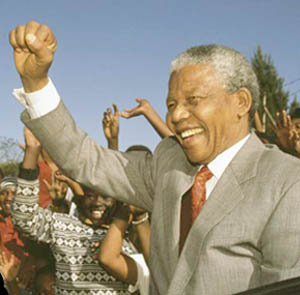 "...Movements for justice
throughout the world and throughout history always
begin with and are sustained by a moral statement, a
value idea. ... It often begins with the notion that
all human beings are equal regardless of race or colour
and that the achievement of equality was in itself the
pursuit of justice. But for such a notion to become
sustainable one must have worked with a theological
tradition, a philosophical construct, a
historical interpretation and a social and
cultural context. Movements are
sustained when there are enough people whose
imagination is captivated by a vision that lifts them
beyond wherever they may be and which encourages them
to have a better idea of themselves and their history
into what they might or could become. In other words an
expansive view
of history and a range of possibilities are
critical to capture the imagination. ... Values are the
essential principles of life without which life would
be without meaning - things would fall apart, and the
centre cannot hold. They are agents of social
cohesion.... in (Martin Luther King's) words
'people cannot devote
themselves to a great cause without finding someone who
becomes the personification of the cause'...
revolutions succeed best and their
objectives achieved and sustained most where the moral
legitimacy resides not just in terms of the end-product
but also in the manner of the execution of the
struggle...if intellectuals do not hold the flag of
analysis high, it is not likely that others will. And
if an analytic understanding of the real historical
choices are not at the forefront of our reasoning, our
moral choices will be defective, and above all our
political strength will be undermined....
" "...Movements for justice
throughout the world and throughout history always
begin with and are sustained by a moral statement, a
value idea. ... It often begins with the notion that
all human beings are equal regardless of race or colour
and that the achievement of equality was in itself the
pursuit of justice. But for such a notion to become
sustainable one must have worked with a theological
tradition, a philosophical construct, a
historical interpretation and a social and
cultural context. Movements are
sustained when there are enough people whose
imagination is captivated by a vision that lifts them
beyond wherever they may be and which encourages them
to have a better idea of themselves and their history
into what they might or could become. In other words an
expansive view
of history and a range of possibilities are
critical to capture the imagination. ... Values are the
essential principles of life without which life would
be without meaning - things would fall apart, and the
centre cannot hold. They are agents of social
cohesion.... in (Martin Luther King's) words
'people cannot devote
themselves to a great cause without finding someone who
becomes the personification of the cause'...
revolutions succeed best and their
objectives achieved and sustained most where the moral
legitimacy resides not just in terms of the end-product
but also in the manner of the execution of the
struggle...if intellectuals do not hold the flag of
analysis high, it is not likely that others will. And
if an analytic understanding of the real historical
choices are not at the forefront of our reasoning, our
moral choices will be defective, and above all our
political strength will be undermined....
"
[ see also Reflections of the Leader - Quotes by
Veluppillai Pirapakaran - Translation by Peter Schalk
and Alvappillai Velupillai, 2007 Published by
Uppasala University, Sweden]
.... Today, we mark the commemoration of
the late Dr Martin Luther King, Jr. We recall his
gigantic contribution as a leader of a movement dedicated
to the transformation of American society. He became, by
dint of fortune and by mark of history, the 'conscience'
of the nation, a moral force that called this nation back
to its founding values. In doing so, of course, he
reinterpreted American history and stretched the
imagination of many of his time to a meaning beyond
anything that might have been foreseeable to the founding
fathers of America. He understood, and he lived the
American dream. He was not dismissive of it but
re-created it in order for it to become the rallying cry
for the values that a modern nation that saw itself as
the first among many could embrace.
But I am here today not because Dr Martin Luther King, Jr
was just an American. He was a world figure. He awakened
Americans to their world responsibilities and the
struggle for civil rights in the United States to the
anti-colonial movement the world over; and that of the
African Americans to the liberation struggles and the
liberation movement in Africa. He was not simply overawed
by walking in the footsteps of the late Chief Albert Luthuli when he accepted the Nobel Peace Prize in
1964, he embraced the honour. In his sermon at Memphis, Tennessee on 3 April
1968, the night before he was assassinated, he talks
about "the masses of the people rising up" and among this
invisible cord that bound people who were in the struggle
for freedom and justice, he recalled the plight of the
victims of apartheid in Johannesburg, South Africa. He
declared that "injustice anywhere is a threat to justice
everywhere" and in a sense became the pioneer of the
anti-apartheid movement in the United States.
Perhaps, James M Washington captures best
Martin Luther King Jr's international dimension when he
observes
"He was indeed a world historical
figure. He captured the spotlight of history precisely
at the right time, and responded with a blueprint for
what America could become if it trusted its democratic
legacy...(1991:xix)"
I begin this address with these remarks
on Martin Luther King Jr because I readily acknowledge
the inspiration of one person in life-changing,
history-making events. He had to take on the mantle of
being the personification of the civil rights struggle
because, in his own words,
"... people cannot devote
themselves to a great cause without finding someone who
becomes the personification of the cause."
South Africans know this only too
well.
The presumed consensus about American values, the common
consciousness crafted by the pioneers of America's
constitutional system, was shattered when Martin Luther
King, Jr demonstrated just how hollow they always were.
He fully understood, in my view, that the negro was never
a participant in the creation of the new America. The
'consensus' collapsed under King's close scrutiny.
As Washington puts it,
"consensus faded when the nation sought
to unpack the contents of its national moral creed"
(1991;xviii).
King appealed to the same values that may
have been intended to exclude their inclusive meaning. He
sought to give effect to the moral code that gave
legitimacy to the American Civil War and the
decolonisation of the New World. For King, the promise of
liberty enshrined in the Constitution was universal. The
point of the civil rights movement was to enforce
fidelity to those ideals.
I omitted at the beginning to mention that the March to
Washington and the "I have a Dream..." Speech invoked
memories of some great moments in our own history.
Notably, the moment Nelson Mandela walked out of prison
accompanied by Winnie Mandela - was itself a moment of
freedom for all South Africans, black and white, who had
suffered for so long under apartheid and white minority
rule. Nelson Mandela himself personifies
that cry for freedom that generations of South Africans
had prayed for and many sacrificed. Leadership that
drives the aspirations of the common people, is one
which, according to Cornel West, is democratic.
Democratic in the sense that it is accountable and draws
its legitimacy from popular support.
In order to assist me to reflect critically on two
towering figures of the civil rights movement in the
United States and the struggle for liberation in South
Africa, I wish to make some comments on the values
underlying the struggle and how these values have shaped
the character of South Africa today and the place of our
country in Africa and the world .
Values in the Struggle
Movements for justice throughout the
world and throughout history always begin with and are
sustained by a moral statement, a value idea. It is an
idea I prefer to find its source in a particular
understanding of human nature. It often begins with the
notion that all human beings are equal regardless of race
or colour and that the achievement of equality was in
itself the pursuit of justice. But for such a notion to
become sustainable one must have worked with a
theological tradition, a philosophical construct, a
historical interpretation and a social and cultural
context. Movements are sustained when there are enough
people whose imagination is captivated by a vision that
lifts them beyond wherever they may be and which
encourages them to have a better idea of themselves and
their history into what they might or could become. In
other words an expansive view of history and a range of
possibilities are critical to capture the imagination.
But values are more than just a strategy for
evangelisation of the unsuspecting into a mass movement.
Values are the essential principles of life without which
life would be without meaning - things would fall apart,
and the centre cannot hold. They are agents of social
cohesion. Values make social interaction possible and
human behaviour predictable.
In his Speech
from the Dock in 1964 ahead of what was generally
expected would be a death sentence, Nelson Mandela
invoked memories from his rural childhood, in his
traditional homestead, and among the village elders. He
recalled the pride with which the elders told of the
history of his people, the stories of gallantry and
courage, the culture of a proud people and the
responsibility this inculcated in him. He ended the
address with this ringing call
"During my lifetime I have dedicated
myself to the struggle of the African people. I have
fought against white domination, and I have fought
against black domination. I have cherished the ideal of
a democratic and free society in which all persons live
together in harmony and with equal opportunities. It is
an ideal which I hope to live for and to achieve. But
if need be, it is an ideal which I am prepared to
die."
The rest, of course, is history. He went
on to serve 27 years in prison. If he had been martyred,
the Speech for the Dock would have inspired the people of
South Africa to even greater heroic and sacrificial
dedication to the eradication of the evil of apartheid.
It gave them a sense of dignity and worth. It gave moral
legitimacy to the demands for justice and it rallied
generations of South Africans to a persistent
denunciation of apartheid until it collapsed. It is a
moral landscape, a sweep of history, equalled perhaps
only by Vaclev Havel in his lifetime and in their
martyrdom, surpassed, by Mahatma Gandhi and Martin Luther
King, Jr.
It came naturally to Martin Luther King, Jr to declare
that civil rights was "a 'moral' issue as old as the
Scriptures and as clear as the American Constitution"
(Cone:199;82), two authoritative guides which,
paradoxically, he shared with the segregationists of his
time. For him , however, they were liberating sources to
which America was to be held accountable.
Values are what remains long after the struggle is won,
the building blocks for the new creation. The values that
formed the bedrock of the struggle become the reference
point that both judges and corrects when power is being
abused, or when corruption is rife.
The Intellectual Tradition
Social movements are given shape, form,
and direction by their thinkers. It is the thinkers who
articulate the "original idea", the "big thought". Often
it is not because it is original in the sense that nobody
has ever thought about it or that is was never capable of
such thought. A movement grabs an idea and elevates it.
So that it does not become a mere passing phase, a
fashionable idea, it brings to bear the analytical
instincts, connects those captivated by it and their
thinking with a series of scattered ideas, pulls them
together.
Every modern idea, draws from previous
ideas and what makes it sound like it is a new idea is
that it is generated from a series of previous notions
which may never have been conceptualised together in the
past in the same way. It is important to understand that
by 'intellectual' we do not just mean a thinker or the
educated elite. Warren French suggests that if
'intellectual' is to serve as a valuable classifying
tool, it must be reserved "for those who have the gift of
abstracting, who are able to perceive the invisible
patterns that permeate the disorder of superficial
appearances" (Bigsby:1969;132).
In all struggles for justice and liberation, the
intellectual foundation is often suggested by the ideas
that see possibilities beyond the norm, thinking outside
the box, as it were; to interrogate received wisdom,
reveal its shortcomings, and to appeal to a greater idea
to overcome it. Criticising a version of WEB du Bois's
notion of a 'talented tenth' Cornel West noted du Bois'
misplaced optimism and his dependence on the capacity of
the educated and cultured classes to lead and guide the
masses. He charges that du Bois was naive in his social
analysis but he later observes that
"Victorian social criticism contains
elements indispensable to future critical thought about
freedom and democracy in the twenty-first century. Most
important, it elevates the role of public intellectuals
who put forward overarching visions and broad analyses
based on a keen sense of history and a subtle grasp of
the way the world is going at present..." (Appiah &
Gates:1999;1970).
Perhaps one needs to explain that there
is a role for intellectuals, and social critics not
just to become part and parcel of the organised force
for change. At times it is as independent commentators
and critical voices that the analytical foresight of
public intellectuals can bring to bear on a movement.
James Baldwin, for example, says that in order to be a
writer "you have to demand the impossible. And I know I
am demanding the impossible. It has to be - but I also
know it has to be done..." (Bigsby:1969;100). It is
that capacity to demand "the impossible" confident that
it can be done, that the courage and insight into the
human condition which intellectuals command, that
social movements can draw inspiration from.
Nonetheless, movements thrive from those within them
who can engage the world of ideas and not be threatened
by it, and learn from it, correct mistakes and enhance
the original ideas in the process.
The intellectual content of social
movements is affected by younger radicals within and
without the movement, scholars and critics and by writers
and other cultural activists. They are the ones who spin
ideas, read the signs of the times, understand human
nature and interpret history. A leader then captures
those ideas, gives them form and shape and elevates them
beyond what they may have been originally intended to
serve. Hence the leadership is never in despair, or
pessimistic but is confident of victory and the
imperatives for change but ensures that sufficient
numbers share that belief to form a surging movement for
change.
Taking these general principles and applying them to the
civil rights movement and to the liberation struggle in
South Africa, one observes that the confidence and the
optimism of the leaders was critical. They ooze the power
of the message.
Martin Luther King, Jr stated confidently
that "I know that this is a righteous cause and that by
being connected to it I am connected with a transcendent
value of right" (Cone:1991;70). The moral claims of the
struggle for justice were always uppermost as King often
quoted the poem "I must be measured by my soul/The mind
is the standard of the man." To the victims of racism and
segregation, King appealed to the sense of innate
humanity that African Americans believed of
themselves:
"We must no longer allow our physical
bondage to enslave our minds. He who feels that he is
nobody eventually becomes nobody. But he who feels that
he is somebody, even though humiliated by external
servitude, achieves a sense of selfhood and dignity
that nothing in all the world can take away"
(Cone:1991;72).
In King, the civil rights movement had
one who dared to dream the impossible and engaged the
resources of American history and Constitution and
galvanised a people who had suffered for too long to
believe that the future held less promise than the past
and the present.
The liberation movement in South Africa was built first
and foremost by African intellectuals, IP ka Seme was a
lawyer at the turn of the century who trained at Columbia
University in the United States and was influenced by the
early civil rights movement.
John Langalibalele Dube (popularly
known as 'uMafukuzela'), the first President of the ANC,
educationist, journalist and pastor also had very strong
links with the American church. It has been noted that
there were seminal American influences on the men who
later became the founding fathers of the ANC. They were
invariably American trained, maintained strong links with
the American thought and drew inspiration from African
American intellectuals like WEB du Bois and Marcus
Garvey, from the black church and the American
Constitution. Booker T Washington and the Tuskegee
Institute, many studied at Lincoln University and the
fledgling black independent church movement, the
Ethiopian churches, was connected to the black church in
the United States. Evidence of this thinking can be
judged from IP ka Seme's famous address which won him
first prize in the Curtis Medal Oration at Columbia
University in 1906. He said
"The brighter day is rising upon
Africa... Yes, regeneration of Africa belongs to this
new and powerful period. By this term regeneration I
wish to be understood to mean the entrance into a new
life embracing the diverse phases of a higher, complex
existence. The basic factor which assures their
regeneration resides in the awakened race
consciousness..." (Meli:1988;25).
ANC leadership often drew from the civil
rights movement in the United States for inspiration and
when Nelson Mandela addressed the NAACP Convention in
1993, he repeatedly referred to "our common struggle".
But in looking forward he restated the purpose of the
struggle:
The historic challenge facing us all is
to ensure that as a result of those elections (the
first democratic elections in 1994), democracy wins,
non-racialism emerges triumphant, nonsexism becomes the
victor, and the people take power into their hands.
(1991:263)
African intellectuals were at the
vanguard of the movement. In their statements the
liberation forces often maintained that no black person
would of their own accord be complicit in their own
oppression and that the policy was predicated on the lack
of regard for the capacity of the African people to
think. The formulation of policy was very methodical,
rhetoric restrained but the determination to succeed was
strong. The end result of the struggle was always kept in
focus, as Oliver Tambo so often stated, as in this
address to the United Nations General Assembly in
1976:
"We will create a South Africa in which
the doors of learning and of culture shall be open to
all. We shall have a South Africa in which the young of
our country shall have access to the best that
humankind has produced, in which they shall be taught
to love their people of all races, to defend the
equality of the people, to honour creative labour, to
uphold the oneness of mankind and to hate untruth,
obscurantism, immorality and avarice..."
(1977:204).
It is widely acknowledged that the
Freedom Charter was the brainchild
of the legendary Prof Z.K. Matthews, one time
Principal of the University College of Fort Hare. It
reflects the best intellectual efforts of the thinkers
among the oppressed, of an all-embracing vision and an
ethical statement of the movement.
Contemporary Challenges
The year 2004 is the one in which both
our societies commemorate two watershed events: 40 years
of the passage of the civil rights legislation in the
United States and 10 years of democracy in South Africa
marking the end of legislated apartheid and white
minority rule. In a sense these events mark the
realisation of the dreams of our leaders and of our
people. In truth they are mere beacons on a journey,
marking a forward movement and no turning back. They also
mark a period where the democratic ideals, ethical
foundations and leadership was to be tested. The
intellectual claims of the movement and its epistemology
will be under critique.
When Brown I overthrew Plessy in the US Supreme Court and
enshrined the principle that separation could never be
equal, it began the process of dismantling the Jim Crow
laws and declared them unconstitutional. It is
significant that many of the cases that enshrined the
principles of equality were tested in admission policies
to schools and universities. Brown II signalled a court
that was gradualist and which sought to defer to local
cultures and traditions. It was precisely those
traditions that Brown I challenged and declared
unconstitutional. In the words of Patricia Sullivan,
Brown II was "a licence to resist." It is interesting to
note that for the next ten years the civil rights
movement consisted of an interplay between mass protests,
court actions and gradual legislative enactment
culminating in the passing of the Civil Rights Act of 1964.
The Civil Rights Act, 1964 declared discrimination and
racial segregation in public amenities, facilities and
employment unconstitutional and authorised the Attorney
General to take federal action to enforce integration. In
the face of a relenting legal system, Martin Luther King,
Jr called attention to the limits of such action.
"A court order can only declare rights"
he argued. "It cannot deliver them. Only when people
themselves begin to act are the rights which are on
paper given life-blood. Only when a people in mass
begin to act are they able to make all these laws real
and meaningful" (Cone:1999;70).
And so the momentum for change was
unstoppable. From desegregation of schools, enforcement
of integration by busing of pupils to schools, and by
challenging discriminatory admission policies in schools,
attention turned to the fact that many black voters were
prevented from exercising their constitutional
rights.
The Voting Rights Act was passed into
law in August 1965 providing for federal supervision of
voter registration practices and protecting the right of
American citizens to cast their vote. The calls to bridge
the racial divide: a nation of two societies - one black,
one white, separate and unequal, could not remain
unheeded. Perhaps, turning W.E.B du Bois' idiom on its head, America
itself was experiencing the problem of double
consciousness:
"... the two-ness - an American, a
negro; two souls, two thoughts, two unreconcilied
strivings; two warring ideals in one dark body, whose
dogged strength alone keeps it from being torn
asunder..." (1994:2).
Democratic South Africa has unashamedly
and demonstrably positioned itself within the broad
canvas of "African renaissance." It is an ideal captured
by Thabo Mbeki's "I am an African..."
speech during the debate to mark the adoption of the new
Constitution in May 1996. Incidentally, these are words
that began IP ka Seme's Columbia University Speech in
1906.
Mahmood Mamdani characterises this
renaisance as an "intellectual rebirth, a reawakening of
the mind" (Makgoba:1999;129). Mbeki himself often appeals
to the African intelligentia world-wide to become the
'vital instruments' in ensuring the transformation the
movement desires and seeks to create. The African
renaissance has been acknowledged to be the driving force
behind the renewal of African unity, in the establishment
of the African Union (2000) and the NEPAD initiative.
The Constitutive Act of the African
Union, 2000 seeks to establish a cohesion of values,
principles and objectives within Africa, so that with a
common African identity, African states can take their
place among the nations of the world with pride and
engage other nations on their own terms and craft the
process towards a better world.
In order to enhance the dignity of the
African people, in order to uphold the sovereignty of
African nations, and in order to increase the prestige of
African leaders in world forums, the African Union has
adopted under its aegis, the programme called A New Partnership for Africa's
Development (NEPAD). NEPAD seeks to present a common
front in dealing with the developed world, in engaging
globalisation and brotherhood, in confronting the
problems of the Continent, and in adopting common
strategies that seek to achieve common development goals,
mutual support and correction in promoting good
governance, peace and prosperity and in confronting
corruption and maladministration.
The African Peer Review Mechanism is
Africa's own system of mutual accountability. It is a
voluntary system by those states that believe that
partnership with like-minded states in pursuit of common
goals will strengthen national cohesion and benefit from
best practices. The primary purpose of the APRM, is to
promote democracy and sound economic practices to the
benefit of the people of the country. To date about 16
countries have voluntarily acceded to this mechanism
thereby submitting themselves to self-monitoring and to
be accountable to their peers. So far NEPAD is fast
becoming a model for African partnership in
development
I have deliberately started our assessment of the extent
to which the ideals of the struggle are finding
expression in the policies and practices of the
democratic South Africa. I wanted to demonstrate that, as
I understand it, a country's foreign policy is only a
manifestation of its domestic imperatives. If the first
principle of the American Constitution is liberty, for
South Africa it is equality. This for obvious reasons.
The South African political system was, since inception,
unashamedly racist, in intent and in practice. The
European settler community's designs were conquests and
exclusion and hardly ever partnership and sharing of the
resources.
The racist ideology of white supremacy
was widely appropriated to give effect to policies of
plunder and repression. There was hardly any counter in
law and the constitution. The courts were there merely to
give effect to the will of the white racist minority
legislature in which the black majority had no place. In
that system black people were conceptually invisible and
nameless. Liberation becomes the determination to assert
being and dignity and presence which spells one's
humanity.
Human consciousness to use James Baldwin's famous idiom, "it's not a
matter of acceptance or tolerance. We've got to sit down
and rebuild this house." (Bigsby:1969;101). West asserts
that "The most effective and enduring black responses to
invisibility and namelessness are those forms of
individual and collective black resistance predicated on
a deep and abiding black love" (1999;1976). What he
appears to call love is commitment to people and a
sacrificial giving of oneself, prophetic thought and
action.
Social and political organisation at home is guided by
the Constitution (1996). The Preamble states that the
purpose of the Constitution is to "Lay the foundations
for a democratic and open society in which government is
based on the will of the people and every citizen is
equally protected by law..." In this the Constitution
makes a connection between the peoples' aspirations which
formed the basis of the liberation struggle and the new
South Africa. In another respect also, the new
Constitution makes that connection. Section 1 of the
Constitution asserts that South Africa is unitary,
democratic republic founded on the values of "human
dignity, the achievement of equality and the advancement
of human rights and freedoms..." Once again consistency
with the ethical claims of the liberation struggle is
easy to detect.
Even more has been done in South Africa to advance the
democratic credentials of the system. Personal liberties
and individual ideals are allowed full expression as per
a justiciable Bill of Rights, described as "the
cornerstone of democracy." The judicial system is
independent. Within a short 10 years the judiciary,
especially the Constitutional Court, has established the
integrity of the courts and in groundbreaking judgments
in matters like the death penalty, various forms of
equality, the limits of state power etc has interpreted
the Constitution, laid the foundations for an enduring
system of constitutionalism and set the tone for an open
and democratic society based on the ideals of human
dignity, equality and freedom.
The judiciary is assisted by a variety of
independent constitutional bodies like the Human Rights
Commission, the Electoral Commission and others whose
mission is to bring the immediacy of constitutional
protection to the people. The South African Constitution
represents not only the antithesis of the apartheid past
of our country but also a shared vision of all the people
of the country whatever their past role in whatever
political system then prevailed.
It is now ten years since the democratic system, and the
rights-based constitutional order were adopted. The
harder question is to determine how well South Africa has
done not only in giving effect to the Constitution but
also in living up to the promises of the liberation
struggle. Inevitably comparisons abound as we approach
the 10th anniversary of democracy in our country. Survey
after survey has found that a growing number of South
Africans are more confident about the future under a
democratic government than they were before. South Africa
acknowledges that the lives of many people have vastly
improved in the 10 years of democracy. Whereas when the
democratic government assumed office in 1994 the economic
outlook was very poor, today South Africa is acknowledged
to have a very stable economy with an improving
competitive index and better social cohesion. Inflation,
for example, has been managed down from 15% to 6%. A
sterling effort has been made to reduce dependency on
debt. Quality of life judged by the number of people with
access to education, homeownership, clean water,
electricity, transport system etc, more and more South
Africans have enjoyed a better life.
And yet serious social problems persist. Unemployment
remains a challenge to government. Programmes and schemes
have been introduced to create employment and
employability, especially among young South Africans.
South Africa remains an unequal society with the gap
between the rich and the poor increasing. Although income
levels have increased, there are still too many South
Africans, unemployed and living in dire poverty. The
state, however, has introduced programmes of state
assistance for the poor especially child allowance,
disability and free health care for children and mothers
with young children.
But, there are certain areas of life where South Africa
does not score so well. First, South Africans always
refer to the levels of crime, the fact that too many
people live in fear often in their homes or when they are
about their legitimate business. Many of the crimes are
violent and brutal like murder, rape, car-jacking, and
corruption. It must however be acknowledged that although
the levels of crime are unacceptably high, much has been
done to improve policing, to put more resources into
crime prevention, to improve of the system of
administration of justice and, to address the problem of
impunity.
Second, HIV/AIDS has remained a very
divisive issue in public life. The government has not
dealt with this matter with as much urgency as it
deserved but public education, availability of condoms,
efforts to limit new infections and the spread of the
disease, research and, now, a commitment to treatment,
have cost the government about R7,5bn in this year's
budget. A very ambitious plan to roll out universal
treatment for those living with HIV/AIDs was announced
recently. The impact of HIV/AIDS on society is
staggering. A growing number of young people,
economically active, the pall of death in many
communities, robs South Africa of her vibrancy and the
economy of its much needed economic actors. It has been
said that the cost of apartheid on the people of South
Africa is incalculable and the dividends of democracy are
elusive.
Third, racial inequality and discrimination prevails.
South Africans today speak less directly about racism
than they would have done under apartheid. This is not
because there is any less racism in society. It is
because the language of society is tolerance, human
rights and reconciliation. It is also because systems
have been put in place to investigate and prevent racism.
The duty to create a society free of racism remains.
Justice and equality across the race divide remain a
challenge.
Frantz Fanon
commenting on post-independence Algeria, observes that
"independence has brought moral compensation to colonised
peoples, and has established their dignity." He goes on
to say, "But they have not yet had time to elaborate a
society, or to build up and affirm values..." (1977:81).
In seeking to understand our society, one is tempted to
seek recourse to Fanon. When one contemplates the
violence and other pathologies prevalent in our
societies, one despairs. As a matter of fact, 300 years
of a system of deliberate alienation of whole peoples is
not going to wear away consciousness that easily.
Violence is a response of despair and of hopelessness to
those who have not yet reclaimed their humanity. Fanon,
moreover points out that the process of nation-building
and of entrenching values becomes the responsibility of
those who consider themselves part of the new society,
whose values affirm their humanity and whose dignity is
assured.
This is hard to make out because one always believed that
the struggle itself was instilling particular values and
morality on those of us who engaged in the struggle. It
is however also the case that much was done in the name
of the struggle that has legitimised forms of living and
entitlements that today generate the negative instincts
manifest in some behaviours.
We cannot completely absolve ourselves
from responsibility. We cannot make a renewed effort to
build a new society and assert new values. West
(1999:1980) could be referring to some of the ghetto
mentality prevalent in some of our townships when he says
that we must understand that the multiple forms of social
pathologies are forms of societal decay and reminders
that liberation is not an event but progressive. A more
complex understanding points to the fact that in the
midst of despair and alienations, therein lies hope of a
better future.
Democracy, it may be surmised, is not
a state of being but a way of growing into
being.
Martin Luther King, Jr predicted in 1964 "that the United
States might have a negro President within 25 years..."
He confessed that he was "optimistic about the future"
(Cone:1999;87). In more contemporary assessments of
American life, analysts like James Cone boldly assert
that America "is a nightmare for the poor of every race."
Both West and Cone believe that central to the failure to
fulfill the dream Martin Luther King, Jr asserted so
confidently, is the centrality of the race question. It
is not without significance to an interested observer
that even today Americans are still debating matters one
thought had been settled by Brown. The US Courts are
still being confronted with suits challenging or seeking
clarification on the application of affirmative action in
admissions to universities. In Texas, California and
Michigan, in the face of an assault on affirmative action
by the courts instigated by white interest groups, the
lack of representation of black and Hispanic students at
universities has led to universities adopting special
measures to attract more minority students.
The debate about affirmative action or percentage plans,
I am aware, accepts that higher education can best be
enriched by ensuring that the learning environment is "as
diverse as this nation" (Judge Powell in Bakke). One
would have thought that in circumstances where, as some
reports suggest, colleges are experiencing a dwindling
enrolment of black males as too many are getting caught
up in problems like drugs or populate the prisons of this
nation, a compensatory measure to encourage and advance
those from that social stratum who wish to undertake
academic studies or skills training, becomes a public
policy imperative. Otherwise King's optimistic prediction
of 40 years ago will simply become another unfulfilled
dream.
Conclusion
My thesis in this address has been that
revolutions succeed best and their objectives achieved
and sustained most where the moral legitimacy resides not
just in terms of the end-product but also in the manner
of the execution of the struggle. So conceived,
revolutions benefit from transformational leadership, and
the values underlying the movement are defensible and
lasting. I have also stated, however, that the values of
the movement often judge it when it seeks to implement
its programme.
Two thoughts spring to mind as to what makes for the
building of the new society that Frantz Fanon refers to.
The first must surely be the capacity of the nation to
conduct its public debates. In such debates the nation
examines its shortcomings and strengths, surveys the
infinite variety of views and opinions and treats
everyone with due respect, exercising tolerance and
promoting meaningful communication. When, however, public
discourse degenerates into "petty namecalling,
fingerpointing, with little room for mutual respect and
empathetic exchange" (West:1980) then the nation is bound
to lose its soul. Such a nation is most unfree because
"freedom is first and foremost an inner recognition of
self-respect..." (Cone:317).
Making the link between human well-being as freedom and a
moral capacity, Elena Mustakova-Possardt, develops
the principle originally mortalised by Brazilian popular
educator Paulo Freire, critical consciousness or in
Portuguese, conscientizadora. In English that became
translated as conscientization. Mustakova-Possardt
redefines "critical consciousness" as "a 'way of
being' that fully integrates the heart and the mind
and so creates in the individual a sense of highly
principled morality, philosophical expansion, and
historical and global vision that represents the acme of
human consciousness" (2003). The connection between moral
consciousness, moral being and moral action cannot be
lost sight of. In fact it establishes wholeness of being.
In this one can feel the resonance of Jurgen Habermas'
"communicative action".
The moral fibre of the liberation struggle gets stretched
to breaking point when leaders appear to be involved in
corruption as the recent Arms Procurement Investigation
suggests. If one suggests that African Americans have
lost their sense of passion for that which is right,
South Africans post-liberation have become very
individualist, self-centred and selfish. When that
happens then we can no longer occupy the moral
high-ground that served as such a powerful indictment on
apartheid and the white minority system.
A communicative environment is critical if the nation
will be able to take stock of itself. And here, the
nation's critical thinkers, scholars and intelligensia -
the cultural actors and creative artists, the historians
and analysts, present the moral character of the nation
and appeal to the nation's own moral self-understanding.
In a recent essay Immanuel Wallerstein debates the
role of intellectuals in societies in
transition and he emphasises how crucial
intellectuals are at a time when nations are rethinking
themselves. He goes on to say
"..But if intellectuals do not hold the
flag of analysis high, it is not likely that others
will. And if an analytic understanding of the real
historical choices are not at the forefront of our
reasoning, our moral choices will be defective, and
above all our political strength will be
undermined..."
Wallerstein was speaking at the recent
UNESCO Colloquium on Higher Education, Research and
Knowledge (December 2003). His comments, especially about
intellectuals opening up the vistas of knowledge and
understanding in order to enable informed choices to be
made, are apposite.
The second imperative, is that such a nation must never
tire of re-inventing itself, rediscovering its values and
its capacity to become better than it has been. We must
eschew the conservative inclination that suggests that
"we have arrived." A transformative society takes shape
when "human beings see new possibilities, act upon them,
and by so doing, transform their own previous ways of
thinking and alter the subsequent course of history, in
great or small ways" (Barnett:2002;216). This draws from
advances in education associated with Alfred Montouri's
models of transformative thinking and learning.
Forty years since the civil rights legislation, and ten
years since the democratisation of South Africa, our two
nations have never shared more on the world stage.
References
1. James M Washington (Ed): A TESTAMENT OF HOPE: The Essential
Writings and Speeches of Martin Luther King, Jr;
1991: San Francisco; HarperCollins Publishers.
2. James H Cone: MARTIN & MALCOLM: A Dream or a
Nightmare; 1991, Maryknoll, New York; Orbis Books.
3. Kwame Anthony Appiah & Henry Louis gates (Eds):
AFRICANA: The Encyclopaedia of the African and African
American Experience; 1999; New York, Basic Civitas
Books.
4. WEB du Bois: THE SOULS OF BLACK FOLK; 1994; New
York, Dover Publications.
5. CWE Bigsby (Ed): THE BLACK AMERICAN WRITER Vol 1
Fiction; 1969, Baltimore, Maryland; Penguin Books.
6. Francis Meli: A History of the ANC: SOUTH AFRICA
BELONGS TO US; 1988: James Currey London.
7. ANC SPEAKS : Documents and Statements of the African
national Congress, 1955-1976.
8. Nelson Mandela Speaks: FORGING A DEMOCRATIC
NONRACIAL SOUTH AFRICA; 1993: Cape Town David Philip
Publishers
9. Nelson Mandela: LONG WALK TO FREEDOM: The
Autobiography; 1994, Randburg, Macdonald Purnell.
10. MW Makgoba (Ed): AFRICAN RENAISSANCE: The New
Struggle; 1999; Mafube/Tafelberg.
11. Franz Fanon:
THE WRETCHED OF THE EARTH; 1968; New York, Grove
Press Inc.
12. Lyn Holness & Ralf K Wustenberg (Eds): THEOLOGY
IN DIALOGUE: The Impact of the Arts, Humanities &
Science on Contemporary Religious Thought - Essays in
Honour of John W de Gruchy; 2002: Grand Rapids,
Michigan: William B Eerdmans.
13.Elena Mustakova-Possardt: CRITICAL
CONSCIOUSNESS : A Study in Global, Historical
Context; 2003;West Point, Connecticut/ London;
Praeger.
|