|
Selected Writings -
N.Nandhivarman
On Constructing the History of Tamils
Dravida Peravai, a
political party which wants to set an example of what a
political party of Tamils ought to do has decided to
launch a website for publishing all information about
Tamil history in one resource bank which will encompass
the history of Tamil spread across continents inclusive
of Tamil Eelam. Though we will be coordinating this
effort we appeal to scholars all over the world to come
forward with research based articles to establish our
past to evaluate our present and to set the agenda for
future.
www.tamilnation.org is doing great service to
this cause but yet we feel a fully history oriented web
site is needed.
The
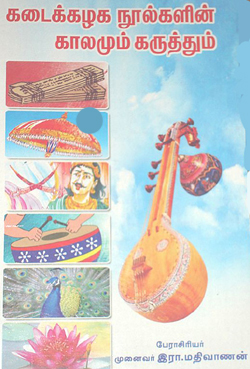
necessity to launch a history website arose when I read the book "Kadaikazhaga
Noolhalin Kaalamum Karuthum (Period and Message of Sangam Literature 500 B.C to
500 A.D) written by Dr.R.Mathivanan, former Director of Tamil Etymological
Dictionary Project of Government of Tamilnadu.
In the preface to the book the learned
scholar says, "Japanese have preserved their past history
spanning to 2440 years, whereas Egyptians and Sumerians
recall with pride their 4000 years of history. The
3000-year-old history of Chinese gives them a unique place.
But Tamils with 10000 years of history have not brought it
to the world arena." In the
Chicago Museum a portrait depicting a Tamil climbing a Palmyra tree mentioning
him as a Tamil came to the notice of Aringnar Anna and that was taken up with
the authorities. Instead of many cultural achievements of Tamils this portrait
showed Tamils as simply tree climbers, and on protest the portrait was not
removed but the word Tamil in the portrait was deleted.
Lamenting about the lack of a Museum to
depict Tamil Culture, Dr.R.Mathivanan says that he had
relied upon the travelogues of foreigners, literary
evidences thrown to light in other languages, recent
archaeological findings and the findings of historians who
have so far dealt with the History of Tamils.
His book is a compilation of all these
evidences in a nutshell, he claims. In Rasatarangini the
author Kallanar had brought to light the history of Kashmir
from 1800 B.C to 1200 A.D. Like this literary evidence which
helped to construct the history of Kashmir, in the book
Narkudi Velir Varalaru comprising 1035 poems and written by
Arumuga Nayinar Pillai, which was published in 1920 throws
light on Tamil history, the learned author claims.
This book speaks about the family hierarchy of Irungovel, a
branch of the Pandyan rulers for 201 generations. This book
follows the Kali calendar and narrates the history from 3100
B.C to 1944, and helps in fixing the date of various rulers
and their rule, the author says.
Pandyan dynasty.
Pandyan Palsalai Muthukudumi
Peruvazhuthi[ 66th generation]500-450 B.C
Karungai Ollvat Perum Peyar vazhuthi[67th
generation]450 B.C to 400 B.C
Porval Vazhuthi[68th generation]400 B.C to 380.B.C
Korkai Vazhuthi-Nartrer Vazhuthi[69th
generation]380B.C-340 B.C
Deva Pandian[70th generation] 340 B.C-302 B.C
Seya Punjan aliasKadalul maintha Ilamperuvazhuthi[71
st]302B.C-270.B.C
Pasum Poon Pandyan[72nd generation]270.B.C –245.B.C
Ollaiyur thantha Boothapandian[73rd generation]245
B.C-220 B.C
Pandyan Nanmaran[74th generation]220 B.C-200 B.C
Nedunchezhian alias Kadalan vazhithi[75th
generation]200B.C-180 B.C
Marungai Vazhuthi[76th generation] 180 B.C-160 B.C
Pandyan Uthaman alias Puliman vazhuthi[77 th
]160B.C-150 B.C
Pandyan Keeran Sathan[78th generation]150 B.C-140
B.C
Kaliman Vazhuthi alias Andar magan Kuruvazhuthi[79
th ]140-120 B.C
Pandyan Yenathi akaNedunkannan [80th ]120
B.C-100 B.C
Korkai Vazhuthi aka Irandam Pasum Poon Pandyan[81 st
]100-87 B.C
Deva Pootanan aka Ilavanthikai palli tunjiya
Nanmaran[82 nd ]87-62 B.C
Thalayanankanathu Cheru Vendra Nedunchezhian[83 rd
]62-42 B.C
Kanapereyil kadantha Ukkira Peruvazhuthi[84 th ]42
B.C-1 A.D
Pandyan Arivudainambi {Purananooru 184][85 th ]A.D
1- 30 A.D
Velliyambalathu tunjiya PeruVazhuthi[86th ]30 A.D-60
A.D
Ariyapadai Kadantha Nedunchezhian [87th ]60 A.D-117
A.D
Vetriver Chezhian [88th generation] 117 A.D-160 A.D.
Nedunchezhian II [89th generation]160 A.D –198 A.D
Ukkira Maran aka Chitramadathu tunjiya Nanmaran[90
th ]198 A.D-220 A.D
Pannadu thantha Maran Vazhuthi[91st ] 220A.D-250 A.D
Koddakarathu tunjiya Maranvazhuthi[92nd ]250 A.D-270
A.D
Thennavan Ko [93rd generation] 270 A.D-297 A.D
Parakirama Bahu aka Nalvazhuthi[ 94th generation
298A.D -310 A.D
Kaliyan Koothan [ 95th
generation]……………………………….
Kadalan Vazhuthi [ of Kazhugumalai inscriptions] [96
th generation
Porkai Pandyan [98th generation]…………………………………..
Pandyan Kadunkhon [103rd generation] 475 A.D-490 A.D
Ukkira Pandyan [103rd generation] —–498 A.D
Somasundara Pandyan [105th generation] 498 A.D-540
A.D.
113 year Pact between Three Tamil
Emperors
The Nandhas who ruled North India had
fraternal relationship with Three Tamil Emperors but the Mauryas who followed
them invaded South India. Imayavaramban Neduncheralathan marched up to Himalayas
and inscribed his country symbol, which could not be assimilated by the Mauryas
who came to Chera country as act of revenge.
But the Mauryan armies did not sneak into
Chozha territory. This invasion brought home the need to
remain united, the call given even now by Kalaignar
M.Karunanithi on Tamil solidarity at least in mourning over
S.P.Tamilselvan's brutal killing but with no useful purpose
failed to alter ground reality on Tamil disunity. The unity
urge united the Three Tamil Emperors who met to sign a Pact
of Cooperation in the year 313 B.C, the author Dr.Mathivanan
says. Imayavaramban Neduncheralathan, Karungai Olvat
Perumvazhuthi and Deva Pandian [ 70th] jointly signed the
declaration of unity that lasted for 113 years. This Treaty
of Tamil Unity stood as a rock protecting Tamil lands from
Northern invaders. In the
final years of the unity era during 200 B.C, in the Chozha Emperor Karikalan
II's court Poetess Mudathamakanniyar who wrote Porunaratrupadai witnessed the
rare scene of Three Tamil Emperors sharing same dais which she records in her
Porunaratrupadai [53-55]. Poet Kumattor Kannanar who wrote the second ten in
Pathitru Pathu also records the historical meeting of Three Tamil Emperors for
which he stands as eyewitness. Later in 42 B.C, Poetess Avvaiyar also had the
luck to see Three Tamil Emperors together in a rare scene of Unity among Tamils.
That unity did not last nor the lessons of unity learnt till date by Tamils.
Chera Emperors:
1.Vanavan aka Vanavaramban
[430-350 B.C] 2.Kuttuvan Uthiyan
Cheralathan [350-328 B.C] ruled for 22 years
3. Imayavaramban Neduncheralathan [328-270 B.C] ruled
for 58 years 4. Palyaanai Chelkezhu
Kuttuvan [270-245 B.C] ruled for 25 years
5. Kalangaikanni narmudicheral [245-220 B.C] ruled for
25 years 6.Perumcheralathan [220-200 B.C]
ruled for 20 years 7. Kudakko
Neduncheralathan [200-180 B.C] ruled for 20 years
8. Kadal Pirakottiya Velkezhu kuttuvan [180-125 B.C]
ruled 55 years 9. Adukotpattuch
Cheralathan [125-87 B.C] ruled 38 years
10.Selvak kadungo Vazhiyathan [87-62 B.C] ruled 25 years
11.Yanaikatchei Mantharanj Cheral Irumborai [62-42 B.C]
ruled 20 years 12. Thagadoor Erintha
Perum Cheral Irumborai [42-25 B.C] ruled 17 years
13. Ilancheral Irumborai [25-19 B.C] ruled 16 years
14. Karuvur Eriya Koperumcheral Irumborai [9-1 B.C]
15. Vanji Mutrathu tunjiya Anthuvancheral [B.C 20 – 10
A.D] 16. Kanaikal Irumborai [20-30 A.D]
17. Palai Padiya Perum kadungko [1-30 A.D]
18. Kokothai Marban [[30 –60 A.D]
19.Cheran Chenguttuvan [60-140 A.D]
20.Kottambalathu tunjiya Maakothai [140-150 A.D]
21.Cheraman mudangi kidantha Nedumcheralathan [150-160
A.D] 22.Cheraman Kanaikkal Irumborai
[160-180 A.D] 23. Cheraman Ilamkuttuvan
[180-200 A.D] 24.Thambi Kuttuvan [200-220
A.D] 25.Poorikko [220-250 A.D]
26. Cheraman Kuttuvan Kothai [250-270 A.D]
27.Cheraman Vanjan [270-300 A.D] 28.
Mantharanj Cheral [330-380 A.D] found in Allahabad
inscriptions of Samudragupta.
Reconstruction of Chozha
Rule
1.Karikalan I [450-380 B.C]
2. Cheraman Paamaloor erintha Neythalanganal
Ilamchetchenni [380-320 B.C]
3.Cherupaazhi erintha Ilamchetchenni [320-270 B.C]
4. Perumpoon chenni [270-245 B.C] 5.Uruva
Paikhrer Ilamchetchenni [245-232 B.C] 6.
Karikalan II [232-200 B.C] 7. Manakkilli
[200-180 B.C] 8. Vel pahradakkai
Peruviral Killi [180-160 B.C]
9.Pooravaikopp Perunarkkilli [160-125 B.C]
10. Mudithalai Koperunarkkilli [125-87 B.C]
11.Koperum Chozhan [87-62 B.C] 12.
Otrumai Vetta Perunarkkilli [62-40 B.C]
13. Chetchenni Nalankilli aka Maavalathan [40-22
B.C] 14.Kulamutrathu tunjiya Killivalavan
[B.C22 - 1 A.D] 15.Kurapalli tunjiya
Perum Thirumavalavan [1-40 A.D]
16.Neythalankanal Ilamchetchenni [40-60 A.D]
17. Karikalan III [60-110 A.D] 18. Maavan
Killi [110-130 A.D] 19. Nedumudikkilli
[130-150 A.D] 20.Chenganan [150-180 A.D]
21. Isai Ve ngilli 180-210 A.D]
22.Kaivankilli [210-240 A.D] 23.
Polampoonkilli [240-260 A.D] 24.
Kadumankilli [260-285 A.D] 25. Nalladi
[285-330 A.D] known by Agananooru 356th poem
26.Chozha Rule in Andhra [300-400 A.D]
We urge Tamils all over the
world to buy Dr.Mathivanan's " Kadaikkazha Noolhalin Kaalamum Karuthum published
by Thilagam Pathipagam 17 E, B-1, 12. K.K.Ponnurangam Salai, Omsakthinagar,
Valasaravakkam, Chennai 600087 Tel:044-24861007 or contact the author at:
rmvanan
akagmail.com Cell: 9283217788.
Based on the Tamil epic Perumkathai, a
historical note is hidden in the poem 414 of Narkudi
Vellalar Varalaru. It says in B.C 701 a Tamil King Udayanan
defeated the Aryans and ruled North India. If he had
continued to rule or if he had not succumbed to the
submissive Aryan pretenders, the Gupta rule could not have
come up, the appendix of the book states.
Our scholars may debate for centuries
instead of fixing the period of Tamil epics or Tamil Kings.
Nothing is wrong in debating but debating beyond centuries
is a crime. In 1921 Maraimalai Adigal established that
Tamils must follow Thiruvalluvar Calendar alone. But we
still follow the Sanskritized Tamil Calendar. Let us
join hands to construct Tamil history. |