The Alps Koothadigal - சுவிஸ்
தமிழ்
நாடகக்
கல்லூரி
பற்றிய
விவரணப்
படம் - Anton Ponraj
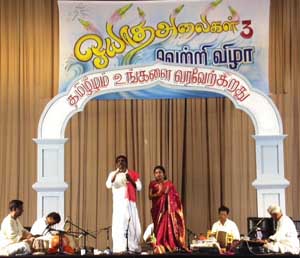
"'Alps Koothadigal' is a documentary about Sri
Lankan Tamil theatre activities in Switzerland.
...the Sri Lankans stage dramas to express their views
about the ethnic crisis in Sri Lanka and they have
taken the drama medium, as plays have wide reach in the
international arena...
Tamils - a Nation
without a State
Switzerland -சுவிற்சர்லாந்து - an estimated 40,000 Tamils live in
Switzerland -
Swiss Tamil Educational Project in
Information Technology for Homeland
தாயகத்திற்கான
சுவிஸ்தமிழர்
கணனித்தகவல்
தொழில்நுட்பக்கல்வித்திட்டம்
முலம்
உங்களை
வரவேற்பதில்
பெருமகிழ்ச்சியடைகின்றோம்
நோக்கம்:
தாயகத்திலுள்ள
பின்தங்கிய
பிரதேச
மாணவர்களுக்கு
கணனிக்கல்வியைக்கற்பித்தலும்
தொடர்ந்து
மேம்படுத்தலும்.
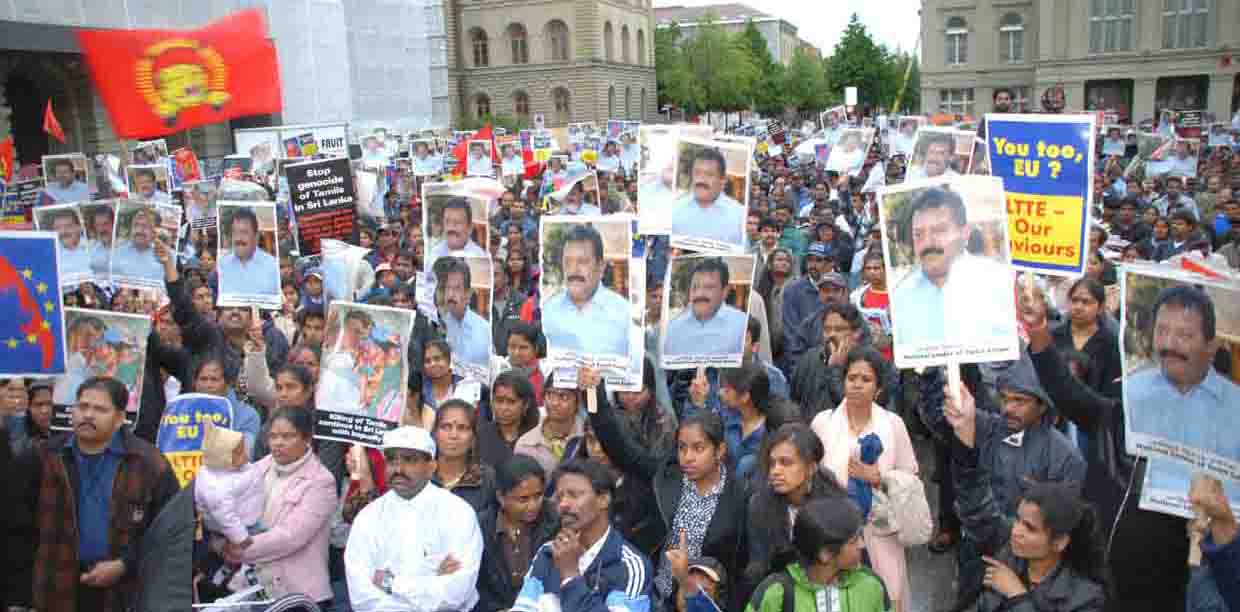
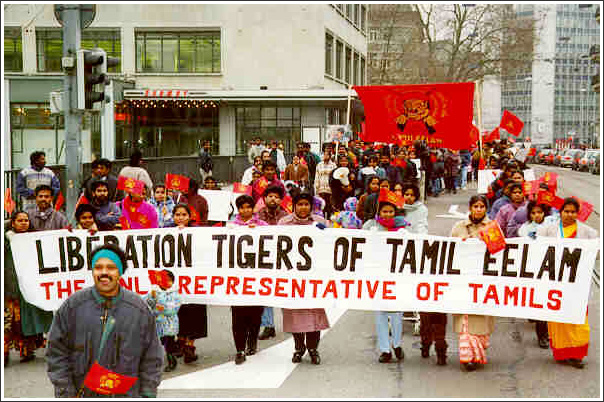
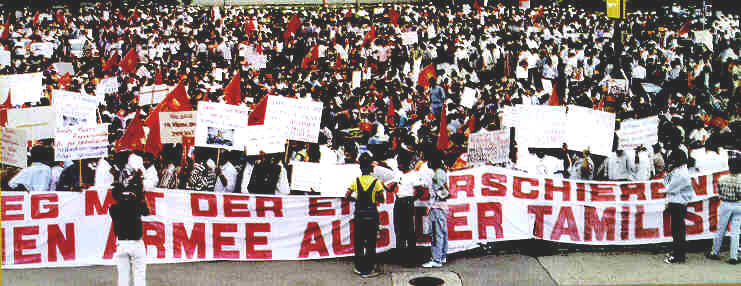
Swiss Tamils Rally in Support of
Struggle for Tamil Eelam, Geneva
Swiss
Tamils look to preserve their culture
18 February 2006, Swissinfo
Tamils first came to Switzerland in the 1980s as
refugees fleeing civil war in Sri Lanka and now make
up a sizeable community in the country.
Although they encountered prejudices at first, Tamils
are now regarded as having adapted well to their new
home. But they are still not fully integrated.
In 1983 the Tamil Tigers group began fighting for a
separate homeland for ethnic Tamils in Sri Lanka,
claiming discrimination by the majority Sinhalese.
The conflict escalated and many Tamils fled abroad to
Europe and North America.
An estimated 35,000 Tamils now live in Switzerland,
of which ten per cent are naturalised Swiss. The
ex-pat community is now one of the largest after
those in Canada, Germany and Britain.
However, the arrival of Tamils in the mid-1980s was
not without consequences. The authorities were forced
to set up a special refugee authority in 1986 to cope
with the unprecedented deluge of Tamil asylum
seekers. Prejudice and xenophobia were also
commonplace.
"The reception was very harsh, very aggressive, and
for us it was also the first time we had been to
Europe and experienced the cold snow," said Anton
Ponrajah, the head of the Swiss Federation of Tamil
Associations. "For both sides it was a difficult
situation." He said that some Swiss distrusted the
Tamils' motives at first.
"In earlier times, when we were in the asylum
centres, people thought we were taking their tax
money... but later on the government allowed the
refugees to work in Switzerland and this tendency
changed," he told swissinfo.
The Tamil population have built up a reputation as
good workers, particularly in the hotel and catering
industry, which has helped integration.
The community is also well organised. In some cities
there are regular showings of Tamil-language films,
Tamil newspapers are freely available and there are
now more than 20 Hindu ? the main Tamil religion -
temples and a string of grocery shops across the
country.
But appearances can be deceptive, warns Damaris
L�thi, an ethnologist at Bern
University, who has just published a study on Tamil
integration in Switzerland. L�thi
says that from a structural point of view, Tamils are
well integrated. They know how to negotiate the
education and health systems and the workplace. But
she says socially and culturally it's a different
story. Contact tends to take place within the
community and Sri Lankan values are still valid,
especially for the first generation.
"The confrontation [between their values and those
of] Switzerland and the West in general is still
difficult," L�thi told swissinfo.
"Even for those who have lived in Switzerland for 20
years, alcohol consumption, divorce and sex outside
marriage, for example, are still very stigmatised and
considered to be immoral."
The second generation is better integrated but
many still subscribe to the old ways, even if they
have no intention of returning to Sri Lanka, says
L�thi.
This can be seen in attitudes towards marriage. Most
weddings still take place between people of the same
social caste ? despite moves in Sri Lanka to outlaw
the caste-system. "If two young people from different
castes get married, they are often isolated,"
L�thi explained. "And even when love
marriages are spoken of, they are normally between
the same caste." Unions between Tamils and Swiss are
very rare. At the end of 2004, of the 18,000 people
of Sri Lankan origin who married in that year, only
521 wed a Swiss.
"These types of marriages are not well accepted,"
said L�thi, citing several examples
of when Tamil families have cut ties with their
children for marrying outside the community.
For Ponrajah, integration is still an ongoing
process. "It's not a tablet that you can swallow and
it will work - it will take time to understand each
other. This is the basic thing for integration."