[see also -
Ronit Ricci Comparative Literature - "Islamic
Literary Traditions in Javanese and Tamil" and
Hindu Javanese Temple Sculpture -
Kristine Marx]
[courtesy info-indo.com] "The
Tamils were brought in by the Dutch in the early
build-up of the plantation industry, probably in the
1830s. Agents visited villages in the Drawidia Kingdom
in South India and tempted poor uneducated Tamils to
come to 'Tanah Deli", which then was more known to them
than "Sumatran". In order to convince these people they
used amazing stories about the riches of 'Tanah Deli"
and were promised easy work with good pay, for example
to guard sugar from being eaten by birds. Some were
even told that there picking tress on which money grew
and that the Tamils would work with hasty and most of
them had to take the decision instantly and where taken
to the harbors to wait for a sailing ship.
The majority left without even telling
their families. After the arrival in the harbor Labuhan
Deli in 'Tanah Deli" the reality was different from the
stories told in India. The Tamils were used for hard
labor and housed in simple huts. Most of them worked
for the Dutch company deli Maatschappij under harsh
conditions. A part of the Tamils were brought back to
India after the contract. In the end of 1940s many
Tamils got an opportunity to return back and left, but
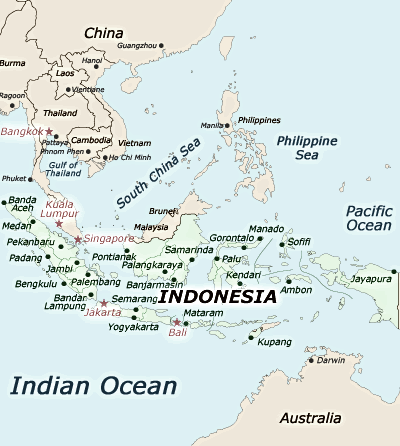
maybe 5000-10,000 Tamils stayed on in North Sumatra,
mainly in Medan, but also in Binjai and Lubuk Pakkam.
Today the Tamil population in North Sumatra is
approximately 40,000. Not until the last two
generations did they star to intermarry with other
ethnic groups.
After World War II and the independence
from the Dutch, many Tamils left the plantations and
they often used a cow cart to do that. These vehicles
became their tools for making a living. Some even
bought abandoned Japanese military vehicles, which they
used to transport sand and building material for
building projects. This occupation has been inherited
through the generations and still today one can see
many Tamil waiting with their pick-ups and lorries for
charters on Jl. Iskandar Muda and in Sunggal. Other
Tamils have specialized in spice trading at the markets
and a few become contractors or government
officials.
The Tamils have remained in North
Sumatra except for a few hundred families in Jakarta
and Tamils that went to Sigli in Aceh in an early
stage. Most of the Tamils are Hindu, but Islam and
Christianity are also represented amongst them. The
Tamils have always had a harmonious relationship with
the original ethnic groups in North Sumatra, as the
cultural and economic background and their fate do not
differ too much. The word Kelling is in North Sumatra a
somewhat derogative word for people with dark skin and
used for Indians, especially Tamils. However,
originally it was used for Javanese from the Kingdom of
Kalingga in central Java, but due to Dutch
mispronunciation it became Keling."