|
Cultural Imperialism & Thomas
Macaulay
Minute on Indian Education, 2
February 1835
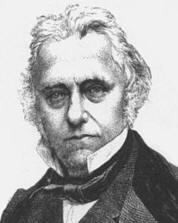 (Lord Macaulay was not only a
well-known Victorian essayist, poet, and historian but
also a colonial administrator. A staunch Whig, he
served in the House of Commons, was a member of the
Supreme Council of India, and Secretary of War.
Remembered in literary history as the author of the
History of England from the Accession of James the
Second, and book reviews for the Edinburgh Review, he
is remembered in postcolonial studies for this classic
statement of cultural imperialism.) (Lord Macaulay was not only a
well-known Victorian essayist, poet, and historian but
also a colonial administrator. A staunch Whig, he
served in the House of Commons, was a member of the
Supreme Council of India, and Secretary of War.
Remembered in literary history as the author of the
History of England from the Accession of James the
Second, and book reviews for the Edinburgh Review, he
is remembered in postcolonial studies for this classic
statement of cultural imperialism.)
"The languages of Western Europe
civilised Russia. I cannot doubt that they will do for
the Hindoo what they have done for the Tartar ... We
must at present do our best to form a class who may be
interpreters between us and the millions whom we
govern; a class of persons, Indian in blood and colour,
but English in taste, in opinions, in morals, and in
intellect."
As it seems to be the opinion of some of
the gentlemen who compose the Committee of Public
Instruction that the course which they have hitherto
pursued was strictly prescribed by the British Parliament
in 1813 and as, if that opinion be correct, a legislative
act will be necessary to warrant a change, I have thought
it right to refrain from taking any part in the
preparation of the adverse statements which are now
before us, and to reserve what I had to say on the
subject till it should come before me as a Member of the
Council of India.
It does not appear to me that the Act of Parliament can
by any art of contraction be made to bear the meaning
which has been assigned to it. It contains nothing about
the particular languages or sciences which are to be
studied. A sum is set apart "for the revival and
promotion of literature, and the encouragement of the
learned natives of India, and for the introduction and
promotion of a knowledge of the sciences among the
inhabitants of the British territories."
It is argued, or rather taken for
granted, that by literature the Parliament can have meant
only Arabic and Sanskrit literature; that they never
would have given the honourable appellation of "a learned
native" to a native who was familiar with the poetry of
Milton, the metaphysics of Locke, and the physics of
Newton; but that they meant to designate by that name
only such persons as might have studied in the sacred
books of the Hindoos all the uses of cusa-grass, and all
the mysteries of absorption into the Deity.
This does not appear to be a very
satisfactory interpretation. To take a parallel case:
Suppose that the Pacha of Egypt, a country once superior
in knowledge to the nations of Europe, but now sunk far
below them, were to appropriate a sum for the purpose "of
reviving and promoting literature, and encouraging
learned natives of Egypt," would any body infer that he
meant the youth of his Pachalik to give years to the
study of hieroglyphics, to search into all the doctrines
disguised under the fable of Osiris, and to ascertain
with all possible accuracy the ritual with which cats and
onions were anciently adored? Would he be justly charged
with inconsistency if, instead of employing his young
subjects in deciphering obelisks, he were to order them
to be instructed in the English and French languages, and
in all the sciences to which those languages are the
chief keys?
The words on which the supporters of the old system rely
do not bear them out, and other words follow which seem
to be quite decisive on the other side. This lakh of
rupees is set apart not only for "reviving literature in
India," the phrase on which their whole interpretation is
founded, but also "for the introduction and promotion of
a knowledge of the sciences among the inhabitants of the
British territories"-- words which are alone sufficient
to authorize all the changes for which I contend.
If the Council agree in my construction no legislative
act will be necessary. If they differ from me, I will
propose a short act rescinding that clause I of the
Charter of 1813 from which the difficulty arises.
The argument which I have been considering affects only
the form of proceeding. But the admirers of the oriental
system of education have used another argument, which, if
we admit it to be valid, is decisive against all change.
They conceive that the public faith is pledged to the
present system, and that to alter the appropriation of
any of the funds which have hitherto been spent in
encouraging the study of Arabic and Sanskrit would be
downright spoliation.
It is not easy to understand by what
process of reasoning they can have arrived at this
conclusion. The grants which are made from the public
purse for the encouragement of literature differ in no
respect from the grants which are made from the same
purse for other objects of real or supposed utility. We
found a sanitarium on a spot which we suppose to be
healthy. Do we thereby pledge ourselves to keep a
sanitarium there if the result should not answer our
expectations? We commence the erection of a pier. Is it a
violation of the public faith to stop the works, if we
afterwards see reason to believe that the building will
be useless? The rights of property are undoubtedly
sacred. But nothing endangers those rights so much as the
practice, now unhappily too common, of attributing them
to things to which they do not belong.
Those who would impart to abuses the
sanctity of property are in truth imparting to the
institution of property the unpopularity and the
fragility of abuses. If the Government has given to any
person a formal assurance-- nay, if the Government has
excited in any person's mind a reasonable expectation--
that he shall receive a certain income as a teacher or a
learner of Sanskrit or Arabic, I would respect that
person's pecuniary interests. I would rather err on the
side of liberality to individuals than suffer the public
faith to be called in question.
But to talk of a Government pledging
itself to teach certain languages and certain sciences,
though those languages may become useless, though those
sciences may be exploded, seems to me quite
unmeaning.
There is not a single word in any public
instrument from which it can be inferred that the Indian
Government ever intended to give any pledge on this
subject, or ever considered the destination of these
funds as unalterably fixed. But, had it been otherwise, I
should have denied the competence of our predecessors to
bind us by any pledge on such a subject. Suppose that a
Government had in the last century enacted in the most
solemn manner that all its subjects should, to the end of
time, be inoculated for the small-pox, would that
Government be bound to persist in the practice after
Jenner's discovery?
These promises of which nobody claims the
performance, and from which nobody can grant a release,
these vested rights which vest in nobody, this property
without proprietors, this robbery which makes nobody
poorer, may be comprehended by persons of higher
faculties than mine. I consider this plea merely as a set
form of words, regularly used both in England and in
India, in defence of every abuse for which no other plea
can be set up.
I hold this lakh of rupees to be quite at the disposal of
the Governor-General in Council for the purpose of
promoting learning in India in any way which may be
thought most advisable. I hold his Lordship to be quite
as free to direct that it shall no longer be employed in
encouraging Arabic and Sanskrit, as he is to direct that
the reward for killing tigers in Mysore shall be
diminished, or that no more public money shall be
expended on the chaunting at the cathedral.
We now come to the gist of the matter. We have a
fund to be employed as Government shall direct for the
intellectual improvement of the people of this country.
The simple question is, what is the most useful way of
employing it?
All parties seem to be agreed on one point, that the
dialects commonly spoken among the natives of this part
of India contain neither literary nor scientific
information, and are moreover so poor and rude that,
until they are enriched from some other quarter, it will
not be easy to translate any valuable work into them. It
seems to be admitted on all sides, that the intellectual
improvement of those classes of the people who have the
means of pursuing higher studies can at present be
affected only by means of some language not vernacular
amongst them.
What then shall that language be? One-half of the
committee maintain that it should be the English. The
other half strongly recommend the Arabic and Sanskrit.
The whole question seems to me to be-- which language is
the best worth knowing?
I have no knowledge of either Sanskrit or Arabic. But I
have done what I could to form a correct estimate of
their value. I have read translations of the most
celebrated Arabic and Sanskrit works. I have conversed,
both here and at home, with men distinguished by their
proficiency in the Eastern tongues. I am quite ready to
take the oriental learning at the valuation of the
orientalists themselves. I have never found one among
them who could deny that a single shelf of a good
European library was worth the whole native literature of
India and Arabia. The intrinsic superiority of the
Western literature is indeed fully admitted by those
members of the committee who support the oriental plan of
education.
It will hardly be disputed, I suppose, that the
department of literature in which the Eastern writers
stand highest is poetry. And I certainly never met with
any orientalist who ventured to maintain that the Arabic
and Sanskrit poetry could be compared to that of the
great European nations. But when we pass from works of
imagination to works in which facts are recorded and
general principles investigated, the superiority of the
Europeans becomes absolutely immeasurable. It is, I
believe, no exaggeration to say that all the historical
information which has been collected from all the books
written in the Sanskrit language is less valuable than
what may be found in the most paltry abridgments used at
preparatory schools in England. In every branch of
physical or moral philosophy, the relative position of
the two nations is nearly the same.
How then stands the case? We have to educate a people who
cannot at present be educated by means of their
mother-tongue. We must teach them some foreign language.
The claims of our own language it is hardly necessary to
recapitulate. It stands pre-eminent even among the
languages of the West. It abounds with works of
imagination not inferior to the noblest which Greece has
bequeathed to us, --with models of every species of
eloquence, --with historical composition, which,
considered merely as narratives, have seldom been
surpassed, and which, considered as vehicles of ethical
and political instruction, have never been equaled-- with
just and lively representations of human life and human
nature, --with the most profound speculations on
metaphysics, morals, government, jurisprudence, trade,
--with full and correct information respecting every
experimental science which tends to preserve the health,
to increase the comfort, or to expand the intellect of
man.
Whoever knows that language has ready
access to all the vast intellectual wealth which all the
wisest nations of the earth have created and hoarded in
the course of ninety generations. It may safely be said
that the literature now extant in that language is of
greater value than all the literature which three hundred
years ago was extant in all the languages of the world
together. Nor is this all.
In India, English is the language
spoken by the ruling class. It is spoken by the
higher class of natives at the seats of Government. It is
likely to become the language of commerce throughout the
seas of the East. It is the language of two great
European communities which are rising, the one in the
south of Africa, the other in Australia, --communities
which are every year becoming more important and more
closely connected with our Indian empire. Whether we look
at the intrinsic value of our literature, or at the
particular situation of this country, we shall see the
strongest reason to think that, of all foreign tongues,
the English tongue is that which would be the most useful
to our native subjects.
The question now before us is simply whether, when it is
in our power to teach this language, we shall teach
languages in which, by universal confession, there are no
books on any subject which deserve to be compared to our
own, whether, when we can teach European science, we
shall teach systems which, by universal confession,
wherever they differ from those of Europe differ for the
worse, and whether, when we can patronize sound
philosophy and true history, we shall countenance, at the
public expense, medical doctrines which would disgrace an
English farrier, astronomy which would move laughter in
girls at an English boarding school, history abounding
with kings thirty feet high and reigns thirty thousand
years long, and geography made of seas of treacle and
seas of butter.
We are not without experience to guide us. History
furnishes several analogous cases, and they all teach the
same lesson. There are, in modern times, to go no
further, two memorable instances of a great impulse given
to the mind of a whole society, of prejudices overthrown,
of knowledge diffused, of taste purified, of arts and
sciences planted in countries which had recently been
ignorant and barbarous.
The first instance to which I refer is the great revival
of letters among the Western nations at the close of the
fifteenth and the beginning of the sixteenth century. At
that time almost everything that was worth reading was
contained in the writings of the ancient Greeks and
Romans. Had our ancestors acted as the Committee of
Public Instruction has hitherto noted, had they neglected
the language of Thucydides and Plato, and the language of
Cicero and Tacitus, had they confined their attention to
the old dialects of our own island, had they printed
nothing and taught nothing at the universities but
chronicles in Anglo-Saxon and romances in Norman French,
--would England ever have been what she now is?
What the Greek and Latin were to the
contemporaries of More and Ascham, our tongue is to the
people of India. The literature of England is now more
valuable than that of classical antiquity. I doubt
whether the Sanskrit literature be as valuable as that of
our Saxon and Norman progenitors. In some departments--
in history for example-- I am certain that it is much
less so.
Another instance may be said to be still before our
eyes. Within the last hundred and twenty years, a nation
which had previously been in a state as barbarous as that
in which our ancestors were before the Crusades has
gradually emerged from the ignorance in which it was
sunk, and has taken its place among civilized
communities. I speak of Russia.
There is now in that country a large
educated class abounding with persons fit to serve the
State in the highest functions, and in nowise inferior to
the most accomplished men who adorn the best circles of
Paris and London. There is reason to hope that this vast
empire which, in the time of our grandfathers, was
probably behind the Punjab, may in the time of our
grandchildren, be pressing close on France and Britain in
the career of improvement.
And how was this change effected? Not by
flattering national prejudices; not by feeding the mind
of the young Muscovite with the old women's stories which
his rude fathers had believed; not by filling his head
with lying legends about St. Nicholas; not by encouraging
him to study the great question, whether the world was or
not created on the 13th of September; not by calling him
"a learned native" when he had mastered all these points
of knowledge; but by teaching him those foreign languages
in which the greatest mass of information had been laid
up, and thus putting all that information within his
reach.
The languages of western Europe
civilised Russia. I cannot doubt that they will do for
the Hindoo what they have done for the Tartar.
And what are the arguments against that course which
seems to be alike recommended by theory and by
experience? It is said that we ought to secure the
co-operation of the native public, and that we can do
this only by teaching Sanskrit and Arabic.
I can by no means admit that, when a nation of high
intellectual attainments undertakes to superintend the
education of a nation comparatively ignorant, the
learners are absolutely to prescribe the course which is
to be taken by the teachers. It is not necessary
however to say anything on this subject. For it is proved
by unanswerable evidence, that we are not at present
securing the co-operation of the natives. It would be
bad enough to consult their intellectual taste at the
expense of their intellectual health. But we are
consulting neither. We are withholding from them the
learning which is palatable to them. We are forcing on
them the mock learning which they nauseate.
This is proved by the fact that we are forced to pay our
Arabic and Sanskrit students while those who learn
English are willing to pay us. All the declamations in
the world about the love and reverence of the natives for
their sacred dialects will never, in the mind of any
impartial person, outweigh this undisputed fact, that we
cannot find in all our vast empire a single student who
will let us teach him those dialects, unless we will pay
him.
I have now before me the accounts of the Mudrassa for one
month, the month of December, 1833. The Arabic students
appear to have been seventy-seven in number. All receive
stipends from the public. The whole amount paid to them
is above 500 rupees a month. On the other side of the
account stands the following item:
Deduct amount realized from the out-students of English
for the months of May, June, and July last-- 103
rupees.
I have been told that it is merely from want of local
experience that I am surprised at these phenomena, and
that it is not the fashion for students in India to study
at their own charges. This only confirms me in my
opinions. Nothing is more certain than that it never can
in any part of the world be necessary to pay men for
doing what they think pleasant or profitable. India is no
exception to this rule. The people of India do not
require to be paid for eating rice when they are hungry,
or for wearing woollen cloth in the cold season. To come
nearer to the case before us: --The children who learn
their letters and a little elementary arithmetic from the
village schoolmaster are not paid by him. He is paid for
teaching them. Why then is it necessary to pay people to
learn Sanskrit and Arabic? Evidently because it is
universally felt that the Sanskrit and Arabic are
languages the knowledge of which does not compensate for
the trouble of acquiring them. On all such subjects the
state of the market is the detective test.
Other evidence is not wanting, if other evidence were
required. A petition was presented last year to the
committee by several ex-students of the Sanskrit College.
The petitioners stated that they had studied in the
college ten or twelve years, that they had made
themselves acquainted with Hindoo literature and science,
that they had received certificates of proficiency. And
what is the fruit of all this? "Notwithstanding such
testimonials," they say, "we have but little prospect of
bettering our condition without the kind assistance of
your honourable committee, the indifference with which we
are generally looked upon by our countrymen leaving no
hope of encouragement and assistance from them."
They therefore beg that they may be
recommended to the Governor-General for places under the
Government-- not places of high dignity or emolument, but
such as may just enable them to exist. "We want means,"
they say, "for a decent living, and for our progressive
improvement, which, however, we cannot obtain without the
assistance of Government, by whom we have been educated
and maintained from childhood." They conclude by
representing very pathetically that they are sure that it
was never the intention of Government, after behaving so
liberally to them during their education, to abandon them
to destitution and neglect.
I have been used to see petitions to Government for
compensation. All those petitions, even the most
unreasonable of them, proceeded on the supposition that
some loss had been sustained, that some wrong had been
inflicted. These are surely the first petitioners who
ever demanded compensation for having been educated
gratis, for having been supported by the public during
twelve years, and then sent forth into the world well
furnished with literature and science. They represent
their education as an injury which gives them a claim on
the Government for redress, as an injury for which the
stipends paid to them during the infliction were a very
inadequate compensation. And I doubt not that they are in
the right.
They have wasted the best years of life
in learning what procures for them neither bread nor
respect. Surely we might with advantage have saved the
cost of making these persons useless and miserable.
Surely, men may be brought up to be burdens to the public
and objects of contempt to their neighbours at a somewhat
smaller charge to the State. But such is our policy. We
do not even stand neuter in the contest between truth and
falsehood. We are not content to leave the natives to the
influence of their own hereditary prejudices. To the
natural difficulties which obstruct the progress of sound
science in the East, we add great difficulties of our own
making. Bounties and premiums, such as ought not to be
given even for the propagation of truth, we lavish on
false texts and false philosophy.
By acting thus we create the very evil which we fear. We
are making that opposition which we do not find. What we
spend on the Arabic and Sanskrit Colleges is not merely a
dead loss to the cause of truth. It is bounty-money paid
to raise up champions of error. It goes to form a nest
not merely of helpless placehunters but of bigots
prompted alike by passion and by interest to raise a cry
against every useful scheme of education. If there should
be any opposition among the natives to the change which I
recommend, that opposition will be the effect of our own
system. It will be headed by persons supported by our
stipends and trained in our colleges. The longer we
persevere in our present course, the more formidable will
that opposition be. It will be every year reinforced by
recruits whom we are paying. From the native society,
left to itself, we have no difficulties to apprehend. All
the murmuring will come from that oriental interest which
we have, by artificial means, called into being and
nursed into strength.
There is yet another fact which is alone sufficient to
prove that the feeling of the native public, when left to
itself, is not such as the supporters of the old system
represent it to be. The committee have thought fit to lay
out above a lakh of rupees in printing Arabic and
Sanskrit books. Those books find no purchasers. It is
very rarely that a single copy is disposed of.
Twenty-three thousand volumes, most of them folios and
quartos, fill the libraries or rather the lumber-rooms of
this body. The committee contrive to get rid of some
portion of their vast stock of oriental literature by
giving books away. But they cannot give so fast as they
print. About twenty thousand rupees a year are spent in
adding fresh masses of waste paper to a hoard which, one
should think, is already sufficiently ample. During the
last three years about sixty thousand rupees have been
expended in this manner. The sale of Arabic and Sanskrit
books during those three years has not yielded quite one
thousand rupees. In the meantime, the School Book Society
is selling seven or eight thousand English volumes every
year, and not only pays the expenses of printing but
realizes a profit of twenty per cent. on its outlay.
The fact that the Hindoo law is to be learned chiefly
from Sanskrit books, and the Mahometan law from Arabic
books, has been much insisted on, but seems not to bear
at all on the question. We are commanded by Parliament to
ascertain and digest the laws of India. The assistance of
a Law Commission has been given to us for that purpose.
As soon as the Code is promulgated the Shasters and the
Hedaya will be useless to a moonsiff or a Sudder Ameen. I
hope and trust that, before the boys who are now entering
at the Mudrassa and the Sanskrit College have completed
their studies, this great work will be finished. It would
be manifestly absurd to educate the rising generation
with a view to a state of things which we mean to alter
before they reach manhood.
But there is yet another argument which seems even more
untenable. It is said that the Sanskrit and the Arabic
are the languages in which the sacred books of a hundred
millions of people are written, and that they are on that
account entitled to peculiar encouragement. Assuredly it
is the duty of the British Government in India to be not
only tolerant but neutral on all religious questions. But
to encourage the study of a literature, admitted to be of
small intrinsic value, only because that literature
inculcated the most serious errors on the most important
subjects, is a course hardly reconcilable with reason,
with morality, or even with that very neutrality which
ought, as we all agree, to be sacredly preserved.
It is confirmed that a language is barren
of useful knowledge. We are to teach it because it is
fruitful of monstrous superstitions. We are to teach
false history, false astronomy, false medicine, because
we find them in company with a false religion. We
abstain, and I trust shall always abstain, from giving
any public encouragement to those who are engaged in the
work of converting the natives to Christianity. And while
we act thus, can we reasonably or decently bribe men, out
of the revenues of the State, to waste their youth in
learning how they are to purify themselves after touching
an ass or what texts of the Vedas they are to repeat to
expiate the crime of killing a goat?
It is taken for granted by the advocates of oriental
learning that no native of this country can possibly
attain more than a mere smattering of English. They do
not attempt to prove this. But they perpetually insinuate
it. They designate the education which their opponents
recommend as a mere spelling-book education. They assume
it as undeniable that the question is between a profound
knowledge of Hindoo and Arabian literature and science on
the one side, and superficial knowledge of the rudiments
of English on the other. This is not merely an
assumption, but an assumption contrary to all reason and
experience.
We know that foreigners of all nations do
learn our language sufficiently to have access to all the
most abstruse knowledge which it contains sufficiently to
relish even the more delicate graces of our most
idiomatic writers. There are in this very town natives
who are quite competent to discuss political or
scientific questions with fluency and precision in the
English language. I have heard the very question on which
I am now writing discussed by native gentlemen with a
liberality and an intelligence which would do credit to
any member of the Committee of Public Instruction.
Indeed it is unusual to find, even in the
literary circles of the Continent, any foreigner who can
express himself in English with so much facility and
correctness as we find in many Hindoos. Nobody, I
suppose, will contend that English is so difficult to a
Hindoo as Greek to an Englishman. Yet an intelligent
English youth, in a much smaller number of years than our
unfortunate pupils pass at the Sanskrit College, becomes
able to read, to enjoy, and even to imitate not unhappily
the compositions of the best Greek authors. Less than
half the time which enables an English youth to read
Herodotus and Sophocles ought to enable a Hindoo to read
Hume and Milton.
To sum up what I have said. I think it clear that we are
not fettered by the Act of Parliament of 1813, that we
are not fettered by any pledge expressed or implied, that
we are free to employ our funds as we choose, that we
ought to employ them in teaching what is best worth
knowing, that English is better worth knowing than
Sanskrit or Arabic, that the natives are desirous to be
taught English, and are not desirous to be taught
Sanskrit or Arabic, that neither as the languages of law
nor as the languages of religion have the Sanskrit and
Arabic any peculiar claim to our encouragement, that it
is possible to make natives of this country thoroughly
good English scholars, and that to this end our efforts
ought to be directed.
In one point I fully agree with the gentlemen to whose
general views I am opposed. I feel with them that it is
impossible for us, with our limited means, to attempt to
educate the body of the people.
We must at present do our best to form
a class who may be interpreters between us and the
millions whom we govern, --a class of persons Indian in
blood and colour, but English in tastes, in opinions, in
morals and in intellect.
To that class we may leave it to refine
the vernacular dialects of the country, to enrich those
dialects with terms of science borrowed from the Western
nomenclature, and to render them by degrees fit vehicles
for conveying knowledge to the great mass of the
population.
I would strictly respect all existing interests. I would
deal even generously with all individuals who have had
fair reason to expect a pecuniary provision. But I would
strike at the root of the bad system which has hitherto
been fostered by us. I would at once stop the printing of
Arabic and Sanskrit books. I would abolish the Mudrassa
and the Sanskrit College at Calcutta. Benares is the
great seat of Brahminical learning; Delhi of Arabic
learning.
If we retain the Sanskrit College at
Bonares and the Mahometan College at Delhi we do enough
and much more than enough in my opinion, for the Eastern
languages. If the Benares and Delhi Colleges should be
retained, I would at least recommend that no stipends
shall be given to any students who may hereafter repair
thither, but that the people shall be left to make their
own choice between the rival systems of education without
being bribed by us to learn what they have no desire to
know. The funds which would thus be placed at our
disposal would enable us to give larger encouragement to
the Hindoo College at Calcutta, and establish in the
principal cities throughout the Presidencies of Fort
William and Agra schools in which the English language
might be well and thoroughly taught.
If the decision of His Lordship in
Council should be such as I anticipate, I shall enter on
the performance of my duties with the greatest zeal and
alacrity. If, on the other hand, it be the opinion of the
Government that the present system ought to remain
unchanged, I beg that I may be permitted to retire from
the chair of the Committee. I feel that I could not be of
the smallest use there. I feel also that I should be
lending my countenance to what I firmly believe to be a
mere delusion. I believe that the present system tends
not to accelerate the progress of truth but to delay the
natural death of expiring errors. I conceive that we have
at present no right to the respectable name of a Board of
Public Instruction.
We are a Board for wasting the public
money, for printing books which are of less value than
the paper on which they are printed was while it was
blank-- for giving artificial encouragement to absurd
history, absurd metaphysics, absurd physics, absurd
theology-- for raising up a breed of scholars who find
their scholarship an incumbrance and blemish, who live on
the public while they are receiving their education, and
whose education is so utterly useless to them that, when
they have received it, they must either starve or live on
the public all the rest of their lives. Entertaining
these opinions, I am naturally desirous to decline all
share in the responsibility of a body which, unless it
alters its whole mode of proceedings, I must consider,
not merely as useless, but as positively noxious.
T[homas] B[abington] MACAULAY
2nd February 1835.
I give my entire concurrence to the sentiments expressed
in this Minute.
W[illiam] C[avendish] BENTINCK.
From: Bureau of Education. Selections from Educational
Records, Part I (1781-1839). Edited by H. Sharp.
Calcutta: Superintendent, Government Printing, 1920.
Reprint. Delhi: National Archives of India, 1965,
107-117.
|