|
CONTENTS
OF THIS SECTION
10/06/09
|
| Saivaite &
Vaishnavite Bronzes at Chennai Museum |
|
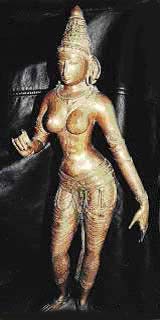
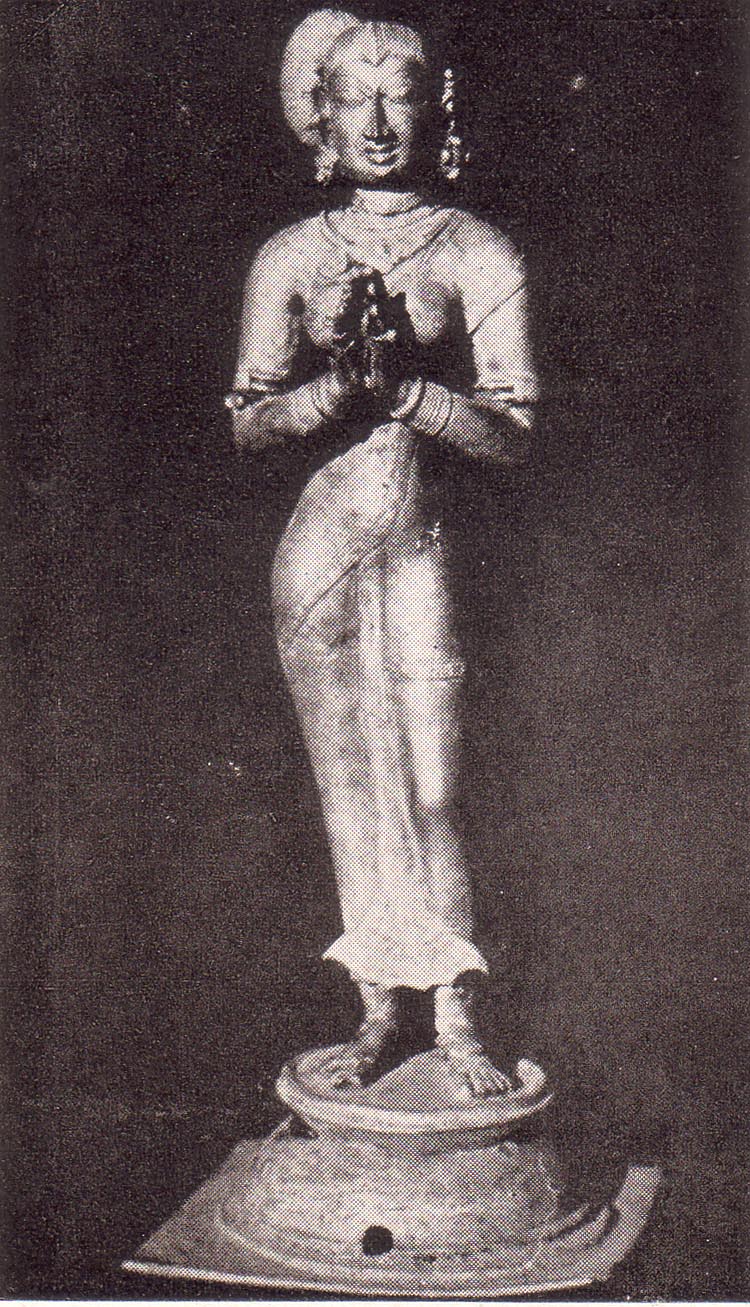
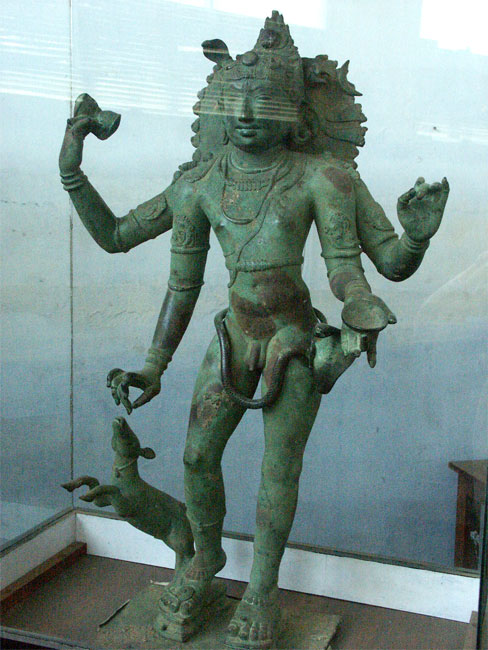
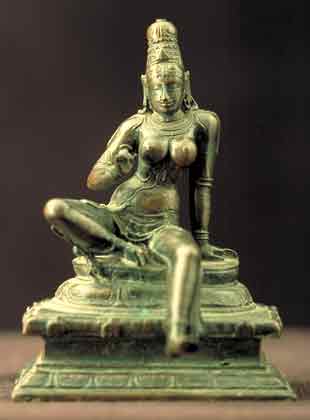
Parvathi
12th Century AD
|
|
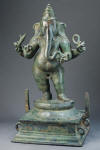
Bronze Sculptures of the Chola
Period at Asia Society Museum
|
| The Sensuous and
the Sacred: Chola Bronzes from South India
On line exhibition of the works of
Indian sculptural art - the temple bronzes cast a
thousand years |
| Splendour in metal
`The Sensuous and the Sacred: Chola Bronzes from
South India' - S.
Rangarajan on the Exhibition at the Smithsonian,
Washington, 9 February 2003 |
| Beautiful Bronzes
"A
collection of sacred bronzes from South India graces
the galleries of the Sarabhai Foundation, Ahmedabad.
The essence of these pieces is brought out by the
display which transcends the contexts of myth and
ritual in which they were originally
placed.." |
| The Chola Bronzes:
A National Treasure, A visual Treat
- Martha Denney "Entering the
Madras (now Chennai) Central Government Museum I felt
as though I was entering a labyrinth- a veritable
maze of buildings that didn't look too
promising...The bronzes are distributed around the
room, and those in cases under the overhang are very
dimly lit. The sculptures in the middle of the room
are better lit, but the cases reflect the light from
occasional florescent fixtures, making it difficult
to see the fine details through the glare. There are
many, and at first I simply glanced at them with
indifference. It is only upon study that you realize
that you have stumbled upon one of the finest
collections of South Asian lost-wax sculpture in the
world, and they are indeed a treasure.." |
| I want to know of
the origin of south Indian bronzes
"Bronze and other metal icons of
Tamil Nadu mostly belong to the Pallava and Chola
eras of history between the 6th and 11th century AD.
The Pallava dynasty built temples across the
landscape of Tamil Nadu, but these were small and
their spires rose to heights of 20 to 60 ft. Thus,
their bronzes of Shiva, Vishnu, Parvati, Lakshmi,
Kartikeya and Ganesha were also small in consonance
with the rules of the agamas..." |
| Experts Clean
Chola Bronze Statues in Pondicherry
Museum |
|
South Indian
Bronzes
on the Web
|
|
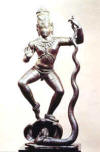
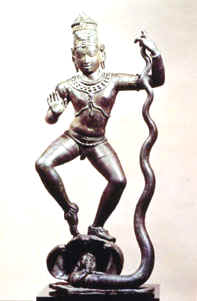
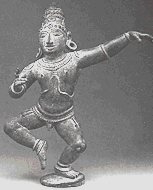
Krishna
on
Serpent Kaliya,
11th-12th Century
|
|
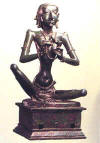
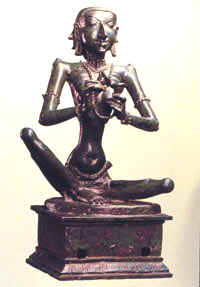
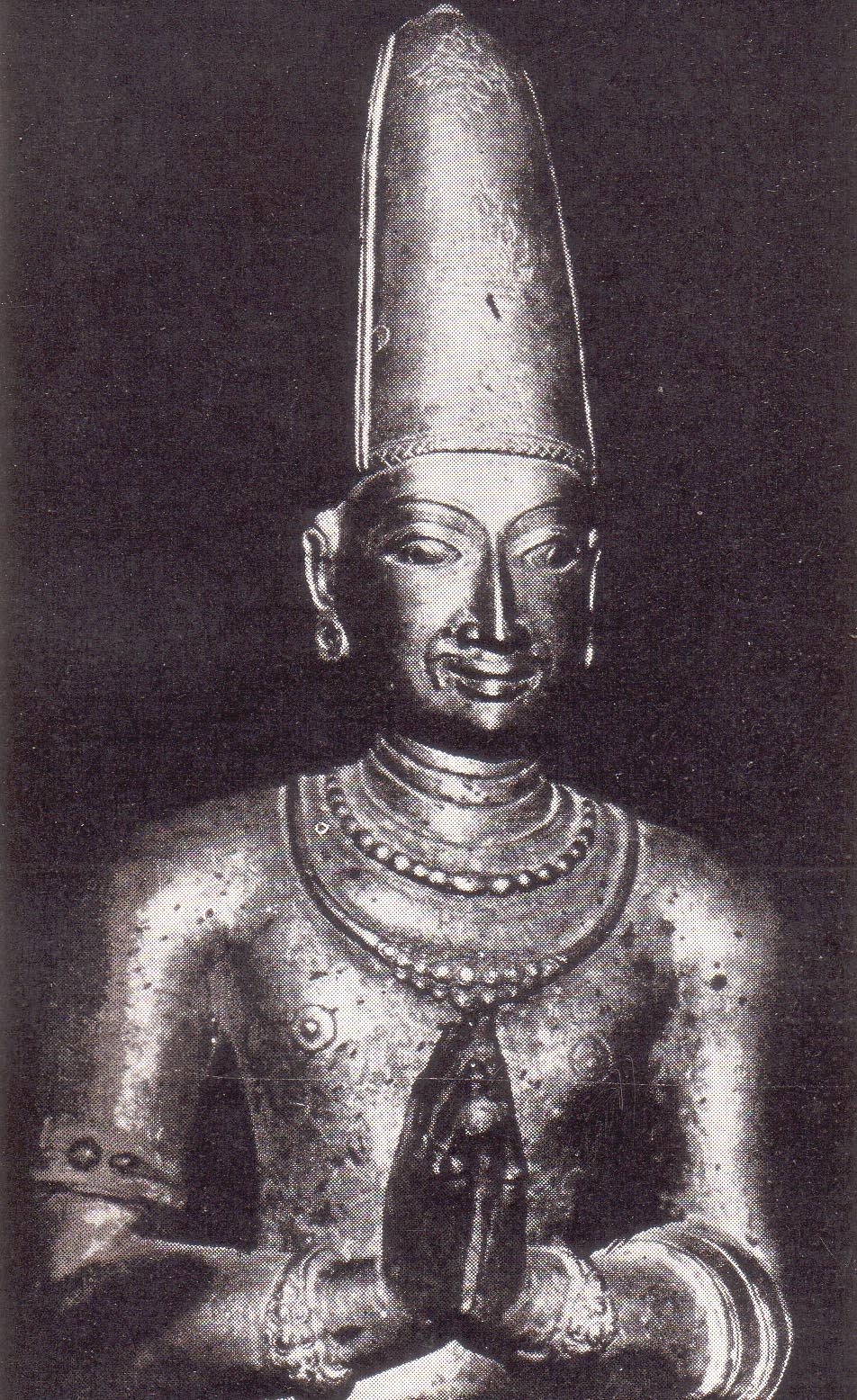
Devotee of Shiva, 12th
Century
|
|
|
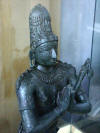
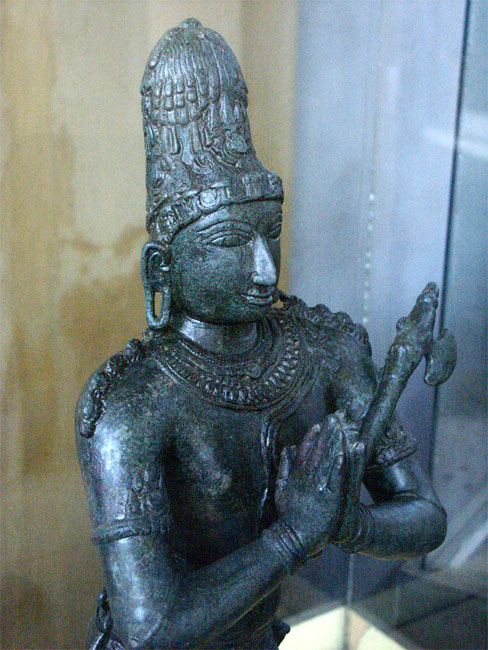
Chandikesvara
|
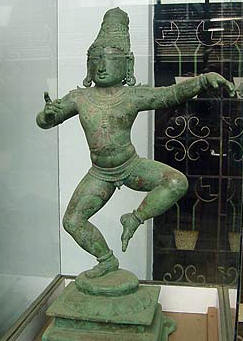
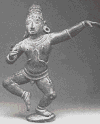
Balakrishna
Bronze Southern India Chola, c. 12th century
National Museum Singapore
Krishna as Natavara, Lord of the Dance.
|
|
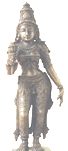
Mahalakshmi
the consort of Vishnu, the
preserver of the world and the goddess of fortune
and wealth
|
|
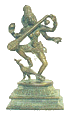
Saraswathi
the consort of
Brahma,
the creator of the universe, and the goddess of
learning
|
|
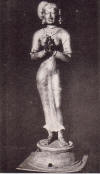
Nayak
Queen,
Bronze,16th Century,
Siva Temple,
Thiruvidaimaradur
|
|
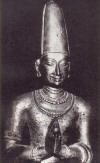
Nayak
Chief,
Thiruvidaimaradur, 16 Century
|
|
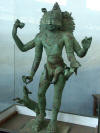
Siva Bhikshatana
1040 AD, Rajaraja Museum,
Thanjavur
|
|
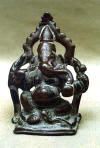
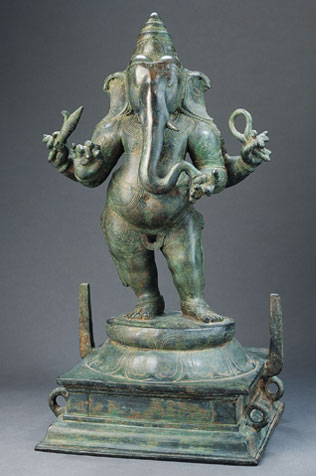
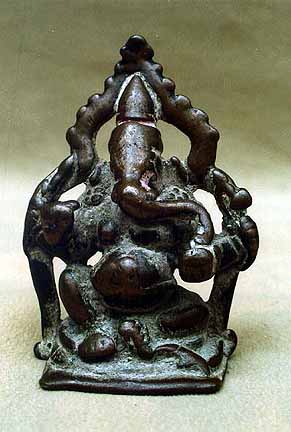
Ganesha - circa15th
Century
|
|
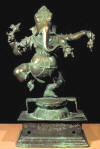
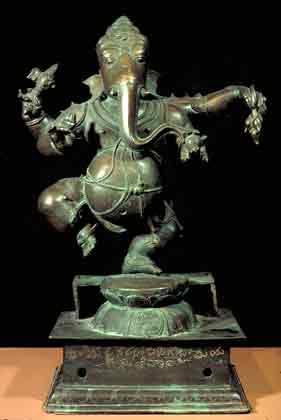
Dancing Ganesha
- circa 16th Century
|
|
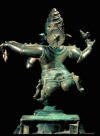
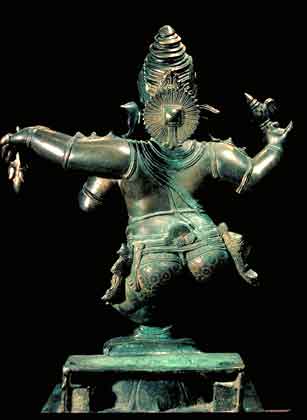
Dancing Ganesha
- circa 16th Century
|
|
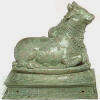
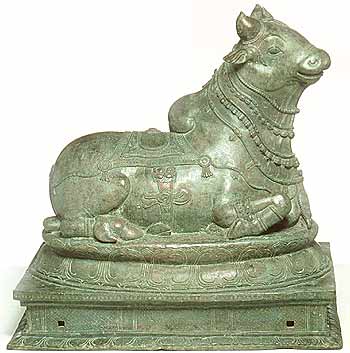
Nandi
- Chola period, circa
1200
|
|
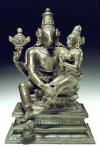
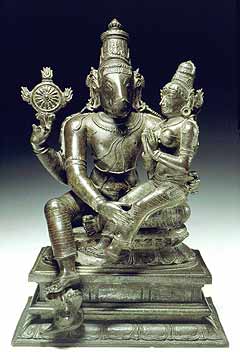
Bhu-Varaha,
Vishnu's Avatar as Gigantic Boar Embracing Goddess
Earth, Chola period, circa
1300
|
|
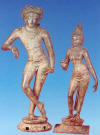
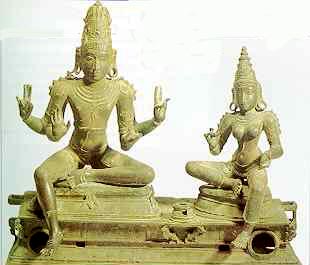
Shiva
Vrishabhavana and Parvati, c. 1012, Rajaraja
Museum, Thanjavur
|
|
|
|
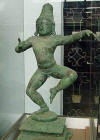
Tirujnana Sambandha, 11th
century, Rajaraja Museum, Thanjavur
|
|
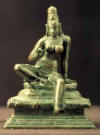
Parvathi - 11th
Century
|
|
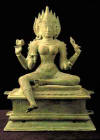
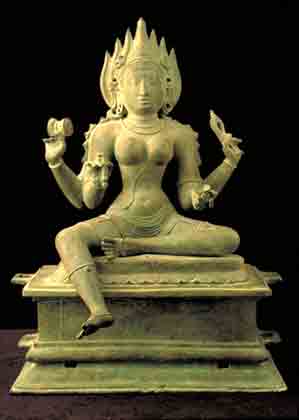
Kali - 11th Century
|
|
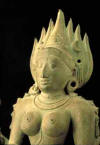
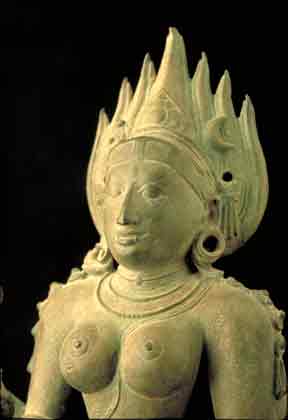
Kali - 11th Century
|
| *The Sensuous and the Sacred: Chola
Bronzes from South India - Vidya Dehejia, Richard
H. Davis, R. Nagaswamy, Karen Pechilis Prentiss
|
| * Masterpieces of
Early South Indian Bronzes - R. Nagaswamy |
|
Visit
Art & Architecture at
tamilnation Library
|
|
|
SOUTH INDIAN BRONZES
- CHOLA, PALLAVA & NAYAK PERIODS
"The following works of art
and literature are among the most remarkable
contributions of the Tamil creative genius to the
world's cultural treasure and should be familiar to
the whole world and admired and beloved by all in
the same way as the poems of Homer, the dramas of
Shakespeare, the pictures of Rembrandt, the
cathedrals of France and the sculptures of Greece
...... the South Indian bronzes
of the Chola period, those splendid and amazing
sculptures belonging to the best creations of
humanity....." (Tamil
Contribution to World Civilisation - Czech
Professor Dr. Kamil Zvelebil in Tamil Culture -
Vol. V, No. 4. October, 1956)
 Introduction with Note
by Dr.Jayabharathi Bronze Casting in Chola
Period Introduction with Note
by Dr.Jayabharathi Bronze Casting in Chola
Period
Dr.T.V.Mahalingam on Chola
Bronzes in Tamil Art and Architecture
The Sensuous and the Sacred -
Dr. Sharada
Srinivasan
Exhibiting Chola Bronzes
Nataraja - the Dancing Siva...
Introduction
The Chola bronzes are products of the Tamil
creative genius during the period that the great
Chola dynasty ruled Tamil Nadu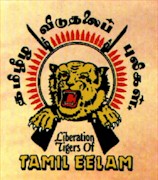 during the 9th to 12th Century. The
four centuries of Chola rule, is regarded by many as
the age of grandeur in the history of the Tamil
people. The Tiger emblem of the
Cholas inspired both the name of the Liberation
Tigers of Tamil Eelam as well as the LTTE flag.
Renowned for their harmony of form and content, the
Chola bronzes speak across centuries - in
silence. during the 9th to 12th Century. The
four centuries of Chola rule, is regarded by many as
the age of grandeur in the history of the Tamil
people. The Tiger emblem of the
Cholas inspired both the name of the Liberation
Tigers of Tamil Eelam as well as the LTTE flag.
Renowned for their harmony of form and content, the
Chola bronzes speak across centuries - in
silence.
The
following is from a note by Dr.S. Jayabarathi
whose writings (in Tamil and in English) on
Tamil history and culture have earned him the respect
and affection of many in the Tamil
diaspora:
"The history of metal art in South India is of
great antiquity,and this is a living art to this
day. This is kept alive by ingenious craftsmen who
have preserved the ancient texts about the method
of preparation, and also the
contemplative hymns or "Dhyana Slokas" which
describe the forms of individual icons. The
earliest specimen in metal in Tamilnadu is the
prehistoric figure of a mother-Goddess from
Adhichchanallur.
We don't have any metal image from
the Sangam Age. But the present line of bronze
casting starts from the Pallava times (400
A.D.). But it was during
the Chola times(900 A.D.), that the art and
craftsmanship of bronze-casting attained its
maximum glory. After a period of 300 hundred years,
the craft degenerated.
The forms of Chola bronzes are very
plastic. They are devoid of intricate ornaments and
designs. They are very expressive. There is grace,
elegance, beauty, and above all else -
life.
By means of the facial expressions
and gestures or mudras and the pose, we can imagine
the surroundings of the figure of the god or
goddess; what instrument or weapon he or she is
holding; what he or she is leaning on; and what he
or she is doing or about to do.
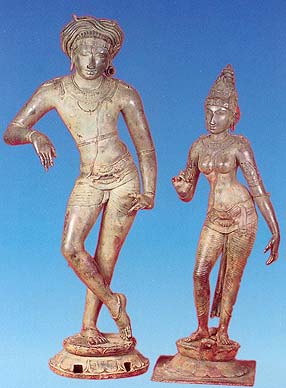
There is a pose called Rishabaandhika
pose. We see Siva standing with one leg crossed
over to the other side, across the other leg . We
see that the way His arm is flexed and raised, it
is resting on something. The way that His body is
tilted suggests that He is leaning on something. In
this scenario, Siva is leaning on his bull-vahana,
Nandhi, on whose shoulders He is resting His arm.
That is why it is called the Rishabaandhika
pose.
There is a figure called "Ardha
Naareeswara". This figure is very unique and there
is none like it in the world. It is a figure of
Siva. The right half is the malehalf - i.e., Siva
himself, and the left half of the figure is that of
Uma Parvathi. The male and female characteristics
blend so very imperceptibly in the centre, that you
can't make out a dividing
centre-line.
Hundreds of Cholza bronzes have been
smuggled out of India and have found their way
into the private museums of art-collectors. The
Cholza bronze, Nataraja of Sivapuram attained
immense fame for its price tag of 100 million
dollars. What makes these Cholza bronzes so unique
and so expensive in the art-market? The answer lies
in the way in which they are made - the Art of
Bronze-casting -
The Chola bronze is made through the
lost-wax process. It is known in artistic terms as
"Cire Perdure". The Sanskrit Shilpa texts call it
the "Madhu Uchchishtta Vidhana".
Beeswax and kungilium are mixed with
a little oil. It is kneaded well. From it, the
necessary figure is made. All the minute details
are fashioned into it. This is the wax model
original.
The figure is made according to the
Silpa Sastras. The dimensions, the proportions, the
pose, the ornaments, the mudras and the bhavas are
all followed very carefully.
The Dhyana Slokas pertaining to the
particular deity as mentioned in the Silpa texts is
kept constantly fixed in the mind. It is
contemplated upon, so that the figure of the god
fills the sculptor's entire mind. All this while
his hands are fashioning the model. As such,
technically speaking, this whole performance of
making the model with single-minded attention and
contemplation upon a particular deity, makes it a
real Yoga.
Clay from a termite-hill is made into
a paste and the entire figure is coated with it
over and over again until the mould is of a
necessary thickness. Then the whole thing is dried.
After that the clay-mould with the wax-mould is
baked over an oven with cow-dung cakes. The
wax-model melts and flows out. Some of it
vapourises. Now the clay-mould is empty and
ready.
The metal alloy of bronze is melted
and poured into the mould. This particular bronze
alloy is known as "Pancha Lokam". It is wrongly
thought that of containing gold. But it does not.
When the metal has filled all crevices and has
settled and hardened and cooled, the mould is
broken off. The bronze figure is thus obtained. It
is then cleaned, finer details are added, blemishes
are removed, smoothened, and polished well. So,
there will be only one specimen of that particular
work done by that sculptor, and it cannot be
moulded or copied. Since it is the only specimen
available at all times, it is unique and
expensive."
|
 Dr.T.V.Mahalingam on Chola Bronzes
in Tamil
Art and Architecture
Dr.T.V.Mahalingam on Chola Bronzes
in Tamil
Art and Architecture
"....This account will not be complete without at
least a brief sketch of the art of bronze casting for
which the Tamil country was famous. Metal images have
been cast throughout the centuries under the
patronage of different dynasties in the north, south,
east and west, but nowhere does it seem to have
registered such an acme of development as it did
under the Colas. A few Agamic texts and the
contemporary practice among the sthapatis indicate
two modes of casting icons - the hollow and the solid
methods. The figure of a female, identified as Mother
Goddess and discovered at Adichanallur is the oldest
extant metal icon in the Tamil country. It is small
in size and has been taken to be at least 3,000 years
old. A few Buddhist metal icons discovered at
Amaravati and Kaverippumpattinam and Buddhapad in
Andhradesa and assignable to the early centuries of
the Christian era reveal that the metallic art was
already flourishing in South India.
These traditions of the early period in the realm of
art were continued by the Pallavas who held hegemony
over parts of the southern Andhradesa and the whole
of the Tondaimandalam and even the region up to the
Kaveri in the south. A few scholars tend to believe
that the art of bronze casting was either unknown to
the Pallavas or at least had not attained great
heights under them and that for all practical
purposes the history of the art of bronzes in Tamil
Nad begins with the Colas.
Now it is difficult to wholly accept this, as we
know for certain that this art was flourishing under
the Satavahanas and Ikshvakus and hence the Pallavas
might also have been aware of it. Considering the
fact that under the early Colas the output of metal
icons was prodigious in quantity and unparalleled in
quality, it is difficult to assume that this art had
developed to that extent within a short time after
its introduction in the Tamil country.
Of particular interest in this connection is an
inscription of a certain Abhimana Siddhi (who seems
to be either a contemporary of or a ruler anterior to
Dantivarman Pallavamalla) in the Vaikunthapperumal
temple at Kanchipuram making reference to
the gift of one thousand pon (gold) obviously for the
making of a golden plate for offering bali and also
for a padimam. The padimam here could only mean an
image made out of the gifted gold and hence a metal
icon.
Apart from some of the Pallava characteristics
revealed by a few bronzes, this inscription would
show that metal art was not unknown to the Pallavas.
A Tripurantaka in a private collection now in
Ahmedabad, a Vishapaharana from Kilappudanur in the
Tanjore District, a Natarãja from Nallur in the
same district are a few of the icons with obvious
Pallava features and noted for graceful and simple
modelling. A Maitreya from Melaiyur and a Visnu in
the Trivandrum Museum may also be included in this
list.
A large number of specimens belong to the period
of transition from the Pallava to the Cola period and
the first two or three decades of the Cola period.
This is the period which witnessed the highest water
mark in the art of bronze casting, and in the light
of recent and penetrating studies it is possible to
discern different phases in sequence in the
development of the art.
The Visnu from Tiruchcherai, Chandikesvara
from Tiruvenkadu, Kirata and Arjuna from Tiruvetkalam
are the most representative of the flowering phase of
the early Cola period. In modelling treatment they
offer valuable links between earlier images and the
clearly datable icons of the subsequent period. The
skandhamala (shoulder tassel), which is not generally
noticed in images of the Pallava period, is
invariably seen in Cola bronzes. Similar and
interesting changes are found in many ornaments and
decorative devices, including armlets, udarabandha,
necklaces, katistra, loops and tassels, etc. The
shape of the yajñopavita, i.e. its running over
the right arm, is continued in a few images but it
ceases to be a dependable stylistic feature in the
Cola period.
Stylistic characteristics, useful as they are for
any chronological classification of images, are not
always useful and at times even prove to be deceptive
on account of the persistence of certain modes for
quite a long time. It is in this connection that a
few inscriptions prove to be useful, affording exact
dates in which the icons were cast and endowed and
thereby enabling one to study the features of dated
bronzes and compare them with images with identical
features to arrive at their probable dates. Quite a
number of well-known and masterly examples of the
Cola bronzes have now been dated with as much
accuracy as possible.
Numerous are the inscriptions making mention of
the dedication of bronze images to temples under
successive rulers, but unfortunately not all of them
have survived. Special mention must be made of the
references to a host of deities in metal in the
Tanjore inscriptions of Rajaraja of which none, with
possibly the single exception of a Tripurantaka, is
still extant. It is difficult to exaggerate the
importance of a few dated bronzes, as they indicate
art forms and norms of the periods of their making
and show how stylistic features are not always wholly
trustworthy.
Of the many superlative icons in the
Umämahesvara temple at Konerirajapuram, Tanjore
District, a Vrshabhavahana Tripurantaka and Ganapati
are datable between 959 A.D. and 977 A.D. on the
authority of an inscription in the same temple. The
reference to gifts to an image of Kuttaperumal and
his consort in the Vriddhagirisvara temple at
Vriddhachalam by Sembiyan Mahädëvi in an
inscription in that temple reveals that the now
extant images of Natãraja and his consort there
were made in or before 981 A.D.
Of the many bronzes unearthed at Tiruvenkädu
in the Tanjore district a Vrshabhavähana was
dedicated in 1011 A.D. and his consort in 1012 A.D.
and the characteristics of these succinctly
illustrate the bronze style during the last years of
Rãjaräja I. An inscription of the same
ruler dated in his 28th year refers to gifts to an
image of Adavallãn (Natarãja) which may be
a reference to either of the two figures of the god
in the temple; obviously this was dedicated in 1013
A.D. Another epigraph speaks of the dedication of
Bhikshatana in the 30th year of
Rajadhiraja I corresponding to 1048 A.D. while yet
another inscription reveals that an
Ardhanãrisvara was endowed in or before 1047
A.D. That other undated Tiruvenkadu bronzes like the
Bhairava and Kalyanasundara should also belong to
about the same period is apparent. All these icons
admirably reflect the heavy and stolid forms of
contemporary stone sculpture.
Generally speaking, the bronze icons reflect the
form and style of contemporary sculpture in stone.
This is true also of iconography and decorative
details. The Nataraja image which is rare in Pallava
times (found only in the Siyamangalam cave,
Dharmaraja ratha at Mahabalipuram, Kailasanatha,
Muktisvara and Matangesvara temples at Kanchipuram) is frequently represented
in the Cola period.
It is in the beginning of the early Cola period
that the Anandatandava mode of dance gets
crystallized and is shown alike in stone and metal.
In the representation of this and other themes and in
general execution and details, minor albeit
interesting variations are found between the
specimens wrought in the metropolitan art centres in
the Cholamandalam and the products in the other
peripheral regions like the Pandya and Kongu
countries. The reversed posture of Nataraja in the
Pandya realm, known as marukal tandavam, is
particularly interesting.
The metal art was zealously patronised during the
later Cola and Vijayanagar periods as well; but
examples of these periods, like contemporary stone
carvings, are devoid of life. They are much
conventionalised and the dynamic and rhythmic
movement characteristic of early examples is now
replaced by mathematical schematism.
|
|
The Sensuous and the Sacred -
Dr. Sharada
Srinivasan
"... As a Bharata
Natyam dancer and engineering graduate, I embarked on
a doctoral thesis on the applications of
archaeometallurgical investigations and techniques of
scientific authentication in exploring metal
technology, dates and find spots of images from
southern India. Using micro-drilling techniques, I
sampled about 130 metal icons from well known
collections in India and abroad on which were done
compositional and trace element analysis....
Out of this alchemy popped a surprise: scientific
evidence suggested that the metal icon of the
Nataraja dancing with leg extended in the dance pose
of bhunjangatrasita karana, which was generally
thought to have been specifically a 10th century
Chola innovation, had already emerged by the Pallava
period, when the magnificent shore temples of
Mahabalipuram were built. The hymns of the Tamil
Saiva saint Appar suggest that by the 7th century the
worship of Nataraja might have emerged at
Chidambaram, where the Nataraja metal image is
uniquely worshipped in the innermost garbha instead
of the lingam..." more
|
|
Exhibiting Chola Bronzes
"...Among the most renowned works of Indian
sculptural art are the temple bronzes cast a thousand
years ago during the Chola dynasty in the
Tamil-speaking region of South India. Today, museum
visitors encounter spot lit Chola sculptures within
the hushed spaces of galleries. But in Chola times,
the bronzes were consecrated as deities, adorned in
silks, and encountered, amidst the chants and music
of livelytemple processions, as gods. Richard Davis,
in his seminal work, The Lives of Indian Images,
first elucidated the dichotomous perceptions and
practices surrounding the reception of Chola bronzes
by devotional and museum audiences.."
|
|
Nataraja
- the Dancing Siva...
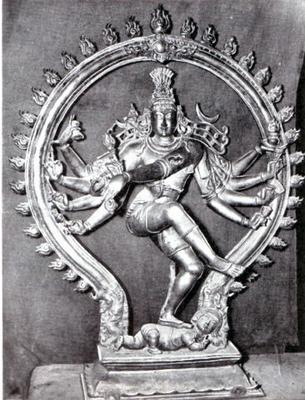
The dance of Shiva in Chidambaram or Tillai forms
the motif of the Chola bronzes of Nataraja.
"Our Lord is the Dancer, who, like the heat latent
in firewood, diffuses His power in mind and matter,
and makes them dance in their turn" - Kadavul
Mamamunivar's Tiruvatavurar Puranam, stanza
75
"Creation arises from the drum: protection
proceeds from the hand of hope: from fire proceeds
destruction: the foot held aloft gives release." -
Unmai Vilakam, verse 36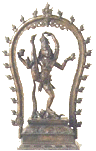
"The Supreme Intelligence dances in the soul... By
these means, our Father scatters the darkness of
illusion (maya), burns the thread of
causality (karma), stamps down evil
(anavam), showers Grace and lovingly plunges
the soul in the ocean of Bliss." - Unmai Vilakam,
verses 32,37, 39
In " The Tao of
Physics", Fritjof
Capra writes, "Indian artists of the tenth and
twelfth centuries have represented Siva's cosmic
dance in magnificent bronze sculptures of dancing
figures with four arms whose superbly balanced and
yet dynamic gestures express the rhythm and unity of
life."
|
|
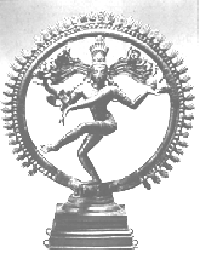
Nataraja Bronze
Gangaikonda Cholapuram,
11th century
|
| Shiva Vrishabhavana and Parvati
c.1012 Rajaraja Museum, Thanjavur |
|
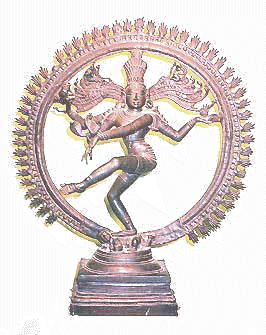
Shiva Nataraja 12th century,
late Chola Delhi National Museum
|
| Shiva Nataraja 11-12th Century,
Chola Period, Government Museum, Chennai |
| Shiva Nataraja 11-12th Century,
Chola Period Government Museum, Chennai |
|
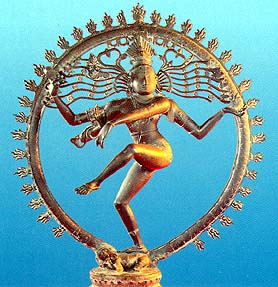
Chola Bronzes at Rajaraja Museum (16 pages)
|
| Shiva Nataraja Airakkal Mandapa,
Meenakshi Temple, Madurai |
|
kaalmaari_aadal
|
| There are 5 ambalams or
sabhas where Nataraja performs the Cosmic Dance.
Madurai is the Rajitha Sabha or VeLLi ambalam. Nataraja
dances on his right foot. But following the wish of
Rajasekara Pandya, he shifted to His left foot - 'kaal
maaRi aadal' (courtesy: Dr.S. Jayabarathi,
Malaysia) |
| Shiva Nataraja 15th Century
Meenakshi Temple, Madurai |
| Shiva Nataraja, 11th Century,
Raja Raja Museuem, Thanjavur |
| Shiva Nataraja, 11-12th Century,
Chola Period, Government Museum, Chennai |
|