International Seminar:
Envisioning New Trajectories for Peace in Sri Lanka
Organized by the Centre for Just Peace and Democracy (CJPD)
in collaboration with the Berghof Foundation, Sri Lanka
Zurich, Switzerland 7 - 9 April 2006
Session 1: Causes of the Conflict & Factors
leading to Ceasefire
Sri Lanka�s Ethnic Conflict: �Root Causes�
[also in
PDF]
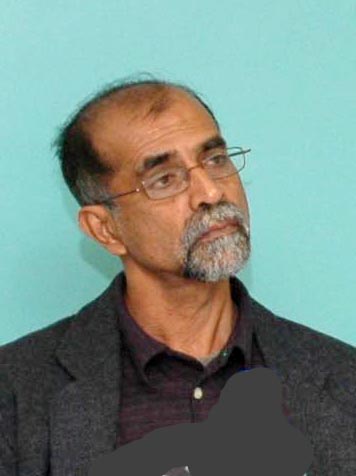 Dr.
Jayadeva Uyangoda Dr.
Jayadeva Uyangoda
Professor and Head, Department of Political Science
and Public Policy,
University of Colombo
[see also
Short Paper on �Way Forward�]
-
My approach to
identifying root causes of Sri Lanka�s conflict is determined by
my belief that the conflict warrants a negotiated political
settlement and that negotiations for a settlement should be
concerned with finding a shared political future for all
citizens as members of identity communities as well as
individual citizens. Envisioning a shared political future calls
for re-making the post-colonial Sri Lankan state within a
democratic, pluralistic framework.
-
At the centre of
Sri Lanka�s ethnic conflict is the question of state power. From
the perspective of the Tamil community, this question of state
power has expressed itself in their
exclusion from sharing the state power in the post-colonial
context. The perception as well as experience of
discrimination, being treated just as a �minority� and as a
community with a second - class status of citizenship and of
moral worth emanated from the unequal distribution of state
power among ethnic communities in the years after independence.
-
The way in which
democratic political modernity evolved in Sri Lanka in the late
colonial and post-colonial years provided a �modernist� context
for ethnic-majoritarian construction of state power. In the
pre-independence decades, representative democracy through
limited as well as universal franchise took roots in Sri Lanka
in association with ethnic identity politics. At the time of
independence, and in the absence of a political party system
that could cut across intra-group loyalties, identity politics
had become the dominant mode for democratic competition.
Ethnic majoritarian democracy, that took concrete shape
immediately after political independence of 1948, was to a great
extent a consequence of this process of democracy � through �
identity politics.
-
The majoritarian
practice of minority exclusion from the domain of state power
was further facilitated by the way in which �state� building and
�nation� building processes took shape in the post-independence
period. Those processes were in turn shaped in the
political vision of Sinhalese nationalism that viewed the
post-colonial state in unitarist and centralist terms. Building
a strong and unitary state was thus viewed as central to the
�nation� building process. This �nation� was not conceived
through pluralist, multi-cultural categories. The Sinhalese
political class that governed the Sri Lankan state did not see
any virtue or relevance of pluralism in building a new
post-colonial nation. Even when some of its members saw its
validity � in 1957 and 1966 --, they failed to convince their
own class that power-sharing and reforming the unitarist state
was necessary to build a pluralist and inclusive nation.
-
The way in which
Sinhalese and Tamil nationalisms evolved in the twentieth
century, particularly after independence, also had a direct
impact on making the ethnic conflict in Sri Lanka. Sinhalese
nationalism evolved after independence as a hegemonic
ethno-nationalist project. Tamil nationalism in turn viewed
the political future of the Tamil community as a �nation�
with political entitlement to shared sovereignty. There was
hardly any possibility for these two nationalist projects to
communicate with each other in order to find a common, shared
ground. The two nationalist projects eventually travelled along
different paths. The challenge today is for them to intersect
and move along together.
-
My argument
concerning the root cause of Sri Lanka�s ethnic conflict and its
possible resolution is two-fold. Firstly, the conflict is
essentially political, and it primarily refers to the question
of state power. Issues of ethnic discrimination, exclusion in
the development processes, violation of minority rights are
linked to the question of the exclusion of the Tamil community
from sharing state power in the centre as well as the periphery.
Secondly, addressing what has usually been understood as root
causes of the conflict can only partially grapple with the
conflict. Identifying and addressing the dynamics and
consequences of the conflict is equally important. For example,
reproduction of the conflict through protracted cycles of
violence is a major dynamic of the conflict. Similarly, the war
has produced immense humanitarian problems that include mass
displacement, destruction of lives and property as well as
social and economic infrastructure in the North and East. It has
impoverished civilian populations in the conflict areas. The
protracted war and violence has also frozen ethnic identities,
reinforced hostilities among ethnic communities, and has even
created epistemic ethnic enclaves in the country. The emergence
of
Tamil-Muslim hostility is a specific outcome of the
protracted conflict. Addressing these consequences of the
conflict is as difficult as finding solutions to the root causes
of the conflict. They require more than formal, legalistic peace
agreements. There is no fixed formula for handling root causes
and the consequences of the conflict. We need to explore
creative ways of settling the conflict in all its major
dimensions.
-
Under what
circumstance would a secessionist minority nationalist project
consider it worth the �returning� to the state from which it has
sought separation? What kind of state reform program
should have the capacity to facilitate such a transition from
�secession� to �returning�? These are fundamental questions that
need to be explored in order to address the political causes of
the ethnic conflict. In this connection, we may note that it is
not yet very clear whether the Sinhalese political class is
ready to make the state flexible enough to enable the LTTE to
�return� on their terms. Meanwhile, the LTTE is unlikely to
�return� except in their own terms. It is not easy to erasing
this �return gap�. It requires a considerably long period of
constructive political engagement between the state and the
LTTE. A continuing state of war cannot provide conditions for
such protracted political engagement.
-
A negotiated
political settlement to the ethnic conflict would essentially
presuppose a qualitatively new political dialogue among
Sinhalese, Tamil and Muslim nationalisms in Sri Lanka. Such a
dialogue among nationalisms will have chances of producing a
constructive outcome only when (i) the Sinhalese political class
is willing to
ethnically pluralize the Sri Lankan state, with a thick
framework of power sharing at the centre as well as in the
regions, and (ii) the new Tamil political class is ready to
re-interpret the goal of national self-determination
in terms of internal self-determination not amounting to
secession. The civil war has in way reinforced the need for such
a dialogue, but closed the political space necessary for it. A
protracted no-war situation under a
sustainable CFA is the pre-condition for such a
transformative dialogue.
|