"Now the first thing that this book is about is the way that India both
exceeds and shatters Western expectations, the way it both exceeded and
shattered mine. Of course there are the stereotypes: India is "more
spiritual" than the West, its people "impoverished," "non materialistic,"
"fatalistic," and "other-worldly," its society structured according to a
"rigid caste hierarchy," its women "repressed" and "submissive," its
villagers "tradition-bound" and "past-oriented," their behavior ordered by
"rituals" and constrained by "rules" of "purity" and "pollution."
These words are not just products of popular Western fantasy. Scholars
and specialists in South Asian culture use them often. But one thing I
learned in India was that these words are just words, our words, to refer to
certain scattered events occurring in South Asia. The propositions they
imply are partial truths, half truths, and anyone going to India who expects
all of Indian life to confirm to them will find herself merely deluded and
confused....
I have tried, anyway, in my own narrative not to lean on such words too
much. This has not been difficult, because they explain very little of what
I experienced in India.
The women I knew there, for instance, were more aggressive than me,
more openly sexual than me, more free in their criticisms of their men than
me. Here in America I often get in trouble for arguing, losing my
temper, speaking my mind. But in Tamil Nadu, one of my woman friends, Anni,
asked me pointedly, "is it your habit to bow and defer to everyone?" My
personality in Tamil Nadu was no more sweet and obliging than it is in
America; if anything, I was more short-tempered there.
As for Anni, she was milder than many Tamil women I knew indeed, she
was known for her patient and loving nature. But when she accused me,
through her question, of excessive deference, she was not being sarcastic.
Compared to her, I was a little mouse. The notion of the repressed and
submissive Indian woman simply did not apply to the people among whom I
lived-and yet in some ways it did. Anni would not have been Anni without her
fidelity to her men and her ability to endure hardship for their sake, to do
without while they did with. She was proud of these qualities of hers and
wore them fiercely. They entitled her to speak freely and to walk with her
head held high...."


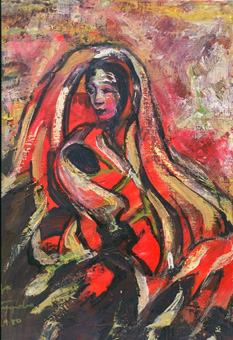 தாய்மை